
You should hire a naming strategist once your name turns load-bearing. That's the day it has to survive a trademark search or stand up in front of investors and competitors, not while it's still just sitting on a landing page. That's the line. Below it, a name is a taste choice, and paying a stranger to fix a taste choice wastes money. Above it, a wrong name costs more than fixing it would. So the whole question of when to hire a naming strategist comes down to which side of the line you're on, and the six signs below tell you which.
You've already got a name. It works well enough that changing it feels dramatic, and badly enough that you keep softening it when you introduce the company out loud. You add a little explanation after it, then watch the other person's face to see if they heard it right. And for months you've been quietly asking yourself the same thing, whether the name is good enough to keep.
Good is the wrong test for a name. It's a slippery word to hang a decision on, and a founder reaching for it usually already suspects the answer. The test that pays off is about timing, whether the name has reached the point where paying for help earns its keep. A name can be unloved and still be fine to keep for years, right up until the specific, checkable moment when it stops being fine.
The line that decides when to hire a naming strategist
A name carries no real weight at the start. For the first few months it sits on a landing page and a few invoices. So if it's a little awkward, the cost of that awkwardness rounds to nothing. What changes over time isn't the name itself. It's how much has come to hang off the name.
A name turns load-bearing the moment it has to hold something heavy. Sometimes the weight is legal, the kind a trademark search settles. Money adds a different kind. The day the name lands in front of investors, they read judgment into everything they see, and the name becomes part of what they're weighing. Competition is the third pressure, the plain fact of standing next to four rivals and needing to be the one a buyer remembers. While none of those is true, the name is a style choice, and taste is enough to pick it. Once one of them is, a wrong name turns into a liability with a price attached, and plenty of names never reach that point.
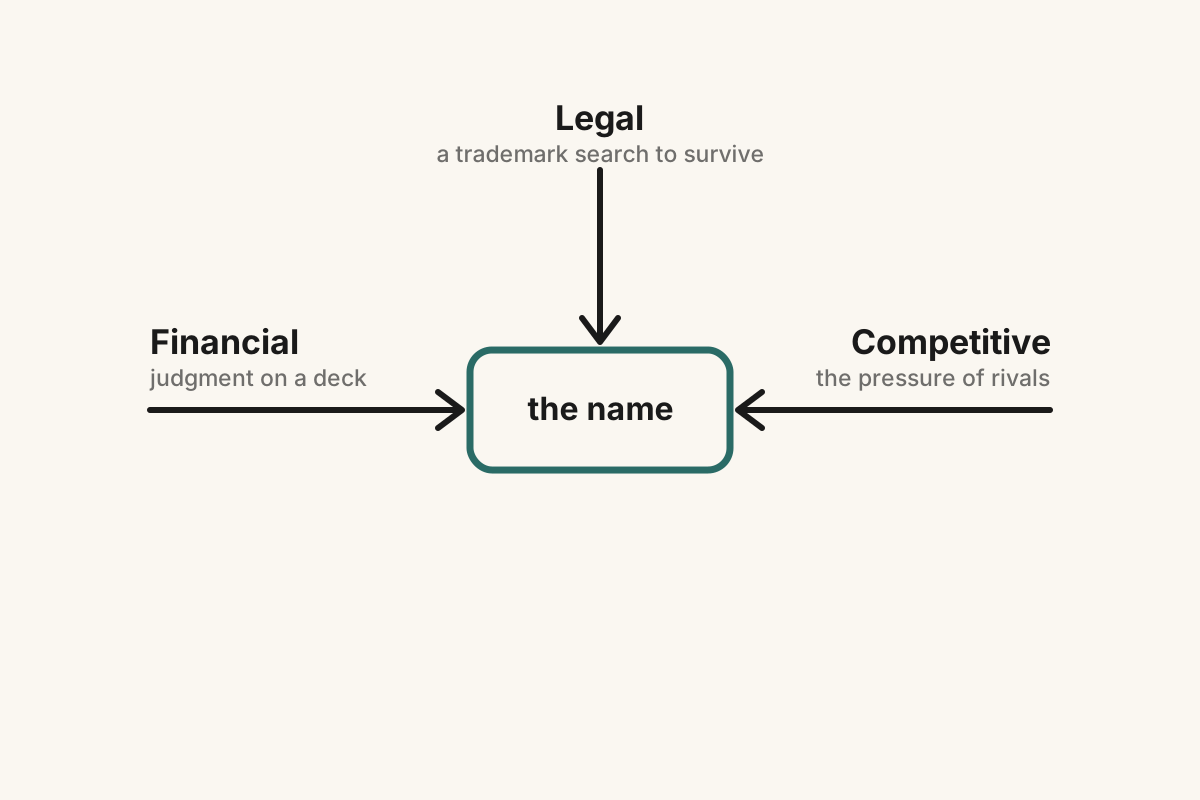
A name turns load-bearing when legal, financial, or competitive weight starts to hang on it. Until then it's a taste choice.
The six situations below are the places that weight tends to show up. None of them is a verdict on its own. Read each one against your own circumstances and notice how many feel familiar. The more that do, the heavier your name already is. And the closer you are to the point where outside help pays for itself instead of draining your budget.
The name won't clear a trademark search
Trademark is the cleanest of the six signs, because it doesn't care how you feel about the name. Either the exact match or a close twin is already registered in your category, or it isn't. If it is, the name is a problem sitting quiet until the day you matter enough for someone to send a letter. A small brand with a contested name gets left alone. A growing one doesn't. The name that felt fine at ten thousand dollars a month becomes the reason a lawyer is on the phone at a million.
Plenty of founders never run the search that would warn them. Either they skip it, or they run one, find something close, and decide it's probably fine. Probably fine is how a small conflict becomes a forced rename two years later. And a forced rename is one of the most expensive moves a brand can make, far more than getting the name right once would have cost. Most of the true cost of brand naming sits in that gap, between the cheap version now and the forced version later. Outside help only screens for conflicts at this stage. Final clearance still takes a trademark attorney. So this sign is about catching the problem early, not handing off the legal risk.
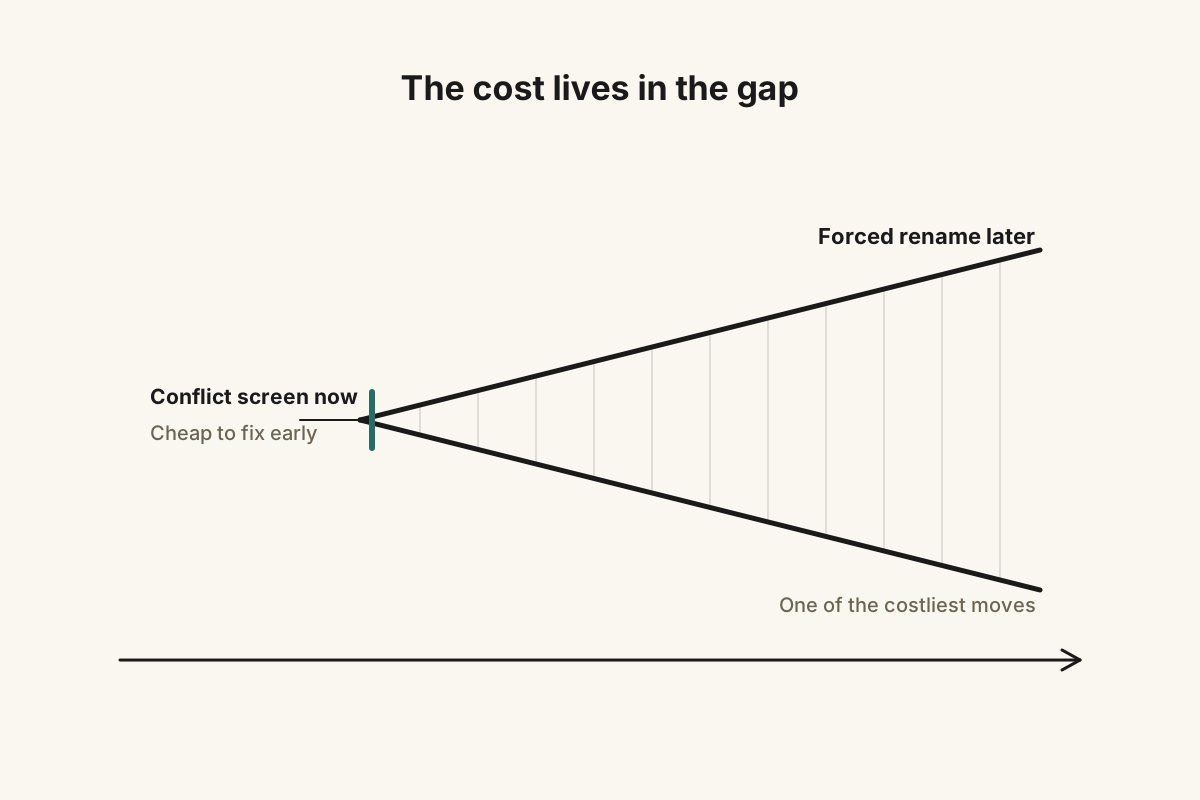
A conflict screen catches the problem on the cheap side of the gap. The forced rename on the far side is one of the most expensive moves a brand can make.
The name is about to go on a pitch deck
Picture the name on the title slide, five investors reading it before you've said a word. That's the moment it stops being a label and starts standing in for your judgment. Fundraising does this overnight, earlier than most founders expect. Investors read a lot into very little. A name that's hard to say, easy to confuse, or quietly embarrassing won't sink a good company. But it spends a little of the credibility you'd rather keep, on the slide before the product ever comes up.
It shows up as a reflex. You start explaining the name before you explain the company. You get ahead of the mispronunciation. You make the small joke about it first, so nobody else can. That reflex is the tell. A name you have to apologize for in front of money is doing the opposite of its one job.
You are one of five names in a crowded category
A name that worked when you were the only option in your own head can fail the day a buyer meets it beside four competitors. Distinctiveness isn't a property the name holds on its own. It lives in the contrast with its neighbors. A word that sounded distinct in a quiet room can vanish in a crowded category. Either it describes the category instead of the company, or it sounds like two of the brands right next to it.
This sign arrives without any announcement. No lawyer calls, no investor frowns. Sales just sit flat in a way that's hard to explain, and somewhere a customer who meant to find you found a competitor with a similar name instead. You notice it as confusion. People mix you up with someone else, or they describe you by the category word instead of your name. A BrandNames read of 5,000 direct-to-consumer brand names measured each one down to its sounds, and one lever stood out. A third of them open on a hard plosive, one of the sounds b, d, g, p, t, or k. That hard opening makes a name lodge a little faster than a soft one does. That edge only starts to matter once a name has neighbors. So whether a name cuts through or sinks into the sound of its category is something you can measure. You don't have to guess.
The team has circled the same shortlist for weeks
Being stuck comes in two versions that are easy to mix up. One is a real signal. The other is impatience wearing the same face. The tell for the real one is repetition. The same shortlist doc gets reopened week after week, the same five or six names, someone re-championing the option that got quietly killed two meetings ago. That loop runs on senior people's hours, and the meter never stops while the decision fails to converge.
The honest reading matters here, because this is the sign most likely to push you toward money you don't need to spend. Being stuck is a reason to get an outside read, but only when one of the heavier signs is also true. A team circling a name that carries no legal, financial, or competitive weight needs a deadline, not a budget. Pair the stuck loop with real weight on the name and the case for help gets strong. On its own, the loop usually just needs a date on the calendar.
You can hear the problem but can't fix it
You can hear that the name is wrong. It's hard to say, or people misspell it, or it lands flat when you introduce it, and you're pretty sure about all of it. The trouble is that every alternative you come up with feels worse than the name you already have. You can name the illness and can't produce the cure. Of the six signs, this is the one that makes the clearest case for a specialist over more time.
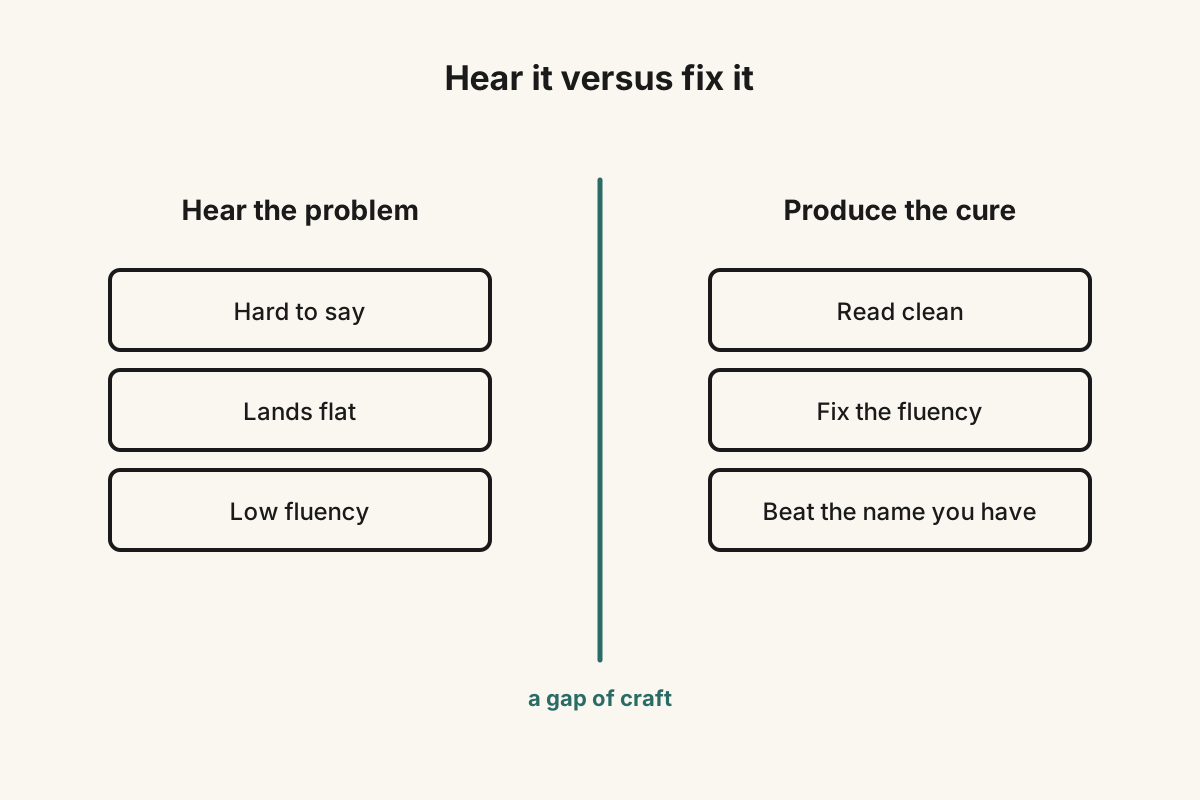
Hearing that a name is wrong is one skill. Producing the cure is another, and the second is what a practitioner is trained for.
That gap won't close on its own, and it isn't a gap in taste. It's a gap in craft, the exact thing a brand naming expert is trained for. Hearing that a name makes a listener work a little harder than it should is one skill. The research calls that difficulty low processing fluency, and it's a real measurement, not a hunch. Producing the cure is a separate skill. Coming up with ten names that read cleaner than the one you already have takes practice most founders haven't put in. So when you can reliably spot the problem and can't reliably solve it, that's the most efficient moment to bring in someone who can.
A rebrand or rename is genuinely on the table
Renaming a live brand is the highest-stakes naming decision there is, because you're not starting from a blank page. You're carrying equity, the small accumulated recognition the current name has already earned. A rename done carelessly drops that recognition on the floor. Customers who knew where to find you lose the thread. The handoff from the old name to the new one is delicate. Doing it on instinct is how a brand sheds the very customers the new name was meant to win.
A warning belongs here, because this is where founders talk themselves into the most expensive mistake on the list. Most people weighing a rename shouldn't go through with one. An unloved name isn't a broken name, and the urge to start fresh is usually just fatigue with a word you've heard too many times. But if a rename is genuinely on the table, with real money and real customers attached, the decision has grown too expensive to make by gut alone.
Match the response to what the name is carrying
Count how many of those six signs felt like yours. Treat the count as a read on how much weight your name is carrying, not a grade.
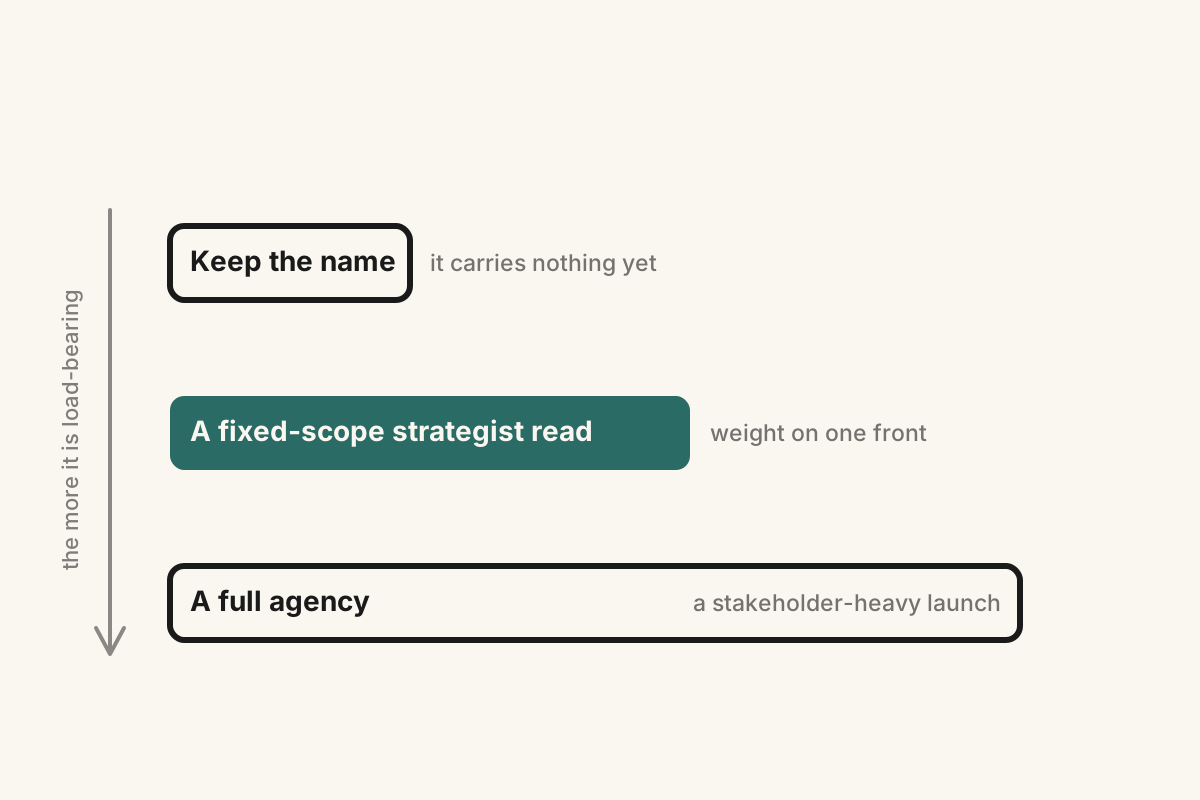
Match the response to the weight. Keep the name when it carries nothing, get a fixed-scope read when one front starts carrying real weight, hire a full agency only for a stakeholder-heavy launch.
If none of them fit, or only one, keep your name and spend nothing. Whatever's bothering you is real, but it's cosmetic, and the name isn't yet holding anything a wrong choice would break. Paying to rename now just solves a problem you don't have. So put the energy into the product, and look again if a heavier sign turns up.
Two or three signs mean a real decision is coming, and it's worth a structured second opinion before you commit rather than after. You don't need a six-month engagement, but you do need more than a show of hands among the founders. A fixed-scope read is sized for exactly that. Someone narrows a shortlist against your actual category and cuts it deliberately, by hand. What comes back is the evidence behind the names left standing. And a structured naming decision follows a defined set of steps you can see in advance.
If several fit, the name is carrying weight on more than one front. A wrong call now costs real money, or legal exposure, or ground lost to a competitor, and the honest move is an outside read before you commit. Even here, a full agency isn't the automatic answer. If the weight turns out lighter than it felt, keeping the name is still fine. If it's real, there's a middle option that rarely gets named next to the free generators and the six-figure firms. A fixed-scope naming-decision service puts a strategist through the same decision for the price of a logo, not an enterprise engagement. That's the option that fits most founders who need help. A full agency is the right call only for a global launch with many stakeholders and the budget to match.
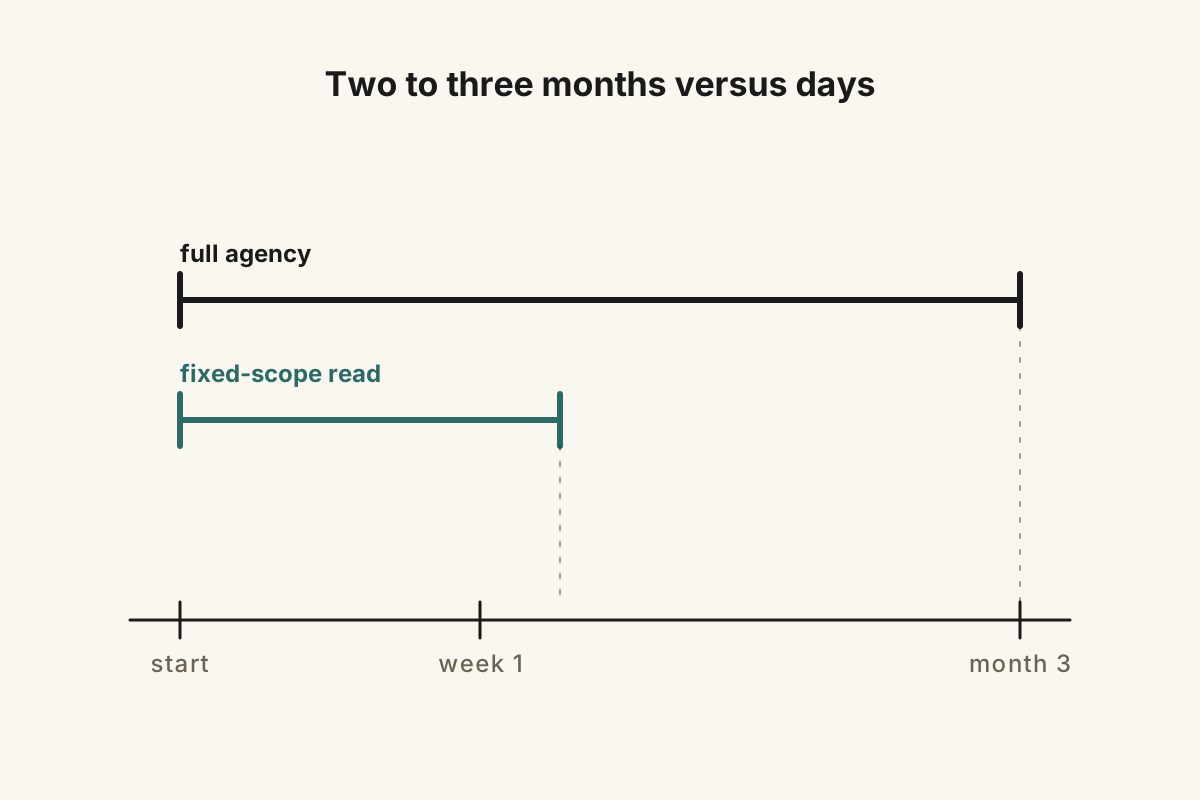
A full agency engagement runs two to three months. A fixed-scope read does the narrower job in days, sized to the same decision.
Frequently asked questions
What does a naming strategist actually do? A naming strategist reads your shortlist against your real category and competitors. Then they go through it deliberately, cutting the names with trademark, pronunciation, or category problems. What comes back is a shorter list, a written case for the top pick, and a call to talk the decision through. It's the narrower job of deciding well, without the long multi-stakeholder process a full agency runs.
How much does a brand naming agency cost? Full agency engagements broadly run from around fifteen thousand dollars at the boutique end to well over a hundred thousand for an enterprise launch with many stakeholders. The best-known firms charge six figures. The number tracks scope, not how good the name turns out to be. The full breakdown of what naming costs, and why the range runs so wide, is its own piece.
How long does hiring a naming strategist or agency take? A full agency engagement often runs two to three months, because of the multi-stakeholder process and the rounds of review built into it. A fixed-scope decision read is sized to run in about a business week, which is part of why it costs a fraction of what an agency does.
Is hiring a naming agency worth it for an early-stage brand? Usually not, which is the honest answer the rest of the genre avoids. Below that line, the name isn't yet carrying legal, financial, or competitive weight, so the money is better spent on the product. A pre-seed brand with the name only on a landing page almost never needs one. Above the line, once a wrong name has started to cost you, outside help stops being a luxury and becomes cheaper than the mistake.
What is the difference between a naming agency and a naming strategist? Mostly scope and price. A full agency runs a long, multi-stakeholder process built for large launches, with a stakeholder committee and rounds of review, and prices to match. A naming strategist, sometimes called a brand naming consultant, runs a fixed-scope decision instead. That means narrowing a shortlist, cutting it by hand, and showing the evidence. No six-month engagement, and usually a single decision-maker rather than a committee. The agency is the right tool for a global launch. The strategist is the right tool for the founder who needs a sound decision, not a season-long project.
Can an AI name generator do this instead? A generator produces options, not a decision. It'll hand you a hundred available-looking names in a second. What it can't hand you is the judgment about which one survives a trademark search, holds up on a pitch deck, or wins in a crowded category. Available at the domain registrar isn't the same as clear in your trademark class, and a generator can't tell the difference. Sorting a name generator against an agency and a strategist is its own comparison. The short version is that a generator is a starting point, not the answer to anything on this page.
BrandNames runs a founder's shortlist through the same category-by-category read this page describes, with a strategist in the loop and the evidence written down. The doors open soon. Leave your email for one note when they do.