
A brand name can cost nothing. The same name can also cost a quarter of a million dollars.
So the honest answer to how much brand naming costs is a spread of $250,000, all for one short line of text you'll print on a label. No other purchase a founder makes runs that wide. A delivery van costs about what a delivery van costs, and a month of ad spend buys a roughly predictable amount of traffic. A name is the one line item that can be free from a generator you opened thirty seconds ago, or a six-figure job with a firm that takes half a year to hand it over.
Nobody draws you the map between free and six figures. Search for what naming costs and you hit a wall of agency pages, and every one frames the whole question as a single giant range, with the agency as the only place to buy. The free floor never comes up, and the middle, where most funded founders actually belong, barely gets a mention.
This piece draws the whole ladder instead, top to bottom. Five rungs, real vendors and real numbers at each one, what your money stops buying as you go lower, and the rung the other guides leave off. Most figures link to a published source, and because vendor pricing moves, the bands reflect what vendors publish today and will drift as their fees change.
What your brand naming cost actually buys
The spread from free to a quarter-million looks irrational until you see what the money buys at each level. You're not paying for the letters. Every rung hands over the same kind of thing, a short name you could put on a label tomorrow. What changes as the price climbs is the checking and the judgment attached to that name, and how much risk somebody takes off your plate before they hand it over.
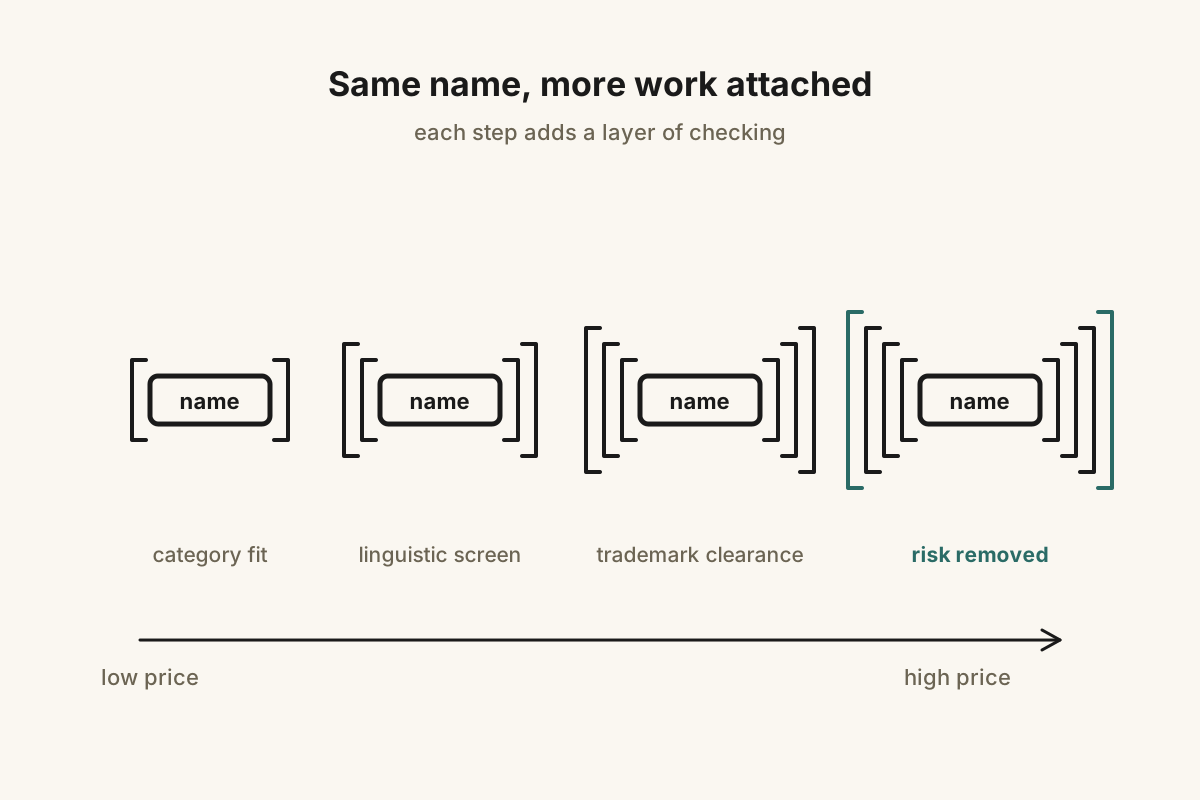
The name stays the same short line of text. What climbs with the price is how much checking and risk-removal comes attached.
At the bottom you get volume and nothing else. A generator returns two hundred candidates and leaves every decision that follows on your desk, whether the name is defensible, whether it fits the category, whether it'll clear a trademark search. At the top a firm takes all of that off your plate, because it researches the category, screens the linguistics, and clears the name through trademark counsel before it puts its reputation behind a recommendation. So the name itself is the last and smallest part of what a firm sells. The price tracks the work nobody hands back to you.
The five rungs sort by price, most expensive at the top.
| Rung | What you get | Typical price | Trademark check |
|---|---|---|---|
| Premium agency | Full methodology at Fortune 500 scale | $40,000 to $250,000 | Included |
| Mid-market agency | A full process over six to ten weeks | $15,000 to $75,000 | Pre-check included |
| Published-fee independent | A professional's judgment on the name | $6,000 to $50,000 | Not included |
| Crowdsource or freelancer | Volume from a crowd or one gig | $60 to $2,500 | Upsell or absent |
| Free AI generator | Fast volume, no judgment | $0 | None |
Rung one, premium agencies ($40,000 to $250,000)
At the top of the ladder sit the firms that name Fortune 500 launches. Lexicon Branding is the one most often cited, the shop behind Febreze, Swiffer, Sonos, the Subaru Outback, and the Impossible Burger. A single Lexicon naming project runs roughly $40,000 to $250,000, and clients on review sites report real engagements in the $120,000 to $150,000 band, so the top half of that range isn't hypothetical.
What the six figures buys is research most founders have never seen priced out. Lexicon has said it put more than $2 million and five years into its own sound-symbolism research, the study of how the raw sounds in a word shape what a buyer feels before they read what it means. Hire at this level and you're renting that whole operation for the three to six months it runs. The fee covers staff linguists, cross-cultural screening, and trademark clearance handled by attorneys.
It's genuinely good work. It's also priced for a marketing budget that can absorb a quarter-million-dollar line item, which is the budget a Fortune 500 has and an early DTC founder doesn't. Firms at this level rarely publish fees at all. Catchword and A Hundred Monkeys, two other well-regarded shops, quote only after a call. The floor is high enough that a public number would scare off most of the people who land on the page.
For a founder who needs a name to defend a brand they're funding out of their own pocket, this rung is the right method at the wrong price. The science is real. The invoice just assumes a balance sheet most readers of this page don't have.
Rung two, mid-market and boutique agencies ($15,000 to $75,000)
Step down from the marquee names and you reach the working agency tier, the one most growing companies actually hire. Tungsten Branding lays its pricing out in three bands, roughly $10,000 to $15,000 for a basic engagement, $15,000 to $45,000 for a mid-level one, and $45,000 to $75,000 and up for its most extensive tier. The bigger jobs run three to six months. A cost guide from the agency Tanj draws a similar shape from the other direction. It lists a $15,000 to $30,000 entry tier, a $35,000 to $75,000 core engagement over six to ten weeks, and an $80,000 to $150,000 band for enterprise work.
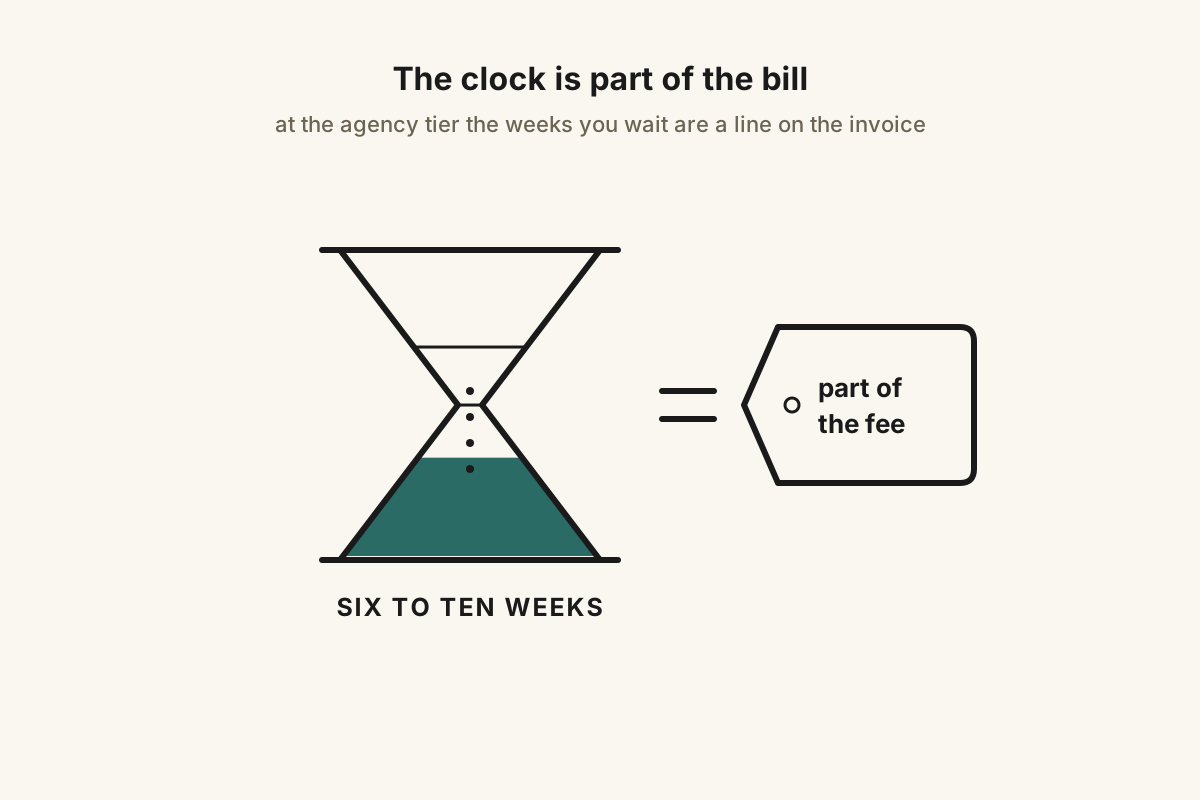
The weeks an agency holds your launch aren't free time. They're a line on the invoice.
Read Tungsten and Tanj together and the real number for a serious agency name lands somewhere around $15,000 to $75,000, over six to ten weeks. That's the rung where the full agency process comes standard, the strategy and linguistic-screening work a firm runs before it recommends a name, with a trademark pre-check on top and none of the Fortune 500 surcharge.
Who it fits is a company with revenue and a marketing function, a Series A startup or an established brand doing a rename, where $40,000 and two months are a fair cost of getting the foundation right. Who it doesn't fit is the founder still proving the business works, because at this tier the clock matters as much as the cost. Six to ten weeks is a long time to hold a launch while a name gets workshopped, and most early founders need to be selling before an agency would even finish discovery.
Rung three, the independents who publish their fees ($6,000 to $50,000)
The agencies above mostly hide their prices. A few publish them, and those few are worth studying, because they show the real shape of an engagement. Igor, a Sausalito firm, runs roughly $20,000 to $35,000 for product naming and $35,000 to $50,000 for company naming, with review sites showing most projects landing in a $10,000 to $50,000 band. Eat My Words, the shop behind names for Coca-Cola, Google, and Amazon, posts a full menu, from $17,500 to $49,000 for full-service corporate naming down to a $6,000 package it calls Fun Size.
That $6,000 floor is the number worth pausing on. For that price you get about three weeks, fifty-plus name ideas, and working sessions with the team. What you don't get is the legal homework founders assume a naming fee covers. The package spells out that it excludes trademark screening and domain checks, and points you to attorneys and designers instead. So even at a transparent, mid-four-figure price from a respected firm, whether you can actually keep the name is still yours to sort out, or to pay for separately.
This rung fits the founder who wants a professional's judgment on the name itself, and goes in clear-eyed that clearance is a second, separate bill.
Rung four, crowdsourcing and freelancers ($60 to $2,500)
Below the independents, the model flips. Instead of paying for one expert's judgment, you pay for volume, either from a crowd or from an hour of a freelancer's time.
Naming contests are the cheapest structured option. NameStation runs them from about $60 for 150-plus suggestions, drawing on a pool it advertises at 651 experts across more than 8,700 past contests, with a three-to-five-day window. It positions itself bluntly against agencies it says charge $5,000 to $50,000. Squadhelp, rebranded to Atom in 2024, runs richer contests at $299, $449, and $749, with managed tiers at $999 and $1,999. For design with a name riding along, 99designs sells a logo and brand-identity pack from $599 to $2,499. Individual freelancers go lower still. Fiverr gigs commonly run from around $30 to $145, and Upwork naming experts typically charge $40 to $100 an hour, or a few hundred to a few thousand for a fixed project.
The headline prices are real. The catch is the same at every stop on this rung. Trademark vetting is either an upsell or absent, and that's the most expensive thing on this page to skip. On Squadhelp the $449 Gold tier includes a single availability check. Only the $749 Platinum tier adds a real trademark screen, and a standalone filing is billed separately, listed at $724. A $60 contest gets you 150 names and zero assurance that any of them is yours to use. You can buy a name here for the price of a dinner. What you can't buy is the judgment that tells you it'll survive contact with a trademark examiner.
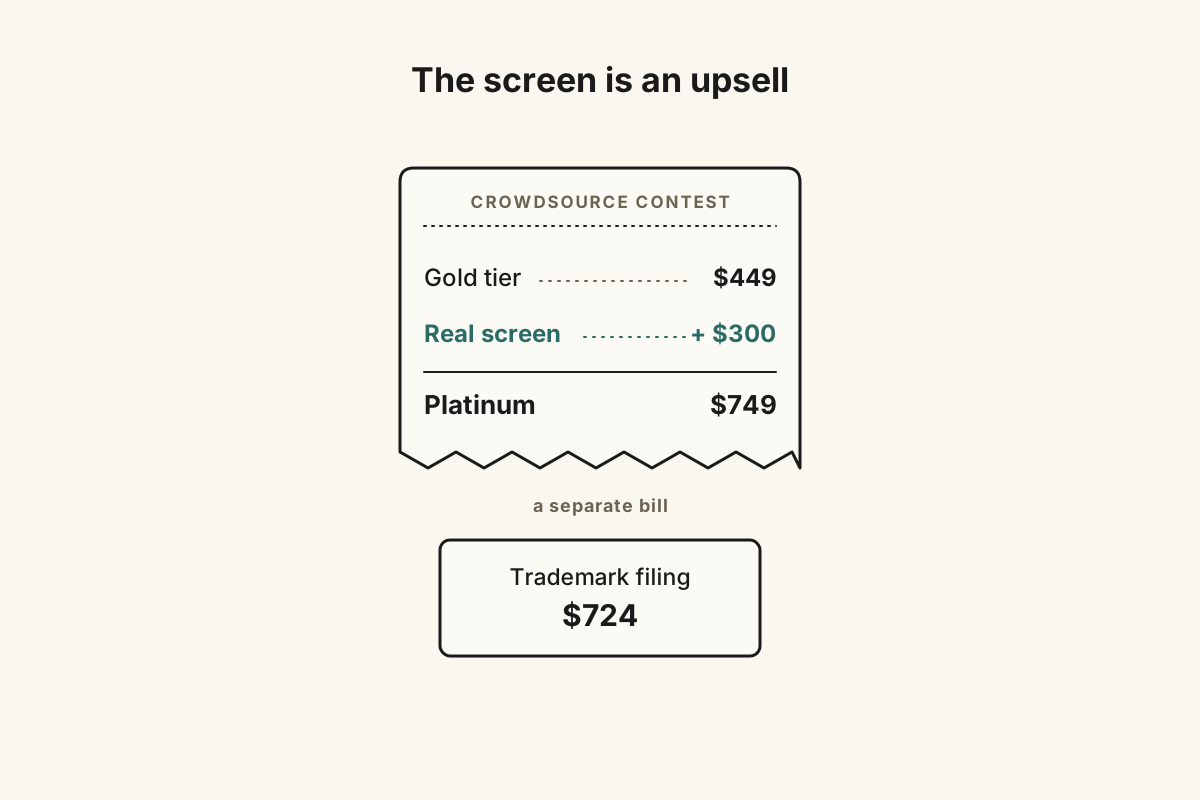
On a crowdsource contest the trademark screen is an upsell, and a real filing is a separate bill on top.
Rung five, free AI generators ($0)
At the floor of the market, the generators give the name away and make their money on what comes after. Namelix produces invented brand-style names with no account and no limit. Looka, Shopify, and Hostinger all run free generators, and NameSnack is free outright. Type in a few keywords and you have two hundred candidates in seconds.
These tools are free because the name isn't the product. Namelix makes its money selling you a logo through Brandmark, a one-time purchase at $35, $95, or $195. Looka gives away the name and charges $20 to $65 for a logo and around $96 a year for a brand kit. Shopify's generator funnels you toward a store subscription that currently runs about $29 to $399 a month, plus a domain. Hostinger's points you at hosting. The free name is the hook, and the logo, the subscription, and the hosting are where the money is.
None of them check the one thing that matters most, whether the name is legally yours to use. They confirm the domain is available, not that the name is clear. NameSnack states plainly on its own site that it doesn't check trademark databases. So the floor of the market gives you exactly what you pay for, fast volume and zero risk removal. Every judgment call, whether a name is defensible, whether it fits the category, whether it's actually yours, stays on you. On a weekend project, that's no problem. For a brand you intend to defend, free names are raw material, not a decision.
Registration and trademark are separate bills
One reason the numbers above look so chaotic is that the guides ranking for this question quietly fold two different costs into one. There's the cost to create a name, which is everything above. And there's the cost to register and protect that name, which is a separate bill no rung includes by default.
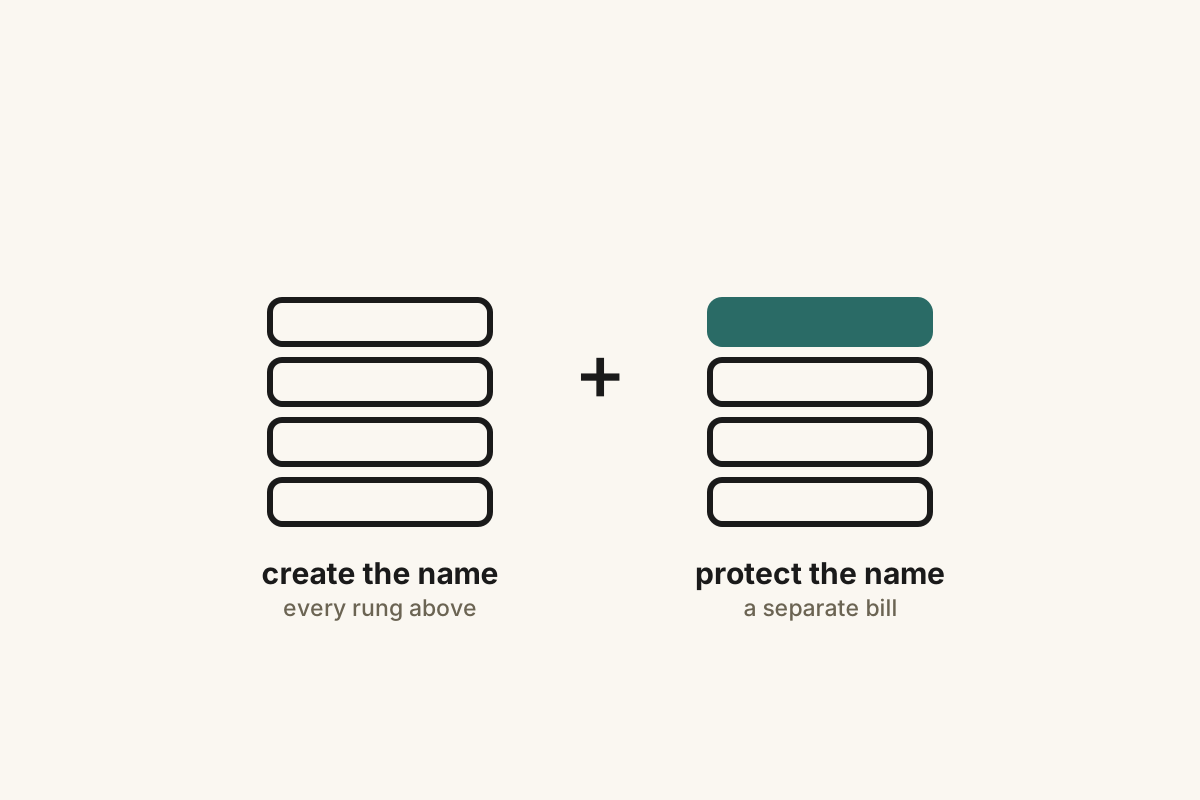
Two separate bills. What you pay to create the name, and what you pay to register and protect it. No rung above includes the second by default.
Trademarking a business name federally runs about $350 to $850 once you account for the filing and the legal help to do it properly. A more complex application, with an attorney running a full clearance opinion and per-class filing fees stacked on top, runs well higher than that. Registering a business name with your state costs somewhere between $50 and $800 in fees, depending on where you are. Those aren't naming charges, and a $6,000 package and a $60 contest both leave them out. So when you compare rungs, compare like for like, and add the protection cost to whichever naming option you pick, because it lands on every one of them.
The rung the ladder skips
Lay the whole ladder out and a gap opens in the middle that none of the rungs fill. A free generator hands you volume and no judgment. A $15,000 agency hands you judgment at a price a pre-scale founder can't justify. Between a name with no decision behind it, and a decision that costs as much as a quarter of payroll, there's a wide empty space. It's where most funded-but-not-flush DTC founders actually stand.
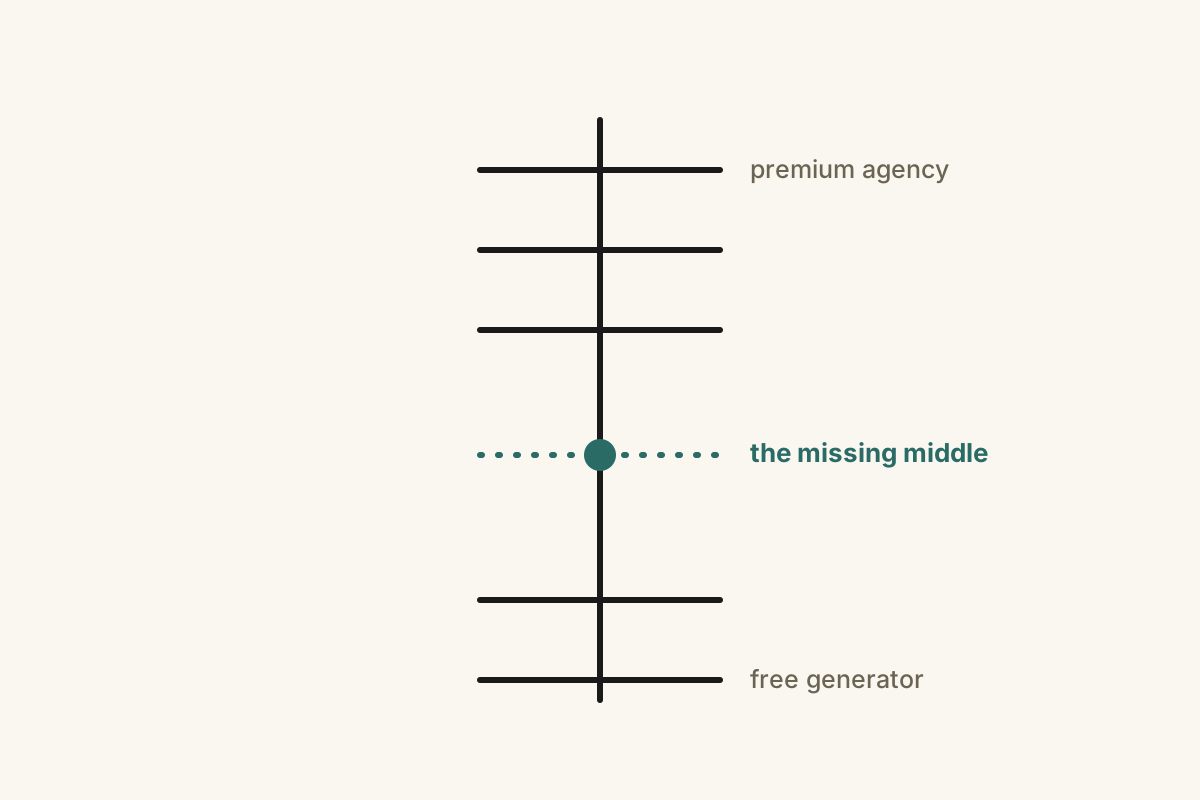
The ladder skips its middle rung. Between free volume and a five-figure agency sits the option most funded founders actually need.
What that founder needs is a service priced in the low four figures, with a human strategist reading the shortlist instead of a generator dumping it on the desk. That kind of service carries the linguistic screening the cheap rungs skip, plus the trademark and validation work the crowd tiers bill as an upsell, without the agency's six-to-ten-week clock or five-figure invoice. A few strategist-led services now sit on that rung, and BrandNames is one of them, with three tiers at $999, $1,299, and $1,499, each worked by hand and each including a call with a strategist. If the map above did its job, you can already see which rung that is, and what sits on either side of it.
Frequently asked questions
How much does it cost to name a brand? Anywhere from nothing to about $250,000. Free AI generators like Namelix cost $0, and premium firms like Lexicon run $40,000 to $250,000. Most funded founders land in between, from the low four figures for a strategist-run service to the mid five figures for a full agency engagement, depending on how much trademark and validation work is built in.
How much do naming agencies charge? Mid-market and boutique agencies generally run $15,000 to $75,000 over six to ten weeks, going by Tungsten's and Tanj's published tiers. Premium firms like Lexicon charge $40,000 to $250,000. Published-fee independents like Eat My Words start near $6,000 for a stripped-down package.
Are free AI name generators any good? It depends on what you're asking them to do. For generating a large volume of candidates fast, they work well. For deciding which of those candidates you should actually use, they give you almost nothing. Namelix, Looka, and Shopify produce hundreds of names for free, but they only check whether the domain is available, not whether the name is clear to trademark. NameSnack says outright that it doesn't check trademark databases, so the legal risk stays entirely with you.
How long does brand naming take? From instant to several months. AI generators return names in seconds, faster packaged services take two to three weeks, and full agency engagements typically run six to ten weeks, longer for the biggest Fortune 500 projects.
Is naming cost the same as trademark cost? No, and conflating them is the most common mistake on cost pages. Naming is what you pay to create the name. A federal trademark runs about $350 to $850 and a state business-name registration $50 to $800, both separate from any naming fee.
What is the cheapest way to get a professional name? Crowdsource contests start around $60 at NameStation and freelancer gigs around $30 on Fiverr. The headline price is real, but trademark vetting is an upsell or absent at that tier, so the true cost of a name you can actually keep is higher than the sticker.
BrandNames is a naming service for founders, built to sit between the free generators and the six-figure agencies, with a strategist on every project. See how the three tiers work.