
Name three brands of olive oil. Most people get one, maybe two, then stall. Now name three brands you saw advertised in the last week, in any category at all. That list comes faster and runs longer. The reason is that you're not pulling those names from memory, you're recognizing them from a cue you just saw. So the names people call memorable are the ones that surface on their own, with no cue. They usually do two things. They break their category's pattern, and they're built from words your mind already stores.
That experiment just separated the two jobs a name does in your memory, and they're not equally hard. One job is recognition. It happens when the name is already in front of you, in a category or a search result. The name only has to feel familiar enough to pick out. The other job is recall, producing the name from nothing when a friend asks what you use. Recall is the expensive one. It drives word of mouth and the typed-in search, and clearing it is what makes a name stick.
Whether a name clears that bar isn't luck. Two forces decide most of it, and you can measure both. A name that breaks its category's pattern is recalled better than one that blends in. And your mind retrieves real words it already stores far more reliably than invented ones it's never seen. Those two forces aren't rival advice pulling you in opposite directions. They're a budget.
Recall is not recognition
Memory isn't one thing, and naming advice almost always works on the easy half while calling it the hard one. The two halves are recognition and recall. Which is which matters, because the rest of the decision turns on the difference.
Recognition asks whether you've seen a name before. It's the job a name does in a category, in a search result, anywhere every option is already in front of you. The name only has to look familiar enough to single out. Recall asks for more. It asks you to produce the name with nothing in front of you, no list and no cue. Think of the friend asking for a recommendation, or the buyer who types a brand straight into the search bar instead of browsing. That's why recall is the harder job. Your mind has to build the name from nothing instead of just spotting it.
The difference matters because the two ways a name fails look nothing alike. A name that wins recognition but loses recall tests beautifully. Show people the name, ask whether they like it, and it does fine. Then it underperforms out in the real world, where nobody's holding it up at the moment a buyer wants to mention it. Most naming research measures recognition, because it's the half that's easy to test. The advice built on that research measures the same half. So the expensive failures, the recall failures, hide from the very tests meant to catch them. Everything below is about that harder half, the one that decides whether a name can travel on its own.
Distinctiveness buys recall
The first force is one of the oldest findings in memory science. In 1933 the psychologist Hedwig von Restorff showed something simple. When a set of items is mostly alike, the one that stands out is recalled far better than the rest. The effect still carries her name. Put one red word in a list of black ones and people remember the red word. The brain spends more attention on whatever breaks the pattern. And attention at the moment a memory forms is what makes that memory easy to reach for later.
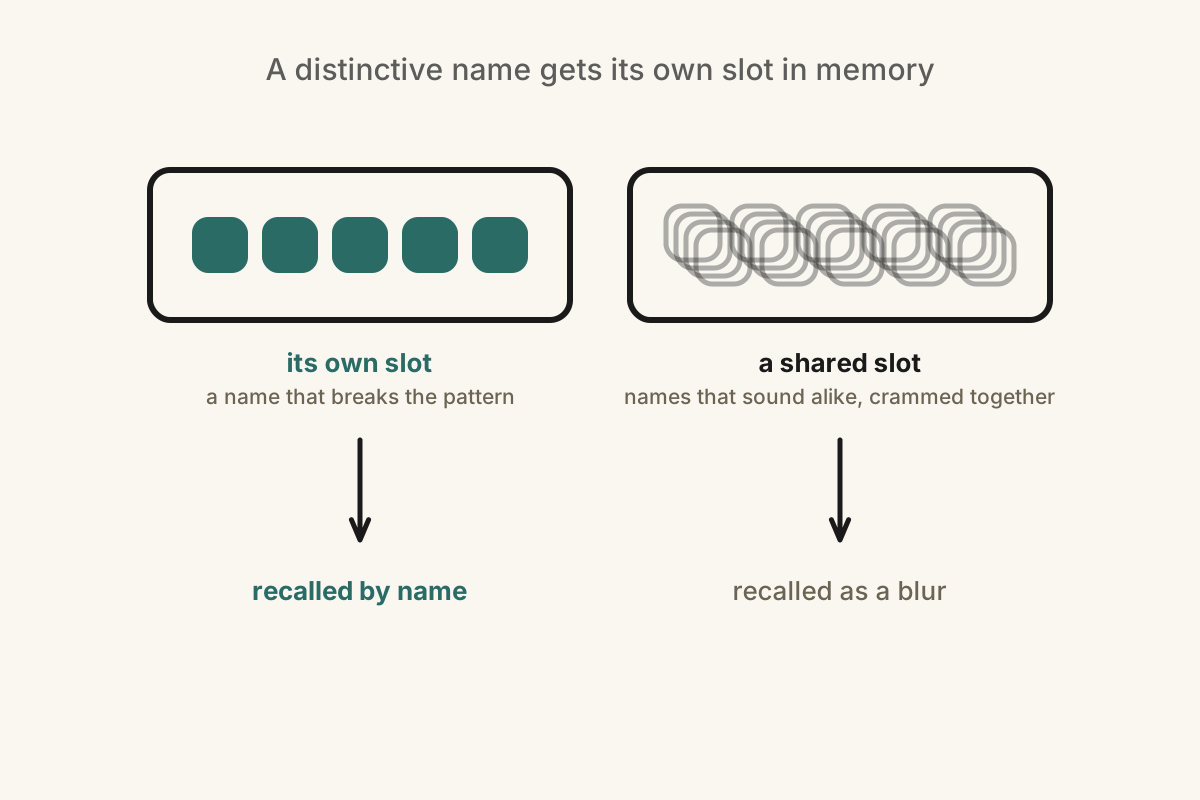
A name that breaks its category pattern gets its own slot in memory and is recalled by name. Names that sound alike share one slot and come back only as an approximation.
For a name, the consequence is direct. A name that sounds like the rest of its category is the black word in the list. Nothing about it is surprising, so it gets encoded with less attention. Less attention going in means worse recall coming out. None of that is a case for being odd on purpose. The distinctiveness that helps is narrow. It's being the one item your mind has a reason to file on its own, apart from its neighbors. In a category where every name reaches for the same sound, the odd one gets its own slot in memory. The rest share a slot, four competitors blurring into one. And that sameness is the norm, as our own analysis of five thousand DTC names found.
All of that is the recall side of distinctiveness, and it pays off separately from the preference side. A polarizing name can win on preference by breaking the pattern. But even setting preference aside, distinctiveness earns its keep at the level of plain retrieval. The name that breaks the pattern is easier to pull back out of memory. In a crowded category, that's the difference between being named and being approximated.
The cost of a word the mind has never seen
The second force pushes the other way, and it's the number the conversation about distinctive names usually skips. In a 2002 experiment, Lerman and Garbarino tested how well people recalled real-word camera brand names against invented ones. Real-word names were recalled correctly 68.8 percent of the time. The invented ones came back 38.1 percent of the time, less than half as reliably from unaided memory.
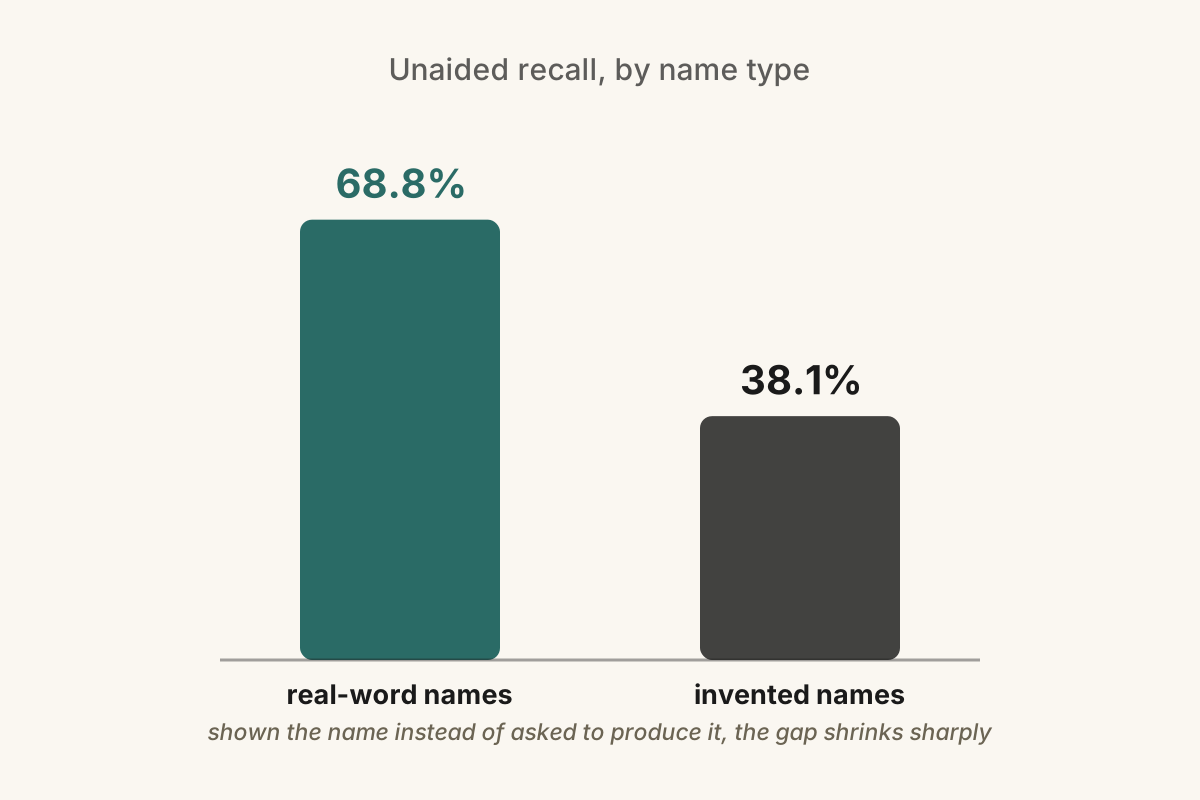
From unaided memory, real-word names were recalled 68.8% of the time and invented ones 38.1%. Shown the name instead of asked to produce it, the gap shrinks sharply.
The reason is the same mechanism behind distinctiveness, seen from the other side. Recall runs on what your mind already stores. A real word shows up with a memory trace already built. Years of hearing and reading it give your brain something to reach for when it grasps for the name. An invented word brings no such trace. The first time anyone meets it is the day they meet the brand. There's nothing already there to reach for, so the name has to build its own trace from scratch, through repetition.
Two details in that study keep the number from becoming a blanket case against invented names. The first is that the gap is specifically a recall gap. Test the same people on recognition. Show them the name, ask whether they have seen it, and the word advantage nearly closes. Recognition leans on the cue in front of you instead of on retrieval. So an invented name is hardest in the unaided moment, the word-of-mouth recommendation. In the category, where the buyer can see it, the penalty nearly disappears.
The second detail is that meaning isn't what drives recall. Arbitrary real words like Apple or Grey Goose were recalled about as well as descriptive names. A real word doesn't have to relate to what you sell to carry its memory advantage. It only has to be a word your mind already holds. The separate cost of a name that's hard to say, as opposed to hard to recall, is its own processing-fluency problem.
Anchoring makes a name more memorable
A name is rarely recalled on its own. It rides on everything attached to it. That's the color, the logo, the sound, the short form, the shape of the package. Researchers at the Ehrenberg-Bass Institute call these cues distinctive brand assets. Jenni Romaniuk's work shows how they build the retrieval network a name lives inside. Each cue is another route back to the name. The more of them a buyer has met, and met consistently, the more ways their memory can reach the brand when it counts.
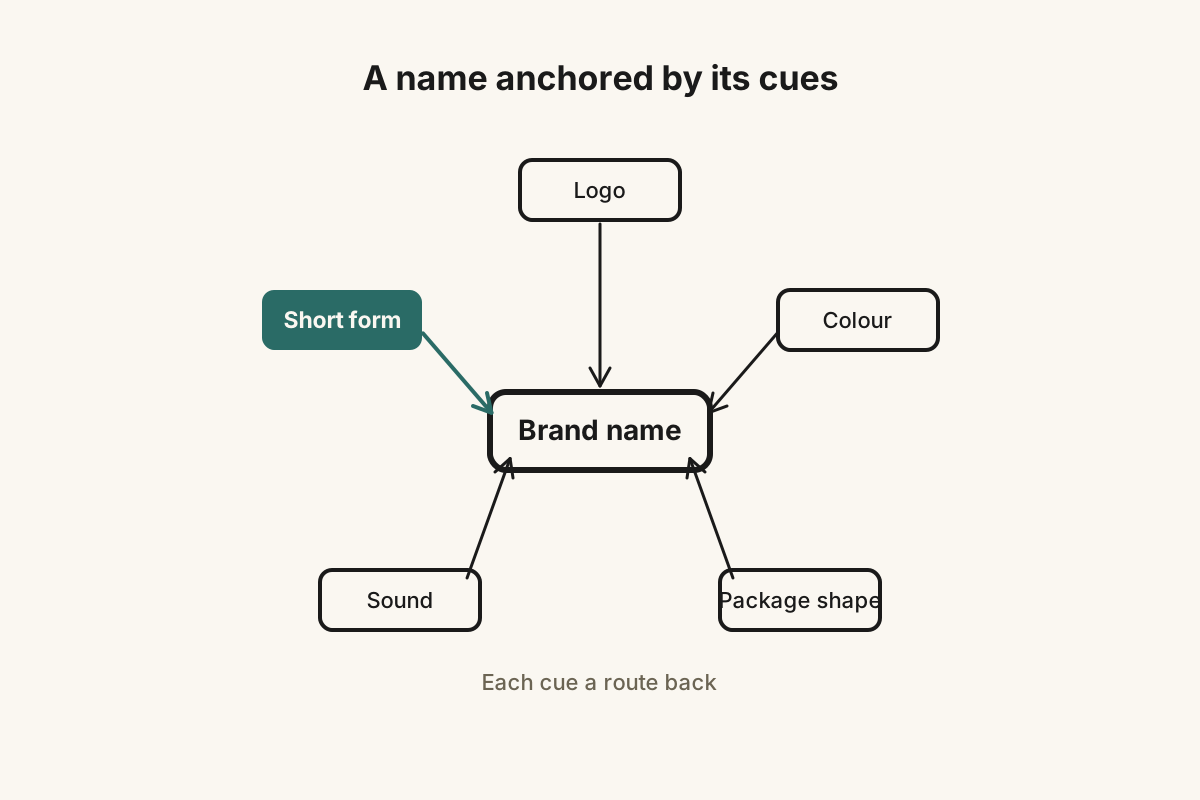
Every consistent cue anchored to a name is another route memory can take back to it.
Anchoring is how an invented name pays down the recall cost it starts with. A made-up word begins with no trace. But every consistent exposure lays down a little more of one, and every asset anchored to it adds another handle to grab. So a coined name with five years of steady color, sound, and a clean short form stops being a word the mind has never seen. It's become a word the mind has seen many times, in one steady shape. The short form does real work on its own. A long name almost always gets shortened in everyday speech. Federal Express became FedEx in conversation years before the company made the nickname official. Buyers are going to compress the name either way. The one that survives compression cleanly keeps everything it built, and the one that comes out mangled loses it.
The memory budget
A distinctive name is recalled better than a conventional one. An invented name is recalled worse than a real one. So the question isn't which rule to obey. It's how to spend a budget, because the rules pull against each other.
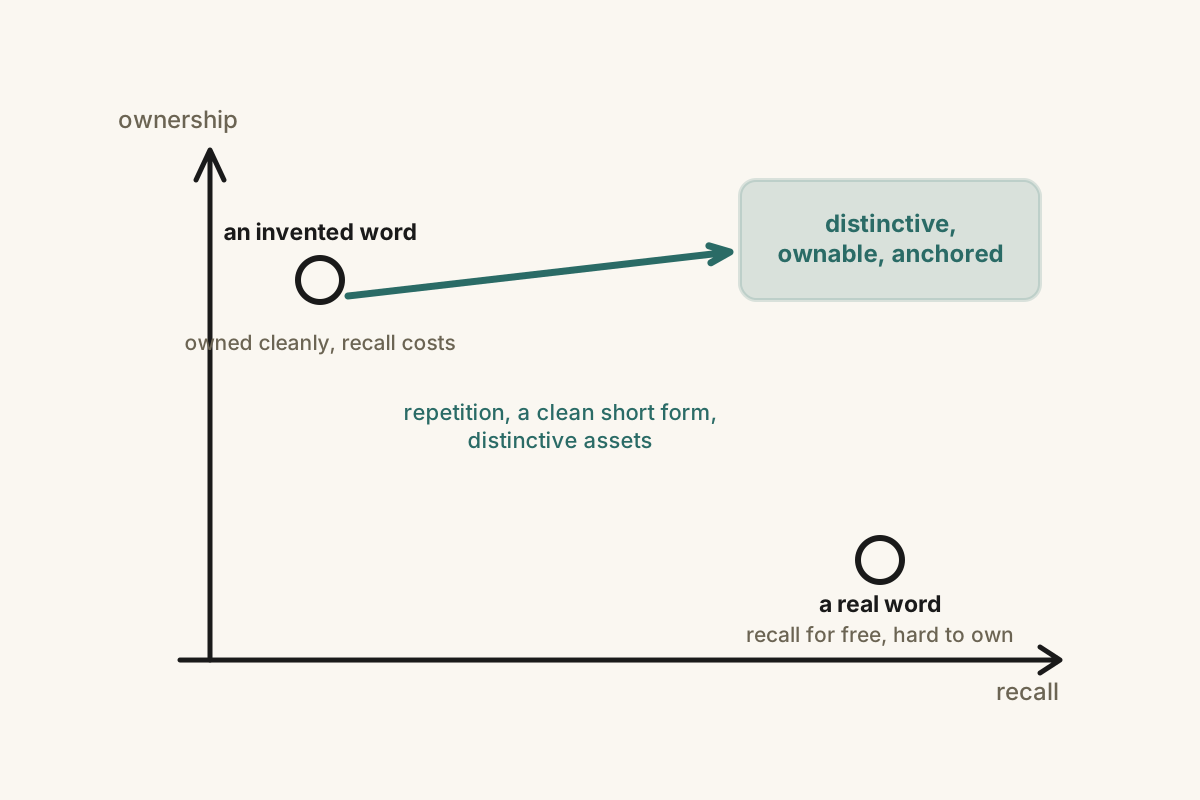
The two forces are a budget. A real word starts with recall and may not be ownable. An invented word is ownable but spends recall.
An invented name spends recall. It's harder to retrieve on day one. Building the memory trace a real word came with for free takes real time and repetition. What it buys instead is ownership. An invented word can be trademarked cleanly, defended without a fight, and owned outright in a crowded category where no common word can. So the trade is recall now for ownership later, and whether it's worth making comes down to the category. Sometimes there's no real word left to own. Every plain word that fits the product is already taken or too generic to defend, which is the normal state of tech and much of consumer software. There, an invented name is the only ownable option, and the recall cost is the price of admission. Vercel and Pentium aren't accidents. They're names built where no real word was left to own.
When a distinctive, ownable real word is still on the table, paying the coined-word recall cost is a choice that needs a reason. And if you do spend it, spend the rest of the budget paying it back down on purpose. Repeated, consistent exposure builds the trace, which is the long-documented effect of mere exposure on familiarity and liking. A deliberate short form keeps the name intact when buyers compress it. Distinctive assets, held steady from day one, give recall more routes home. It's the work that earns back what an invented name borrows.
What this means for your shortlist
Decide recall against ownership on purpose, instead of letting an available domain decide for you. Three checks make the trade visible before you commit.
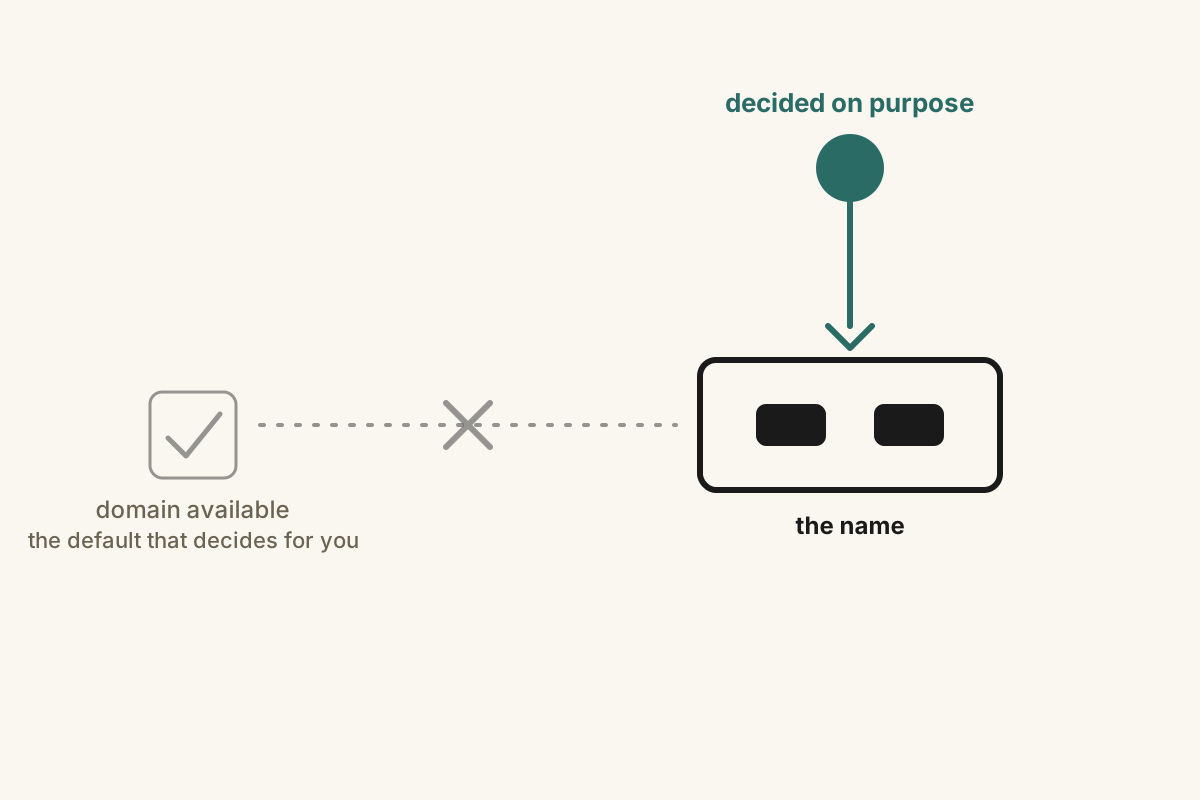
Decide the name on purpose rather than letting an available domain decide it for you.
Test for unaided recall. If a stranger shown the name once can't say it back a day later, you're paying an invented name's recall cost. Make sure ownership is the return.
Check whether the name breaks its category's sound or just echoes it. A name that echoes its category forfeits the recall that standing apart would have earned. It blends into the pattern before anyone notices.
Look for a clean short form and a distinctive asset to anchor. Those are how a name pays its recall cost back down once it's live. A name with neither has no way to earn back what it borrowed.
A name that's distinctive, ownable, and anchored spends its budget well. A conventional, unownable one with nothing anchored to it carries the same cost and earns nothing back.
Frequently asked questions
Why are some brand names more memorable than others? Two forces decide most of it, and you can measure both. A name that breaks its category's pattern is recalled better than one that blends in. That's the isolation effect, first shown by von Restorff in 1933. And your mind retrieves real words it already stores far more reliably than invented ones it's never seen. Distinctiveness and familiarity drive recall, not luck.
Are made-up brand names harder to remember than real words? For unaided recall, yes. In one study, real-word names were recalled about 69 percent of the time against 38 percent for invented ones. But the gap shrinks sharply for recognition, when the buyer can see the name. So a coined name is penalized most in the word-of-mouth moment and least at the point of sale, where the buyer can see it. What it buys in exchange is ownership. It can be trademarked cleanly.
What is the von Restorff effect in branding? It's the isolation effect, described by Hedwig von Restorff in 1933. The item that stands out in a uniform set is recalled best. Applied to names, a brand that sounds like its whole category gets encoded with less attention and recalled worse. One that breaks the pattern gets its own slot in memory. The lever is attention at the moment the memory forms. That's why a name that's usefully different isn't the same as one that's merely strange.
Does a brand name have to mean something to be remembered? No. Arbitrary real words used as brand names, like Apple or Grey Goose, are recalled about as well as names that describe the product. What helps recall is that the word already lives in the buyer's memory, not that it relates to what you sell. Meaning and retrieval are separate questions. That's why a meaningless but real word still outpaces an invented one for unaided recall.
BrandNames weighs recall against ownership on a founder's real shortlist, and reads each name against the category it has to be remembered in. The doors open soon. Drop your email to get one note when they do.