
Is a brand naming service worth it? Most people weigh it against the sticker price, a few hundred dollars for a contest, four figures for a service, five for an agency, as if a name were a one-time purchase you make and forget. It isn't. A name is a liability you carry for the life of the brand, and the real cost lands later, in what you spend to defend it, change it, or fight for it.
Price it as a purchase and the cheapest option always wins, because a generator costs nothing and a contest costs about as much as a tank of gas. Price it as a liability and the order flips, because the name you paid the least for is the one most likely to send you a bill later, at the trademark office, in your own category, or in court. Those bills run from five figures to seven. So the real question was never what a naming service charges. It's what a weak name costs you over the years you own it, and whether paying once to get it right beats paying later to fix it. The figures below are real and sourced, and they include the cases where the answer is no.
What the sticker actually buys
The upfront prices are easy to look up, and they're the wrong thing to judge by. A free generator hands you a list of a couple hundred available names in seconds. A fixed-scope service runs in the low four figures. A naming agency runs from the mid five figures into six, and the category-creation tier, the Lexicon end of the market, sits above $100,000 and takes months. That full range, plus the separate trademark and registration bills layered on top, is in the companion piece on what brand naming costs.
What actually matters is what each of those prices leaves on your desk. A generator gives you volume and no decisions. It won't tell you which of those names is defensible, which one fits the sound of your category, which one a competitor already owns in spirit, or which one still works when you launch a second product. Every one of those calls is yours to make, and every one of them is where the lifetime cost gets set. So the cheap name is really a name whose hard decisions nobody made, handed back for you to make on your own.
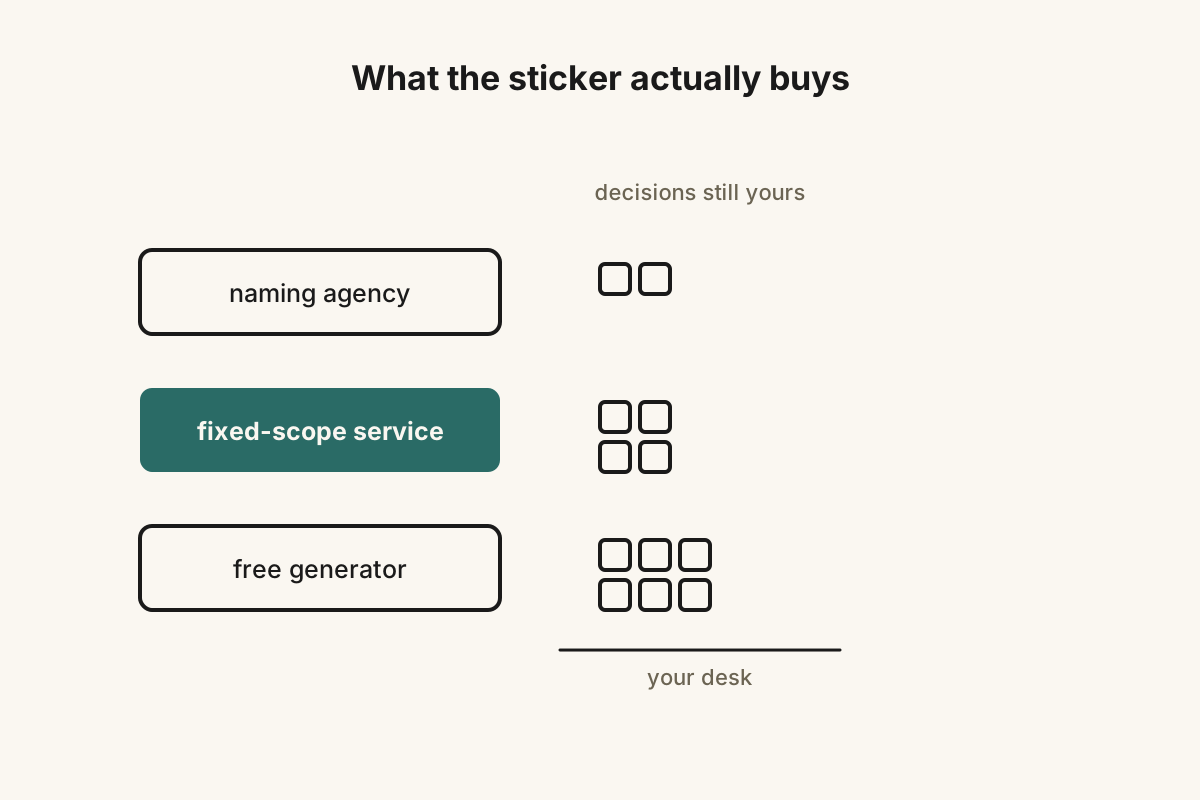
The three options and the decisions each one leaves on your desk, fewest beside the agency and a full grid beside the free generator.
The name you have to defend
A name built on a common word is cheap to pick, and then you pay to keep it. If the word already lives in everyday language, you're allowed to use it, but you can never fully own it, and that gap between using a word and owning it gets policed forever, at your expense.
Backcountry.com learned this in public. The retailer took its name from a plain dictionary word, then acted as though it owned that word outright. In 2019 it filed a wave of trademark actions against small outdoor brands that used backcountry in their names, reported by The Colorado Sun. The response was a national boycott under the hashtag boycottbackcountry, a public apology from the chief executive who admitted the company had made a mistake, and the firing of the law firm that had run the campaign. After all of that, Backcountry still doesn't own the word, because no one can.
That's the first bill, the one you pay to defend a name. A distinctive, coined, or suggestive name is defensible on its own, so you rarely have to police it and it stays cheap. A descriptive or common-word name isn't, so you end up policing it constantly. It reads clearly on day one, which is what makes it tempting, and then it bills you in legal spend and lost goodwill for as long as you try to hold a word the language already handed to everyone. The cheap name pushed the cost downstream instead of saving it, and downstream is where it only got bigger.
The name you have to change
The second bill is the rebrand, and it dwarfs every upfront price. Industry estimates put a small-to-mid-business rebrand at roughly $10,000 to $50,000, and a full enterprise rebrand at $250,000 to over a million. That spend spreads across eight to twelve months of new identity, packaging, signage, and the slow work of teaching customers a name they never asked to learn.
Even keeping the name and only changing how it looks is expensive. When Tropicana redesigned its packaging in 2009, sales fell about 20 percent in the weeks that followed, an estimated $30 million in lost sales. The brand went back to the old design within about two months, as the New York Times reported at the time. That was a package redesign, not a name change, but it measures the same thing a rename sets off, the cost of breaking the recognition a brand has already built. A new name breaks far more of that recognition than a new carton does.
Set the rebrand against the upfront prices. The most a fixed-scope naming engagement costs is a fraction of the least a rebrand costs. That's because getting the name right once, before any recognition exists to lose, is the cheapest moment this decision will ever have. Every month after launch, the cost of changing it climbs, since there's more equity to carry across and more customers to re-teach. A rebrand is the bill for a naming decision made too lightly the first time, and it comes due long after the day the name felt cheap.
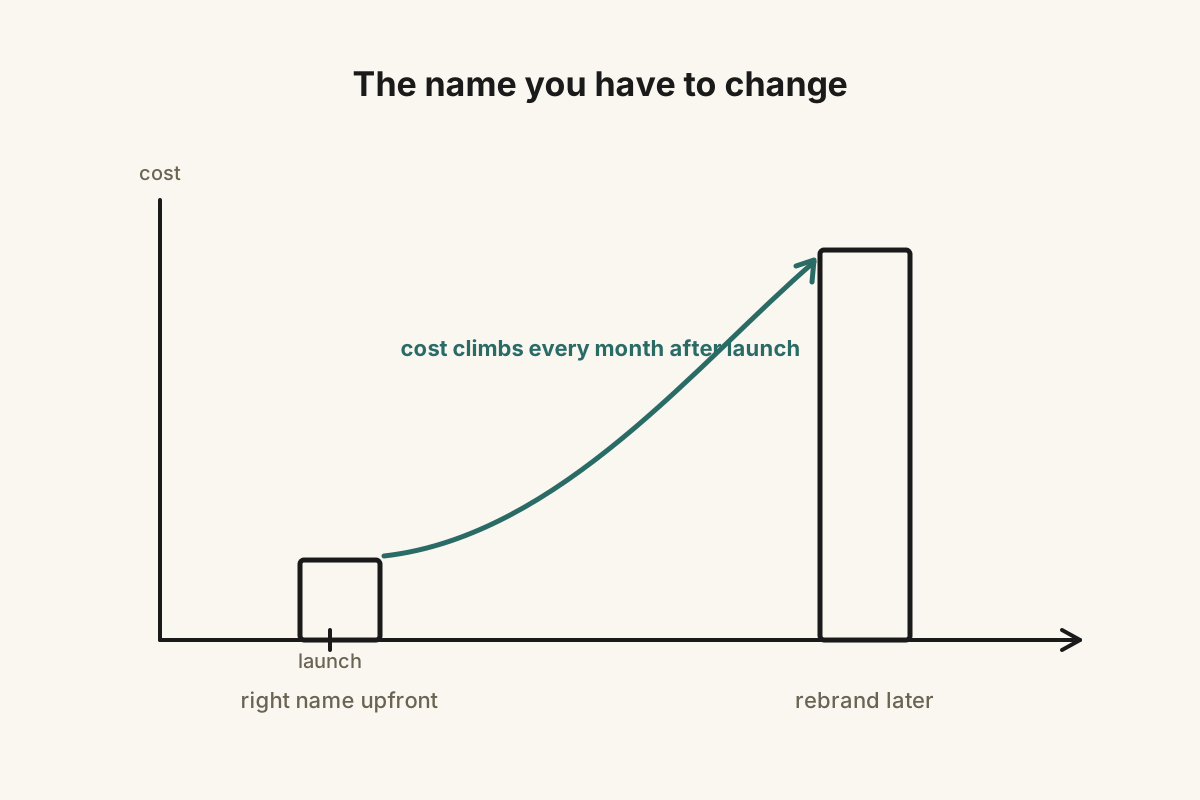
The cost of changing a name over time, small at launch and climbing every month as more recognition builds up to lose.
The name you have to fight for
The third bill comes from someone else's lawyer. A name can clear every check you know how to run and still collide with a mark you never found, and when that happens, the choice to rename gets taken out of your hands.
Microsoft is the clean example at scale. In 2013 a British court ruled that SkyDrive infringed the SKY trademark held by the broadcaster BSkyB, and rather than keep fighting, Microsoft renamed the product OneDrive across the world, as TechCrunch reported. A company with effectively unlimited legal resources decided the cheaper path was to walk away from a name it couldn't defend. The same thing happens to founders, who have far less cushion. Among the small brands Backcountry.com pursued, Backcountry Denim Co became BDCo and Backcountry eBikes became Bakcou eBikes, renames forced on businesses that couldn't afford the fight.
A full federal trademark dispute routinely runs into six figures, and into the millions for a complicated one, going by the AIPLA survey of litigation costs. Against that, the cheapest line in this whole decision is the search you run before you commit. A US trademark filing is $350 per class, and a real knockout search across your class and the ones next to it costs a small fraction of any rebrand or any fight. That search is exactly the work a generator skips and a serious naming process does. Skip that search and the discovery still comes, just later, once the name is already on the door.
Add up the three bills
The upfront cost is a number you can see. The lifetime cost is the sum of those three risks, and any one of them dwarfs it, since a forced rebrand alone starts around ten thousand dollars and a trademark fight starts in the six figures.
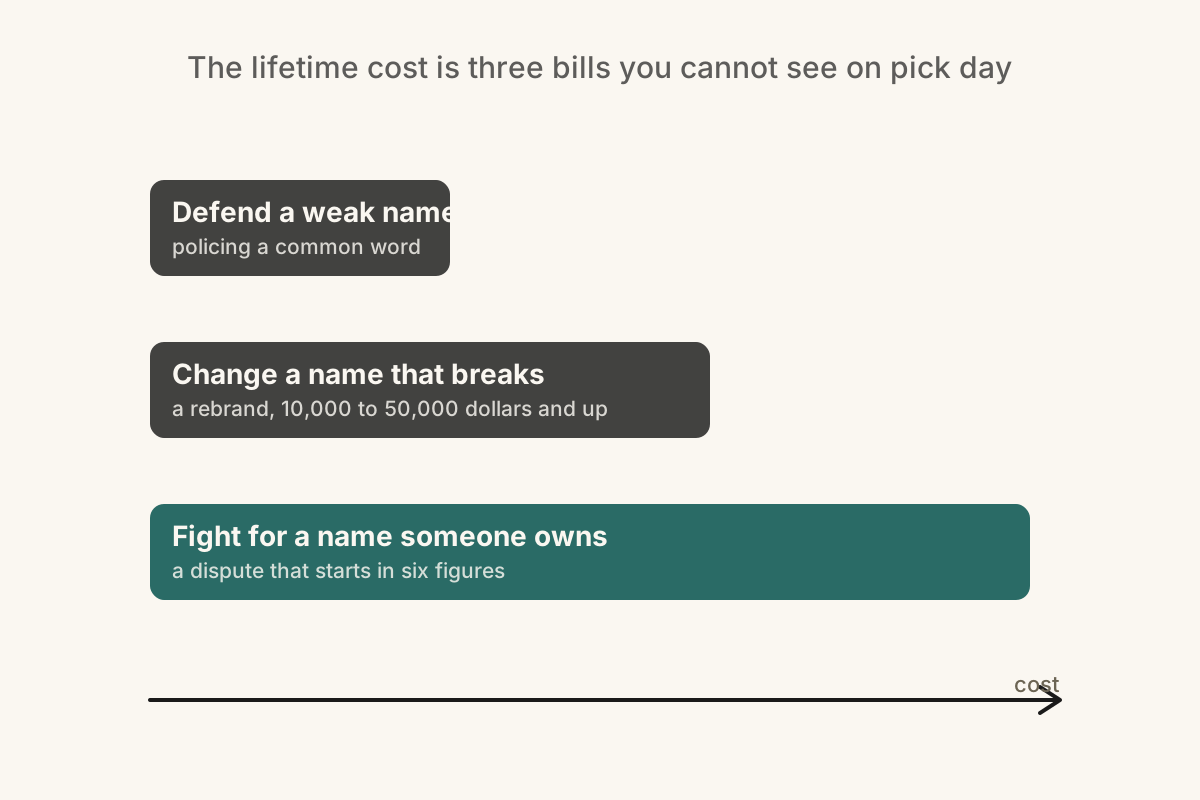
The three bills drawn as bars, longer as the risk grows, with the trademark fight the largest.
Plenty of cheap names never trigger a single one, the way plenty of uninsured drivers never crash. So the real decision is whether you want to carry three uncapped risks to save a few thousand dollars at the start. Buying those risks down once, before launch, is the conservative move, not the indulgent one. The sticker price was never the cost. It was just the part you could read on the day you paid it.
When a brand naming service isn't worth it
A buyer's-side answer has to include the cases where the answer is no, or it's just another sales page.
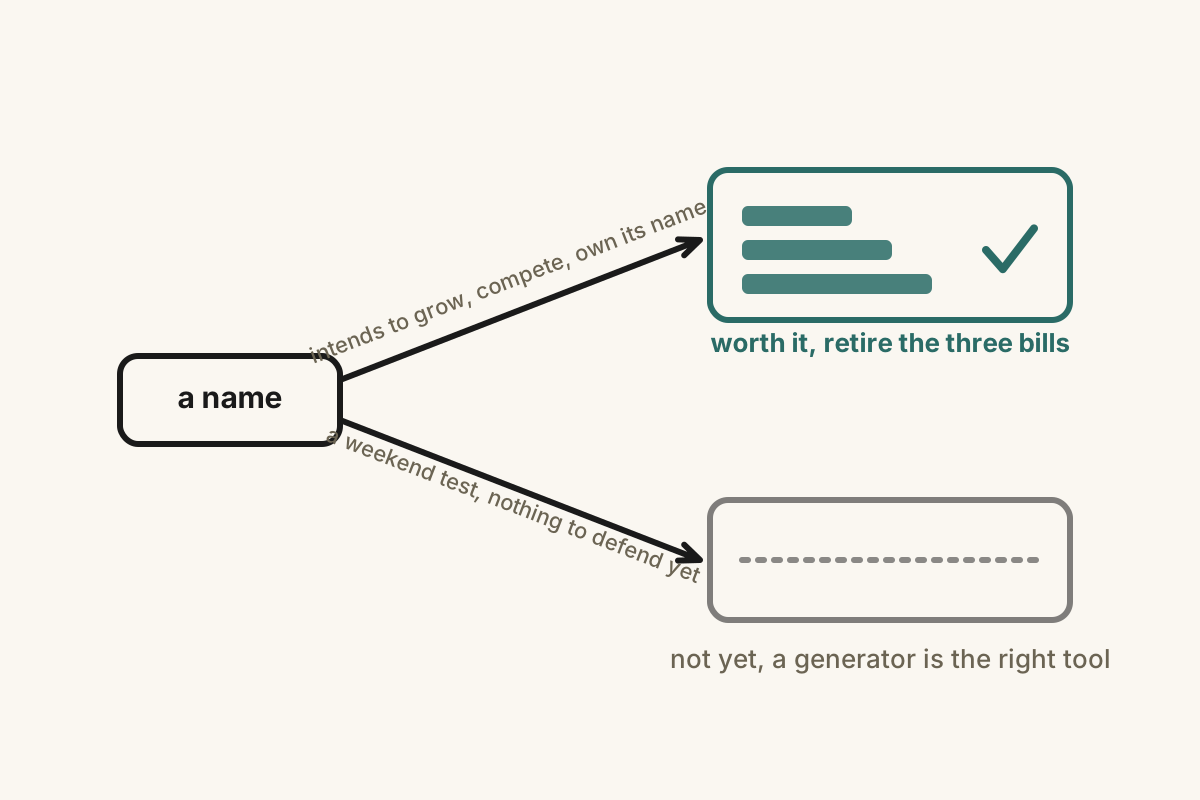
A fork from one name into two paths, one to a naming service for a brand built to grow, the other to a free generator for a weekend test with no name to defend.
If the project is a weekend experiment, a side venture you haven't committed to, or a business still proving anyone wants the product, a paid naming process is premature. Spend nothing. Use a generator, pick something serviceable, and put the money into finding out whether the thing sells at all. A name can't save a product no one wants, and an expensive name on a business that folds in six months is money lit on fire.
The same holds for a name you'll genuinely never need to defend or trademark, an internal tool, a project with no commercial ambition, a label that only ever lives in one place. There's no lifetime cost to carry, so there's nothing for a service to buy down. The three bills in this post only come due for a brand that intends to grow, compete in a category, and own its name. If that's not the brand you're building yet, the honest answer is to wait.
What you are actually buying
For the brand that does intend to grow, the real choice isn't which vendor to hire. It's whether you're buying volume or a decision.
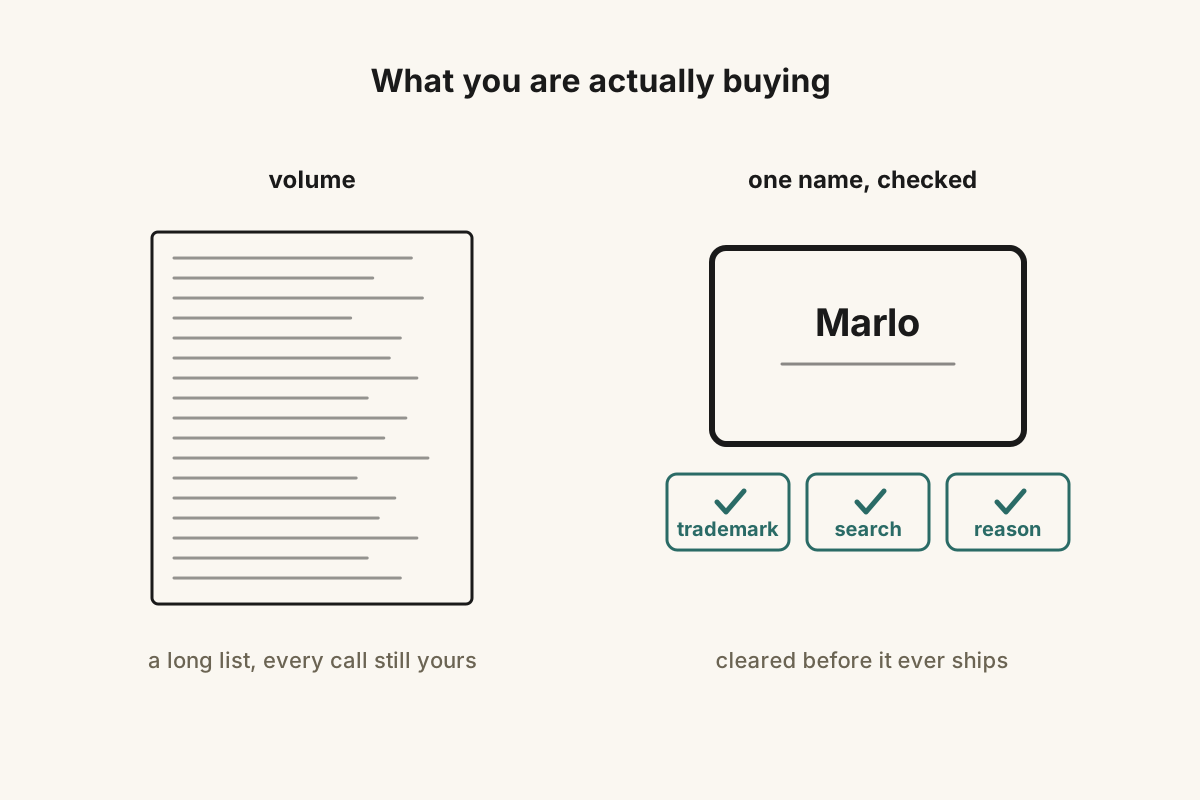
Volume hands back a long list with every call still yours. A service hands back one name, already run through the checks.
A generator sells volume, a long list of available strings, and leaves every judgment to you. A serious naming process does the reverse. It hands you a small set of names already read against your real category, run through a knockout search, and backed with a reason the top pick will hold up. You pay once, up front, to buy down the three downstream risks before any of them comes due, at the price of a logo instead of the price of a rebrand. BrandNames runs that as three fixed-scope tiers, Verdict, Vetted, and Verified, each one ending in a strategist's read rather than a pile of names. Which tier fits depends on your stage, and on whether a service even beats an agency or a strategist for you. Two companion pieces take those up, one on agency versus AI versus a strategist and one on when to hire one. This post argues only the economics. A name is priced at the start and paid for over its life, and the cheapest start is rarely the cheapest life.
Frequently asked questions
Is a brand naming service worth it? For a brand you intend to grow and defend, usually yes. A weak name keeps sending bills long after you pick it, and one forced rebrand or trademark fight costs many times what the naming did. For a weekend project or an unproven idea, no, because there's no lifetime cost to buy down.
Does a brand name really matter? It matters as a cost, not as decoration. A weak name quietly runs up charges for years, to hold a word you can't own, to rebrand when it stops fitting, or to settle a collision with someone else's mark. A strong one avoids all three and mostly goes unnoticed.
How much does it cost to make a brand name? Anywhere from nothing to six figures, depending on who does the work. A free generator costs nothing, a fixed-scope naming service runs in the low four figures, and a naming agency runs from the mid five figures into six. The full breakdown, plus the trademark and registration bills on top, is in the companion piece on what brand naming costs.
How much does it cost to rebrand a company? Industry estimates put a small-to-mid-business rebrand at roughly $10,000 to $50,000, and a full enterprise rebrand at $250,000 to over a million across eight to twelve months. That range is what makes the upfront price of getting the name right look small, because a rebrand effectively pays for the name twice.
Is rebranding worth the cost? Usually only when the business itself has materially changed, a real shift in what you sell or who you serve. A rebrand can't fix a weak product, and it can't undo a name you never needed to change. If the only reason to rebrand is that the first name was chosen carelessly, the cost is the price of skipping the work the first time.
What happens if your brand name is already trademarked? You may be forced to rename, the way Microsoft renamed SkyDrive to OneDrive after losing in court, or the small brands that renamed rather than fight Backcountry.com. A trademark search across your class and the adjacent ones, run before you commit, is the cheap insurance against it, a fraction of the cost of a forced change later.
Can you name your own brand? For a weekend project or an unproven idea, yes, and a free generator is the right tool. For a brand you intend to grow, the cost of doing it alone isn't the naming. It's the decisions a generator leaves unmade, the ones that set the lifetime bill this post is about.
BrandNames reads founders' real shortlists against their category, runs the trademark search, and backs the top pick with evidence, before the name is locked. The doors open soon. Drop your email to get one note when they do.