
You already have a name. You picked it fast, somewhere between the idea and the first order, and for a while it did the job. Now you've got traction, a category crowded with competitors who sound like you, and a low hum of doubt that the name is costing you something. Or the reverse is true. You've got no name yet, a launch date on the calendar, and a browser full of two hundred options from a free generator that you don't trust.
Either way, you go searching for brand naming services, and almost every result turns the decision into a money question. What should a name cost, how much to spend. Framing the decision as money is the mistake, and it's how founders overpay for help they don't need, or skip the help they can't afford to skip.
There are three real ways to get a brand name. A free AI generator, a mid-priced naming service, and a six-figure agency. The right one depends on the stage your brand is at. This guide names all three, puts a real number on each, and says plainly when the free option is all you need.
What you're actually choosing between
Take the price tags off and the three options line up on a single scale. The scale measures judgment, how much human thinking comes attached to the name, and how much risk someone takes off your plate before handing it over.
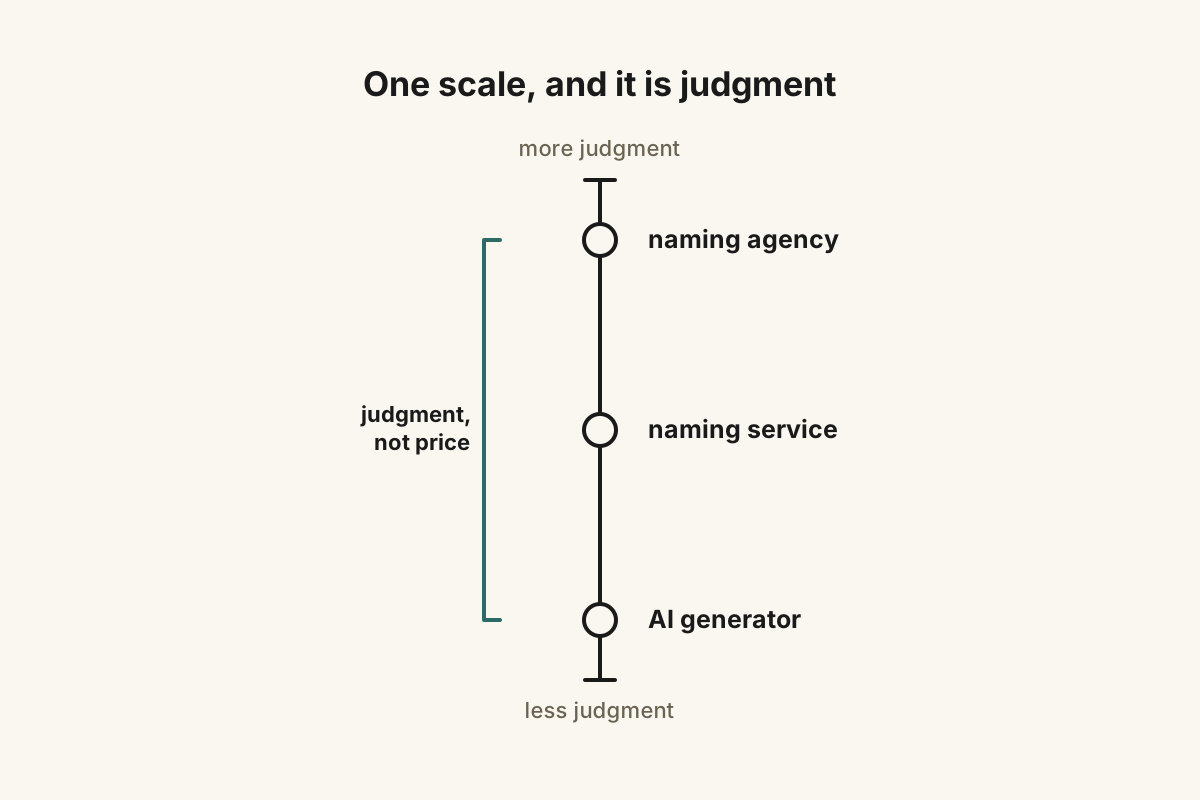
The three options sit on one scale, and the scale is judgment, not price.
At one end is a free AI generator, and it gives you volume and little else. Type in a few words and it returns a long list of invented, brand-style names in seconds, then leaves the decisions that matter sitting on your desk. It won't tell you whether a name is defensible, or whether it's even legally yours to use.
At the other end is a naming agency, and it takes all of that off your plate. The agency researches the category, screens the linguistics, runs a trademark prescreen through counsel, and puts its own name behind a recommendation. The name itself is the last and smallest thing it sells you, because what you're really buying is the judgment and the months of work behind it.
In between sits a third option, a naming service that gets far less coverage than the other two.
The free AI generator
Start at the bottom of the market, because for a lot of founders the cheap tools are the right answer.
Namelix is the one most people land on first. Give it a business idea and a few keywords, pick a style, and slide a dial for how literal or how random you want the results. It spins up short invented names built around what you typed. It's free, it's genuinely useful, and it markets itself on generating more original ideas than ChatGPT. Looka, Shopify, Namify, and Wordlab run the same play.
What these tools share is a hard limit on what they actually check. They confirm a domain is free. They don't confirm the name is yours to use. Shopify says on its own page that the names it produces are examples only, and that they may already be in use by other businesses. So it tells you to do your own due diligence or talk to a lawyer. NameSnack is blunter. It says outright that it runs a domain search but doesn't check trademark databases. If you mean to trademark the name, that part is on you or a lawyer. So none of them claims a strategist read your shortlist, and none weighs how a name sounds against the rest of your category, because they're not built to.
A generator hands you raw volume in seconds and hands every judgment right back. What it can't tell you is whether a name will clear a trademark search, or hold up in a category full of competitors who sound like you. That judgment stays on your desk.
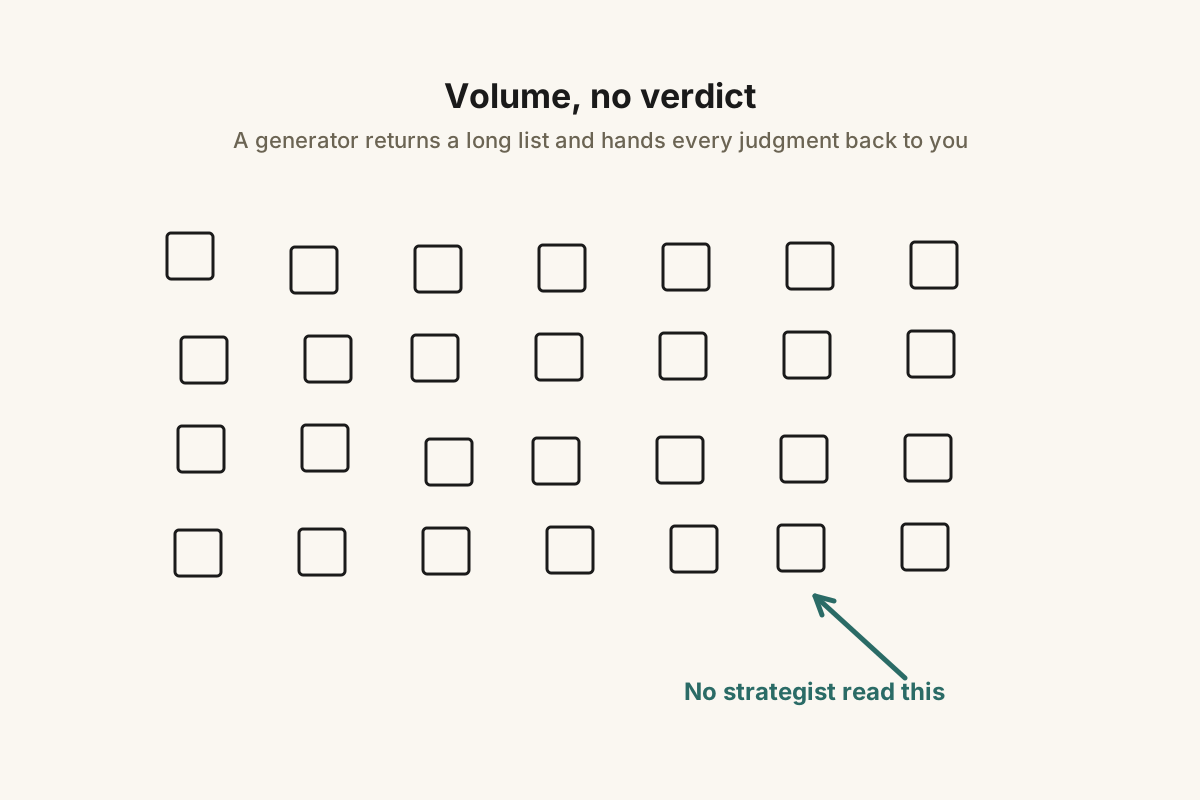
A generator hands back raw volume and leaves every judgment about it to you.
For a pre-revenue founder still circling the idea, that trade is fine, and often smart. The cost of a name you change later is low, and the money's better spent elsewhere. A generator is a fast way to react to a hundred options and learn what you're drawn to. This is the one stage where the cheapest option is also the right one, and an honest guide should say so plainly. The only danger is mistaking the list for a decision.
The naming agency
At the top of the market, a brand naming agency flips the model entirely. You're no longer buying a list. You're buying a firm's judgment, and the whole apparatus behind it.
Lexicon is the firm named most often here, the shop behind Febreze, Sonos, Swiffer, and the Impossible Burger. Its own process page describes a multi-stage engagement run by a worldwide network of linguists. The work folds in structural linguistics, trademark evaluation through attorneys, and consumer research. The page says plainly that a typical engagement takes eight to ten weeks. According to The Hustle, the firm spent more than $2 million and five years on its own sound-symbolism research.
That apparatus has a price. A single Lexicon naming project runs roughly $40,000 to $250,000. Step down to the working mid-market and a serious agency name still lands around $15,000 to $75,000 over six to ten weeks. That's going by the published tiers at firms like Tungsten and Tanj. Even at the transparent end, Eat My Words posts a menu that starts near $6,000 for a stripped-down package and climbs to $49,000 for full-service work.
What the money buys is everything the generator skips. The agency runs the category research and screens the names for how they sound and what they suggest. Then it prescreens for trademark conflicts, before it ever shows you a candidate. Igor, another well-known shop, lays out the same sequence. It starts with positioning and competitive analysis. Then comes name development, and a worldwide trademark prescreen clears the field before a single name reaches you.
For the right brand, that price earns out. The fit is a company creating a category, or running a rebrand where the name has to carry years of weight and a board will pick apart every option. The misfit is the early DTC founder. When you're still proving the business, eight to ten weeks is a long hold on a launch, and a $40,000 line item assumes a marketing budget you don't have yet.
Brand naming services, the middle option
Between a free list with no judgment and a $40,000 engagement with months of it sits a wide gap, and it's where a lot of funded DTC founders land. Search for brand naming services and the results mostly skip right over that middle option. The agency tier pitches budgets they can't justify, and the free generators hand over a list and walk off.

The middle option fills the gap between a free list and a six-figure engagement.
A naming-decision service fills that gap by splitting the difference. AI generates wide, the way a generator does, so no one is paying a person by the hour to brainstorm. Then a human strategist reads every name that comes back. They cut against the brief and against the names already in your category, and they weigh how each one actually sounds. What survives is a short list a person will stand behind. Then evidence goes to work on the finalists, a trademark screen and, at the top tier, a panel of real buyers. You walk away with a verdict and the reasoning under it.
Each of those steps does concrete work. The strategist's read drops any name that blends into the category, echoes a competitor, or leans on a word a buyer would have to look up. The knockout search is a first-pass clearance check. It looks for identical and confusingly similar marks in your trademark class and the classes next to it, plus the matching domain and the social handles. The buyer panel is thirty to fifty people screened to your category, reacting to the finalists cold. You learn which name reads the way you intended before a launch rides on it.
Picture a shortlist of eight. The strategist cuts three that echo names already on the market and one a buyer would stumble over. The knockout search flags one of the four survivors as a near-match to an existing mark in the same class, so it comes off the table. The panel reads the last three cold, and one of them lands cleaner than the name the founder walked in liking. By the end, the founder carries forward a name that got past a strategist, a clearance check, and a room full of buyers.
A cheap version of this already exists, the email-only outfits that'll sell you a short list for under $250 with no trademark work and no buyer input. That clears the floor and not much more. The harder slot to fill pairs the human judgment with real evidence, and that's the lane BrandNames works. It runs in three one-time tiers, each one handled by a person and each including a strategist call.
Verdict, at $999, hands back a hand-narrowed short list inside seven business days. Along with it come a plain-English note on what got cut and why, the top pick with its reasoning and its risks, and a positioning summary. Vetted, at $1,299, adds a founder-grade knockout search. The search sweeps trademark, adjacent classes, domains, and social handles. It reports a preliminary risk read on the finalists and points you at the names worth a lawyer's time. That read isn't a legal opinion, and an attorney is still required for one. Verified, at $1,499, puts the finalists in front of a panel of thirty to fifty buyers screened to your category. It adds a visual placement check and a language and culture screen, then delivers the full strategy deck.
A naming service leaves out most of an agency's machinery. There's no eight-week discovery phase and no five-figure invoice. What it keeps is the part that matters when you've got a call to defend. A person read the names and the evidence and stands behind the pick, at the price of a logo instead of a rebrand.
The three side by side
Find the column that matches your stage, then read down it. Where you are decides the fit.
| AI generator | Naming service | Naming agency | |
|---|---|---|---|
| Typical price | Free | $999 to $1,499 | $15,000 to $250,000 |
| Time to a decision | Seconds | Days | 6 to 10 weeks |
| Who makes the call | You, alone | A strategist, with you | The firm |
| Trademark work | None, domain only | Knockout search, attorney still required | Full prescreen through counsel |
| What you walk away with | A long list | A verdict and the reasoning | A researched recommendation |
| Best fit | Pre-revenue, exploring | Funded, defending a crowded category | Category creation, enterprise budget |
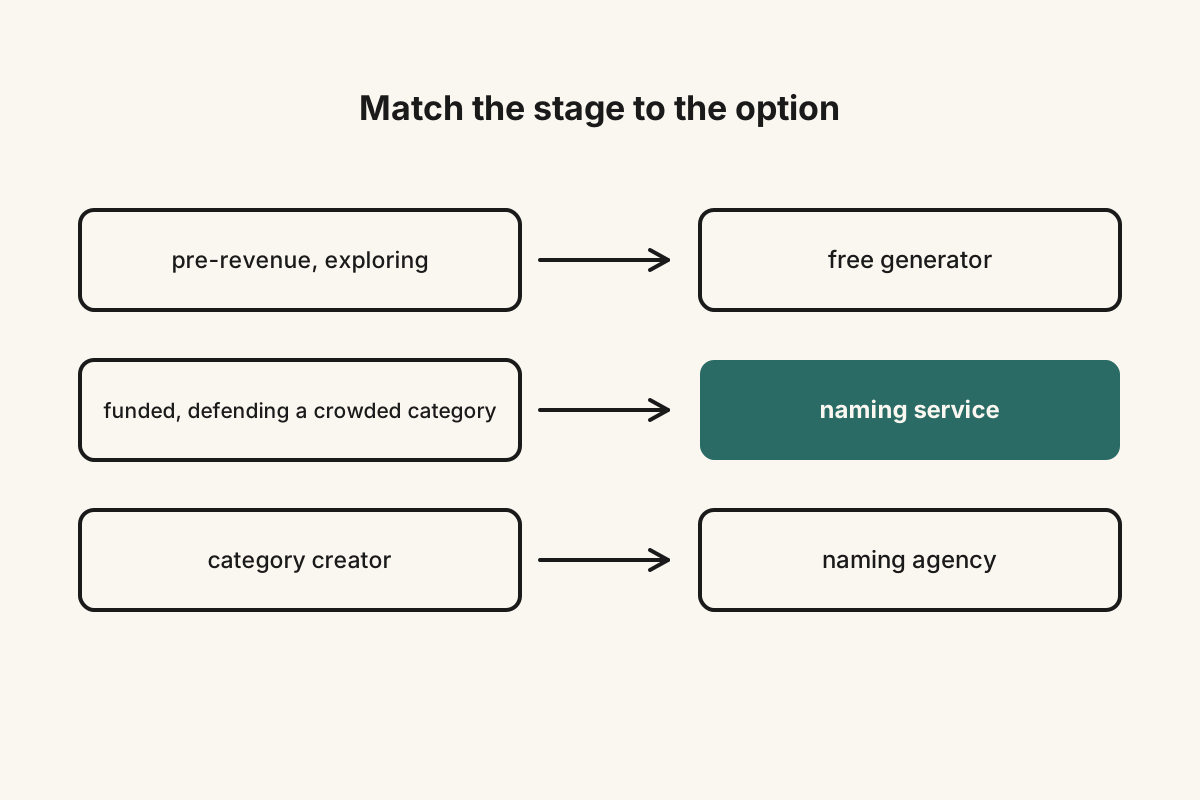
Each stage points to a different option.
The middle column is built for the founder who's outgrown the free list but can't justify the firm. Past the scramble of launch, you're stuck with a name that's hard to defend, hard to trademark, or lost among competitors who sound the same. That's who the middle was built for. You need the choice de-risked, a person cutting the list against your real category, and evidence behind the name you carry forward. That's a naming-decision service, and for a funded DTC founder it's usually the fit.
The cost that lands on all three
One cost sits outside all three and lands on every one of them. Protecting the name is a separate bill. A federal trademark runs about $350 to $850, and a state registration $50 to $800, on top of whatever you paid to find the name. A fuller map of every price, from free to six figures, lives in the companion piece on what brand naming costs.
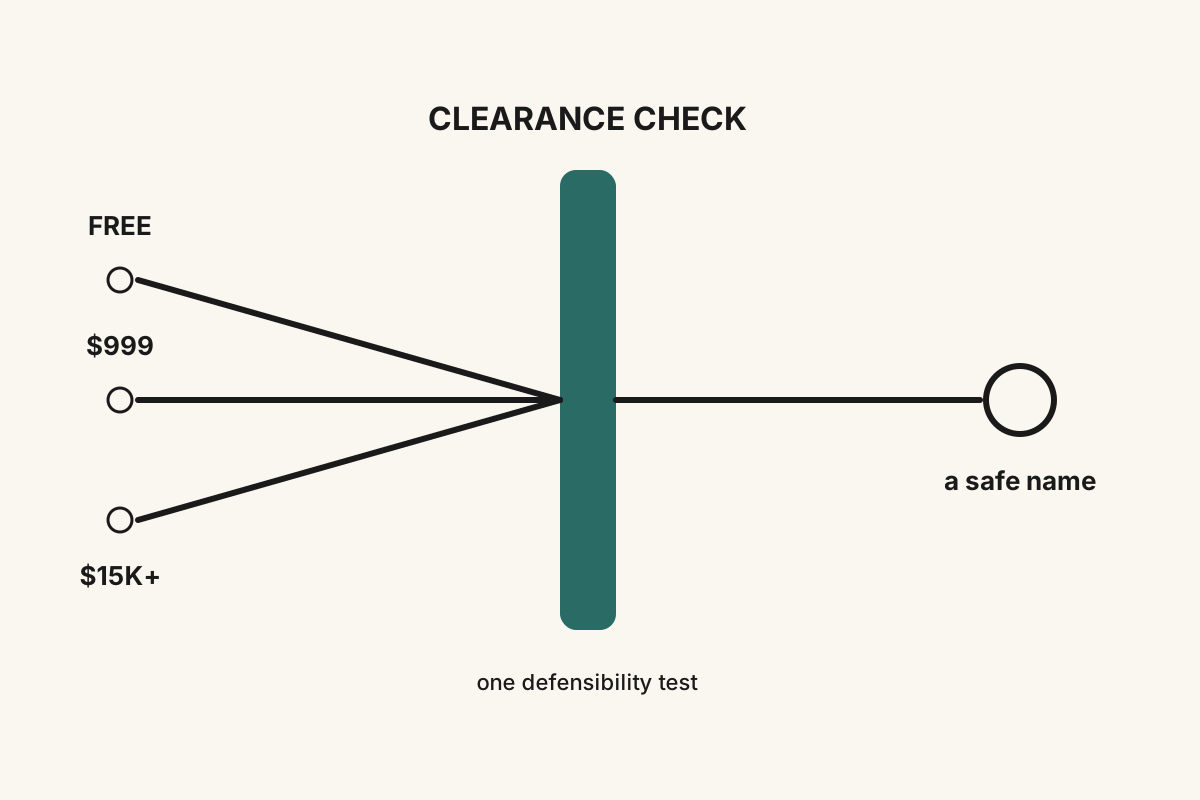
Three price lanes converge on one defensibility test before any name is safe to keep.
Frequently asked questions
Are AI brand name generators good enough? For generating volume to react to, yes, and they cost nothing. For a decision you can stake a relaunch on, no. A generator checks whether a domain is free. It does not check trademark databases, and NameSnack says as much on its own page. The practical move is to use one for the wide first pass, then take your strongest three or four into a proper knockout search before you commit.
What is a brand naming service, and how is it different from an agency? A brand naming service is a productized engagement. AI generates wide, a strategist cuts the list by hand and stands behind what survives, then a trademark screen and a buyer panel de-risk the pick. It turns around in days, where an agency runs a multi-week program, and it costs four figures against the five or six an agency charges. What it borrows from the agency is the one thing that matters when a stakeholder pushes back, a person who read the names and the evidence and will defend the call.
Is the cost of naming the same as the cost of trademarking? No, and treating them as one number is a common mistake. Naming is what you pay to find the name. Protecting it is a separate bill. A federal trademark runs $350 to $850, and a state business-name registration $50 to $800. A generator checks neither, so that cost lands on you no matter which option you pick.
BrandNames is a naming-decision service for founders, built for the gap between a free generator and a six-figure agency, with a strategist on every project. See how the three tiers work.