
Of 5,018 real direct-to-consumer brand names, only 27 percent are invented words, and 64 percent are built from words that already existed.
That number cuts against the loudest piece of naming advice there is, which is to coin something new, a blank slate nobody owns yet, the next Kodak or Verizon. Every guide to naming sorts names into seven neat types, hands you the same brand name examples every time, Apple, Google, Kodak, and tells you to pick one. Not one of them says how often each type actually shows up on the brands that got built. So BrandNames read those 5,018 names, spread across nine consumer categories and ninety-one subcategories, and measured each one down to its sounds and its structure. Coining a word turns out to be the minority move, and it's the first of several places where what founders actually built parts ways with what the guides recommend.
This isn't a controlled experiment. There's no pile of failed names to compare against, so nothing here proves that one pattern wins and another loses. It's a record of what founders reached for, thousands of times over, once the naming was done and a brand had to live in a crowded category.
The corpus is the real direct-to-consumer brands in the BrandNames reference set, spanning food and drink, beauty, apparel, home and garden, accessories, health and fitness, tech, kids, and pets. Length and word count come straight off each name. Name type is a reading of what a name is doing, an invented word set against a borrowed one. The sound figures map each name's sounds onto the published sound-symbolism research. Those figures are a reading, not a hard count, and each one is flagged as such where it appears.
Most names are borrowed, not invented
Start with the split that surprises founders most. Just over a quarter of the 5,018 names are coined, words that did not exist until a brand made them. Olipop, Oatly, Poppi, Beis, Solgaard. Nearly two thirds are ordinary words the language already had, and the small remainder, under one name in ten, are founder or family names.
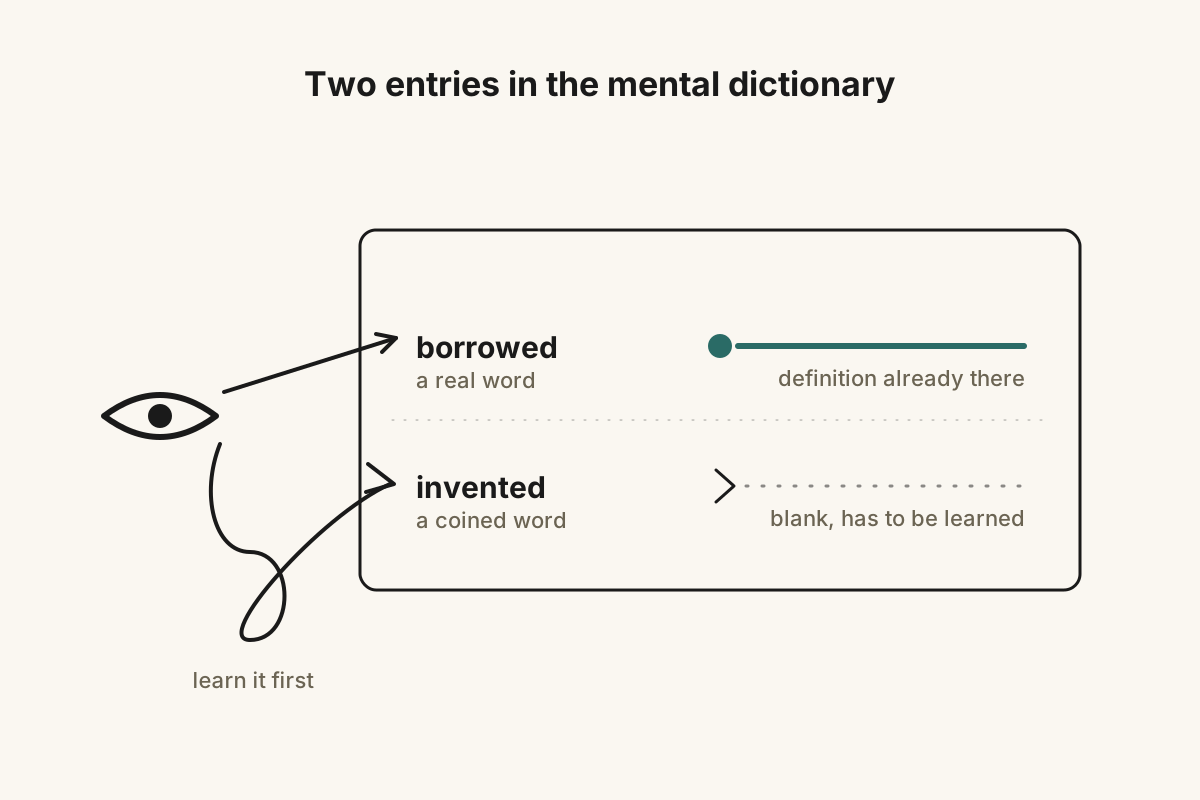
A borrowed word arrives with its entry already written. An invented word points at a blank line a buyer has to fill in first.
Sorted by type, the corpus splits five ways, each one with real brand name examples of its own.
| Name type | Share | Examples |
|---|---|---|
| Invented or coined word | 27% | Olipop, Beis, Monos |
| Real word, used descriptively | 23% | Greats, NoBull, BaubleBar |
| Real word, used for a feeling | 24% | Away, Knack, Rains |
| Real word, used as a symbol | 17% | Allbirds, Osprey, Matador |
| Founder or person | 9% | Warby Parker, Herschel |
Coining a word can work, but it's the rarer path, because it runs into two facts at once.
The first is memory. When Lerman and Garbarino compared real-word brand names against invented nonwords in Psychology and Marketing in 2002, the real words were recalled more reliably. A made-up word has to teach the brain a new sound before it can mean anything, while a borrowed word arrives already known. That head start is one most new brands would rather not give up.
The second fact is supply. The obvious real words are already gone. Beebe and Fromer studied 6.7 million United States trademark filings for the Harvard Law Review in 2018 and found that 81 percent of the thousand most common words in American English are already registered as single-word marks. You can't name a coffee brand Coffee or a sleep brand Sleep, because someone already owns the easy ones.
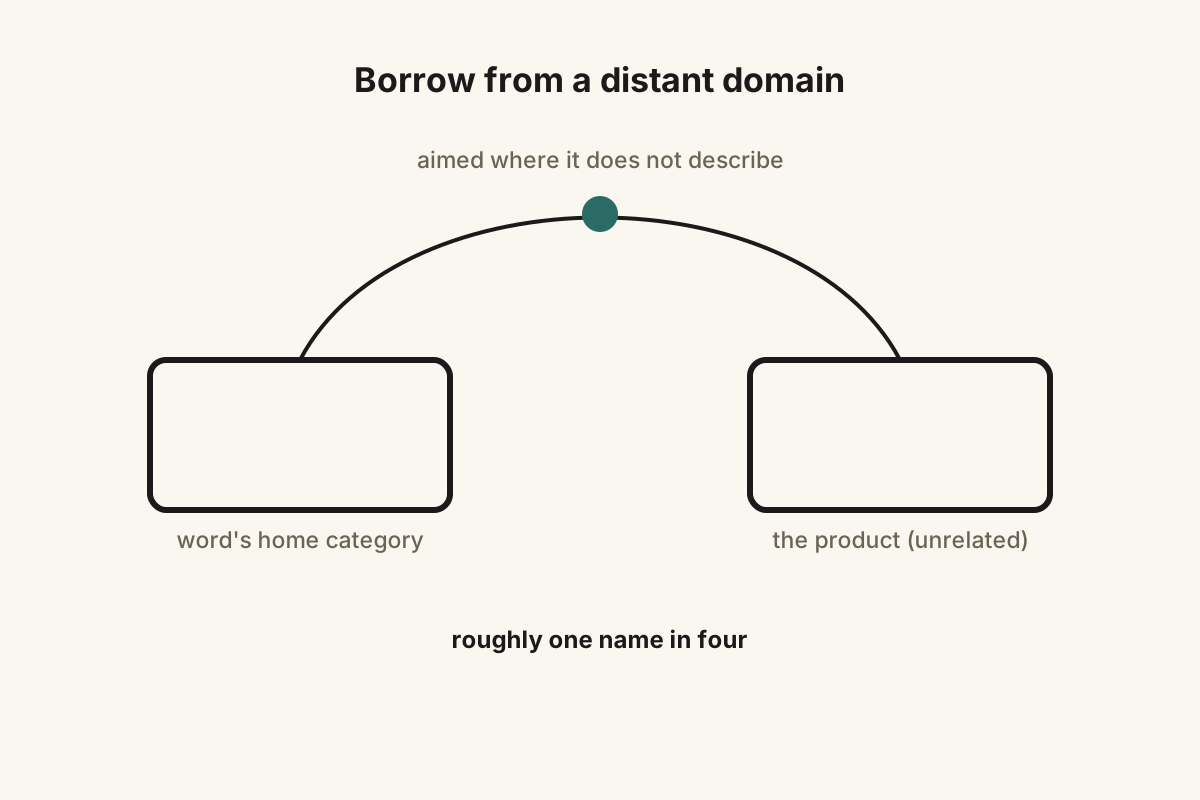
Borrow a real word from a category that has nothing to do with the product.
So the names that get built thread between the two. Not an invented word, and not the obvious one. They borrow a real word from a domain that has nothing to do with the product. Allbirds sells shoes. Osprey and Antler sell luggage. Matador sells gear. Each one took a word the buyer already owned and aimed it somewhere unexpected. That distance does a second job. A word pulled from far enough away, Osprey for a backpack, sits clear of the things it literally describes, which is part of what lets a brand register it and own it outright. Read the corpus by that mechanic instead of by the five types in the table, and one move rises above the rest. Borrowing an existing real word for a product it does not describe is the most common thing these names do, tagged on roughly one name in four, a recount that cuts across all five types rather than any single row above. The craft is in choosing which existing word to aim at the product.
The typical name is eight letters, and half are one word
For all the energy that goes into naming, the result is usually small. The median name in the corpus runs eight letters. The single most common length is five, and half of all the names sit inside a tight four-to-eight-letter band. Just over half, 53 percent, are a single word, and only about one in ten stretches to three words or more.
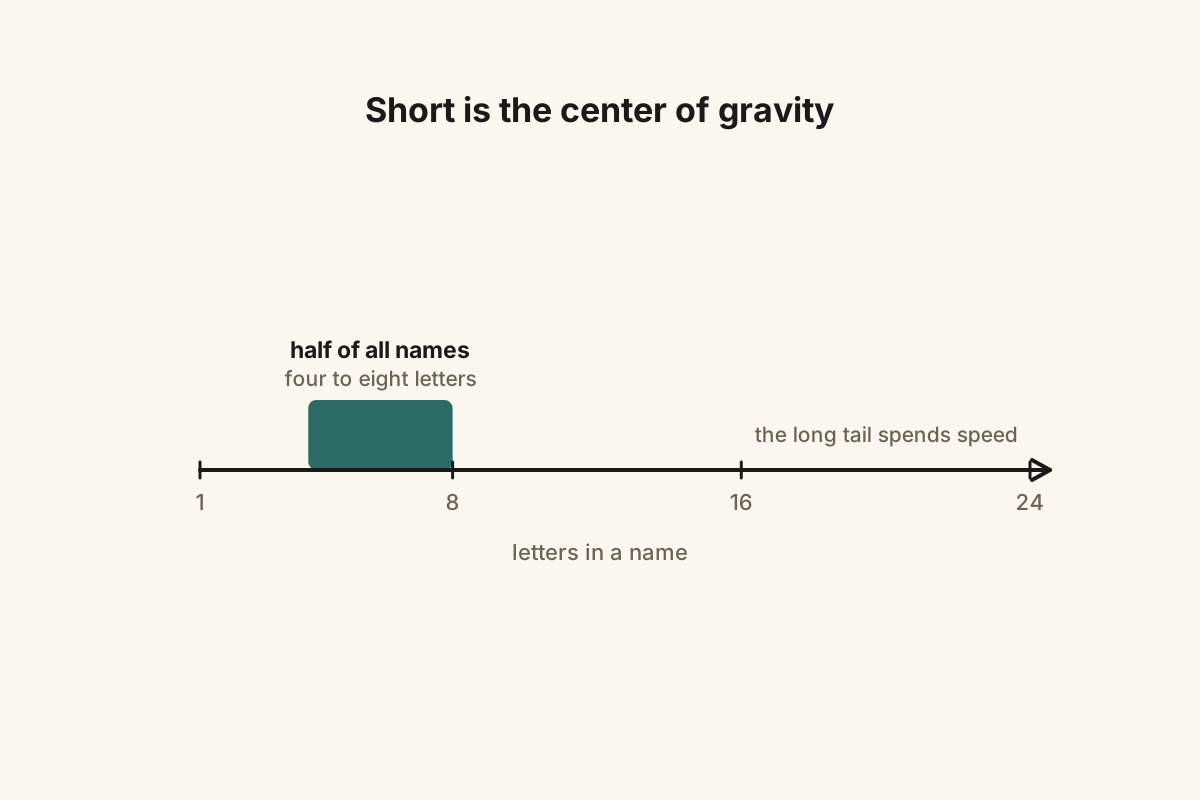
The typical name is short. Each extra word spends a little of the speed that made the first one work.
Single-word names are smaller still, a median of six letters. These are the ones that read in a single glance and survive being said across a noisy room. Greats. Knack. Rains. Studs. Away.
There's a real pull in the other direction. When a single word feels too thin, the reflex is to add a second word to explain it, then a descriptor to qualify the second. The corpus shows where that ends. The longest names run past twenty letters, almost all of them a brand plus a category plus a hedge, like The London Grooming Company or Medicine Mama's Apothecary. Each added word buys a little clarity and spends a little of the speed that made the first word work.
There's no rule here, only a center of gravity. If your shortlist sits well outside eight letters and one or two words, the names on it aren't wrong, but they are unusual. And unusual should be a choice you made on purpose, not one that crept in a descriptor at a time.
Most names sound light, not bold
Names carry a feeling before they carry a meaning. The sounds in a word arrive with associations already attached, fast or slow, heavy or light, and that reflex has a century of research behind it. Run every name in the corpus through that read, and one association dominates the rest.
| Dominant sound | Share of names |
|---|---|
| Light | 31% |
| Smooth | 17% |
| Fast | 15% |
| Heavy | 10% |
| Warm | 6% |
| Rich | 6% |
| Everything else | 15% |
Light is the single most common sound a direct-to-consumer name carries, the strongest note in about a third of them. Add the names that read smooth or fast, and nearly two thirds of the corpus lands in the same gentle, quick register. The heavy, forceful sounds that founders reach for when they want a name to feel serious are the minority, together under a sixth of the names.
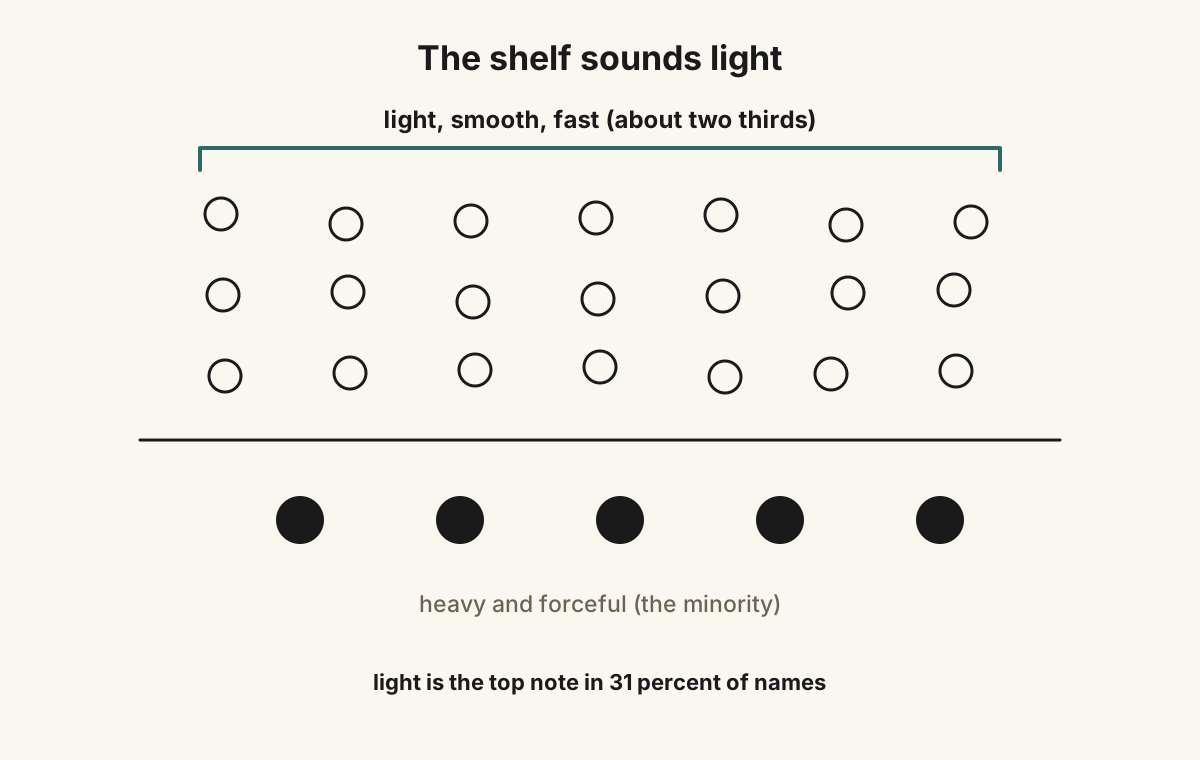
Most names sound light. The heavy, forceful ones are the minority.
This is a reading of the sounds, not a hard count. It also fits the goods. Most direct-to-consumer categories sell softness and ease, a better night's sleep, a gentler cleanser, a snack that feels like a treat. So the names sound the way the products want to feel. The lesson for a shortlist isn't to chase light for its own sake. It's to check that the sound a name makes points the same way as the thing it sells, because a heavy, blunt name on a soft, easy product works against the very thing it's meant to move.
One name in three opens on a hard sound
One pattern in the corpus stands out. A third of the names, 34 percent, begin on a hard plosive, one of the sounds b, d, g, p, t, or k, made by stopping the air and letting it go. No other opening sound is as common. Bombas. Poppi. Casper. Glossier.
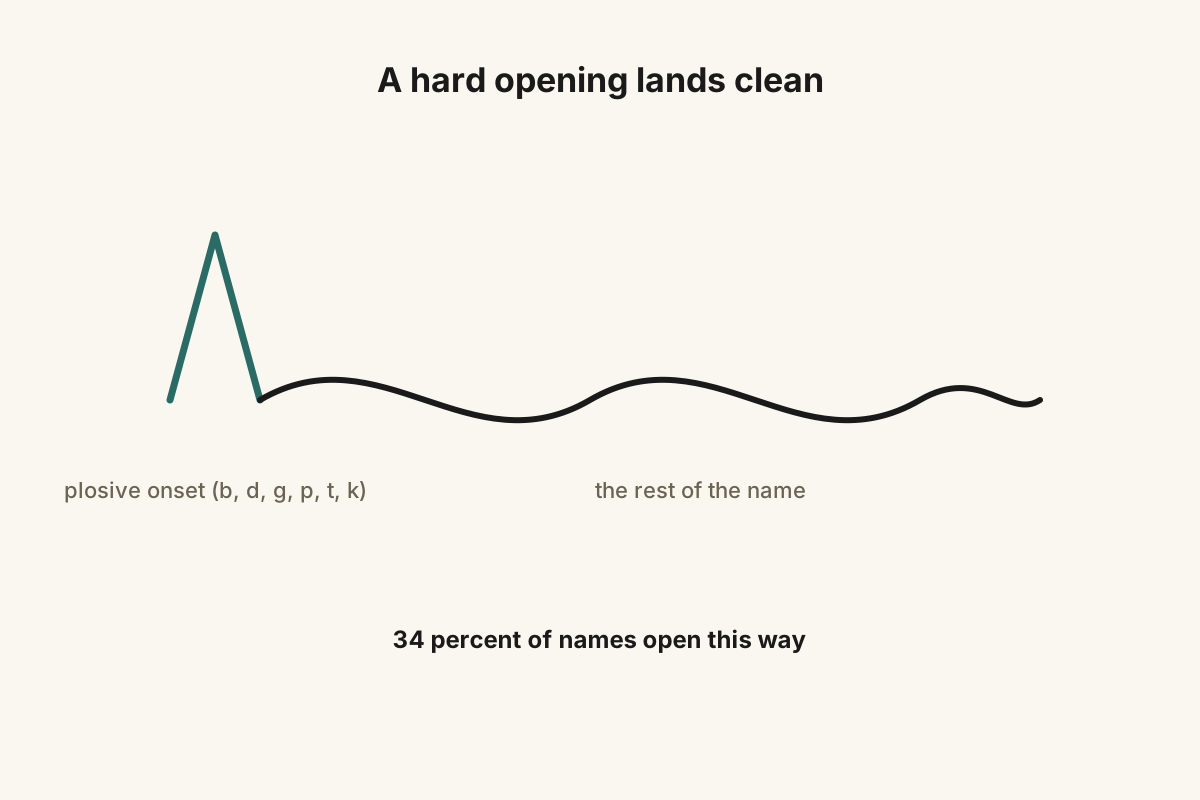
A third of names open on a hard sound that lands clean and sticks.
Those openings hit sharp and land cleanly, which is part of why they stick. Names that open on a soft hiss, the s and z and sh sounds, are far rarer, under one in ten.
A hard opening isn't mandatory, and plenty of strong names start soft. But when two names on a shortlist are otherwise close, the one that opens on a plosive holds a small, free advantage in how easily it lodges, so it costs nothing to prefer it. Applying that kind of tiebreak across a full shortlist is what the guide on how to name a brand works through.
The flashy tricks almost never get used
Naming lore loves a trick. The palindrome that reads the same backward, like Sonos. The doubled syllable, like a Lulu or a Toto. The alliteration that chimes, like Le Labo or Blu Dot. They are satisfying to spot, and they are close to absent from the real brands in the corpus.
Alliteration is the most common of the three, and even that turns up on only about one name in ten. Palindromes account for about a third of a percent of the corpus, seventeen names out of more than five thousand. Repeated-syllable names are just as scarce, another seventeen. So a founder who anchors a shortlist on finding the perfect palindrome is hunting for a pattern that almost no built brand actually used.
The reason isn't that the tricks fail. Sonos is a fine name. It's that each trick is a constraint, and a constraint throws out far more candidates than it keeps. Demanding a palindrome rules out nearly every available word in service of a flourish most buyers will never consciously notice. The names that got built mostly spent their effort on sound and sayability instead, and let the symmetry go.
Most names are easy to say, but a fifth fight it
Underneath all of this sits the plainest test of all, whether a stranger can say the name on the first try. By the corpus read, most pass. Six in ten alternate their consonants and vowels cleanly, the rhythm that lets Banana or Casper roll out without a stumble. Only about 7 percent are genuinely cluster-heavy.
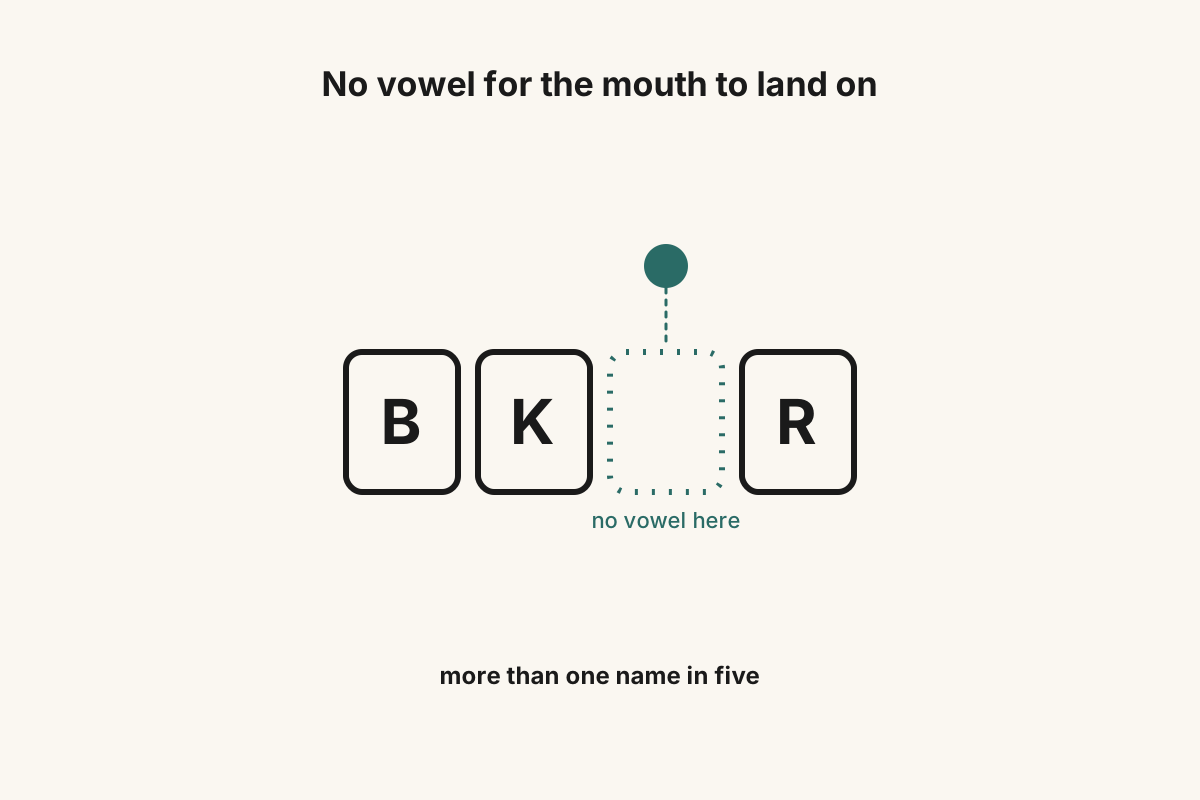
Three consonants run together with the vowel slot left empty, so the voice reaches the gap and finds nothing to land on. That stall is the half-second a new buyer pays.
But more than one in five names, 22 percent, carry a run of three or more consonants with no vowel to break it. Look at which names those are, and a pattern jumps out. BKR. JBL. ASRV. CDLP. They are mostly initials and stylized contractions, names built to look compact in a logo rather than to be said aloud. That's a real trade, and sometimes the right one for a brand that lives mostly as a mark on a product. But it's still a trade, paid in the half-second a new buyer spends working out how to say the thing, and worth making on purpose rather than by default.
Putting this to work on a shortlist
Set your own shortlist against these patterns and most of the checks take a minute. Count the letters and the words, notice whether each name is borrowed or invented, and say it aloud to hear whether it opens hard and lands light. The names that sit near the center of gravity are working with the market rather than against it, and the ones well outside it should be there on purpose.
What the checklist can't score is the word itself. The borrowed names that carry a brand reach into a category nobody else thought to borrow from, and finding that word is the part no rulebook hands you. So once a name clears the patterns, what decides it is narrower. It comes down to whether the specific word points toward the thing you sell, and whether a competitor working from the same rules would ever have thought to reach for it.
Frequently asked questions
Should a brand name be a real word or an invented one? For most brands, a real word. A word the language already has arrives already known, so buyers recall it more reliably than an invented one they have to learn first (Lerman and Garbarino 2002). Coined words still work for some, but the obvious real words are mostly trademarked already (Beebe and Fromer 2018), so the reliable move is to borrow an ordinary word from a category unrelated to what you sell.
How long should a brand name be? Short. One or two words and roughly four to eight letters covers where most direct-to-consumer names land. Longer names aren't penalized, but the extra length is usually an explanatory word bolted onto a root that was already doing the work, which slows the name down. Before you keep a long name, check that the length is buying real clarity rather than just hedging.
BrandNames reads founders' real shortlists the way it read these 5,018 names, against the sounds and the patterns that built brands actually share. The doors open soon. Drop your email to get one note when they do.