
Read these two made-up words out loud, bouba and kiki.
Now picture two shapes, one all soft curves like a cloud, the other all sharp points like a shard of glass. Match each word to a shape before you read the next line.
You almost certainly gave bouba to the rounded shape and kiki to the spiky one. Nearly everyone does. You didn't reason your way to it. You felt it, which is the point of running it on yourself first. The sounds arrived already carrying a shape.
What you just felt is sound symbolism, also called phonetic symbolism, the non-arbitrary link between how a word sounds and what the mind assumes it means. It's the reflex that decides whether a brand name feels fast or heavy, cheap or premium, in the half-second before a buyer reads a word of your copy. Take Bombas, the sock brand. Its two voiced b sounds and back vowel make the name feel as cushioned as the socks. What follows proves the effect is real. Then it hands you the two dials you actually turn, vowel frontness and consonant voicing. Four current brand names, read straight off those dials, close the piece.
Is sound symbolism real?
The effect has held up for almost a hundred years, across cultures and writing systems. The studies below keep landing on the same result.
In 1929 the linguist Edward Sapir ran the experiment in its plainest form. He gave people the nonsense pair mal and mil and asked which named a larger table and which a smaller one. Across his groups, somewhere between 75 and 96 percent chose mal, the back-vowel word, for the larger object. In his largest group of 124 teenagers, 83 percent agreed. The vowel alone carried the size.
The shape test you just ran comes from the same era. The psychologist Wolfgang Köhler showed people a jagged figure and a rounded one alongside two invented words, takete and maluma. He found the same lopsided agreement about which sound belonged to which form. He had renamed the rounded word by the 1947 edition of his book, and the result still held.
The modern numbers are larger and harder to wave off. Ramachandran and Hubbard reported in 2001 that about 95 percent of people match the spiky shape to kiki and the round one to bouba. In 2022 a cross-cultural study put the effect to its hardest test yet, running it across 25 languages from 9 language families and 10 different writing systems. It held at a 72 percent match rate, far above chance, even among readers whose scripts look nothing like the Roman alphabet.
What your brain is actually doing
You already know the effect is real. What matters for a naming decision is when it fires, and it fires automatically, below the level a buyer can switch off.
The clearest evidence comes from a 2004 study by Yorkston and Menon in the Journal of Consumer Research. They invented an ice cream and served it to two groups, changing exactly one thing, the name. One group got Frish, the other got Frosh. The only difference is the vowel, a front one against a back one. The group that ate Frosh rated the same ice cream as smoother, creamier, and richer, scoring it 5.06 against 4.25. The effect held even when people were told it was a real brand name rather than a made-up one.
What matters most is how that inference behaved. Yorkston and Menon found it automatic, outside awareness, and effortless. Their subjects weren't sounding out Frosh and deducing a flavor, the meaning was there before they noticed it. And the effect grew stronger when people were distracted, not weaker.
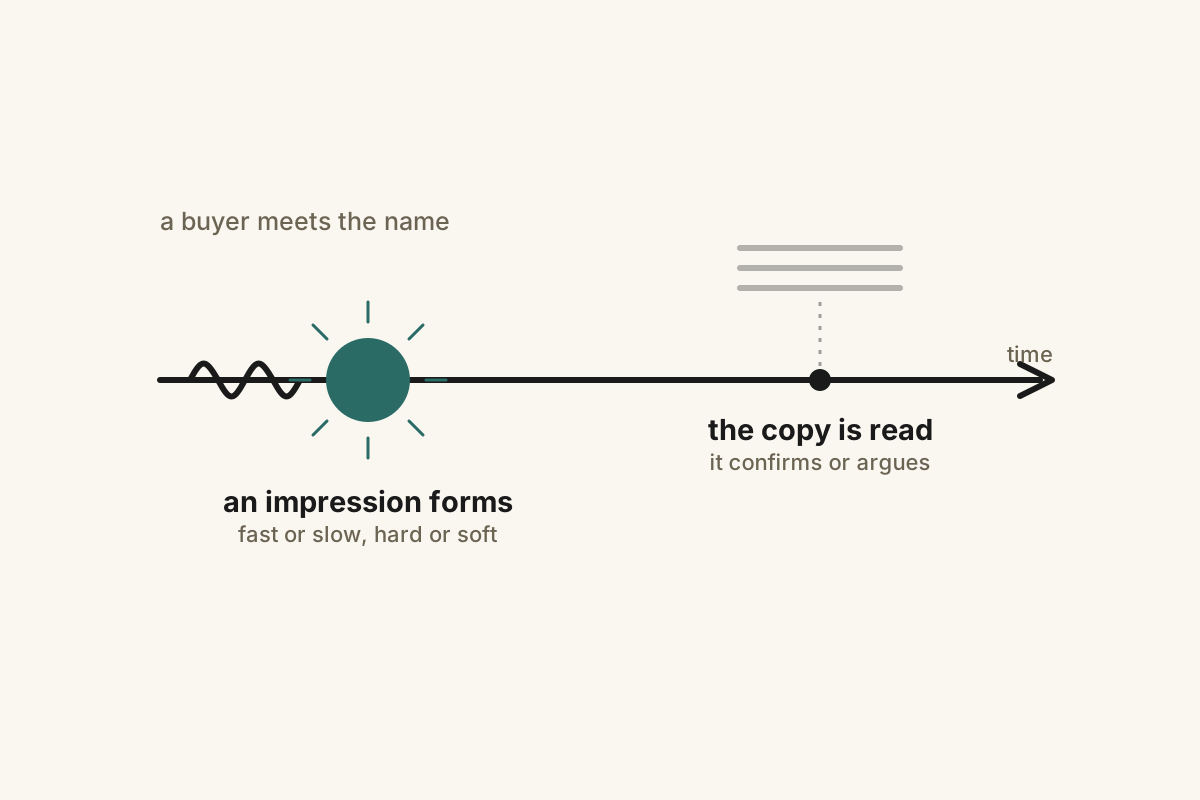
The sound deposits an impression before the copy is read. Your words then either confirm what the sound promised or argue with it.
Timing is what makes this practical. A buyer meets your name before they read your tagline, before the product shots load, before a single claim registers. In that half-second the sounds have already deposited an expectation, fast or slow, hard or soft, and your copy then either confirms what the sound promised or argues with it. A name whose sound contradicts its positioning isn't neutral, it's spending the buyer's first impression fighting itself.
Dial one, vowel frontness
For a founder, the science comes down to two dials you can actually turn. The first is vowel frontness.
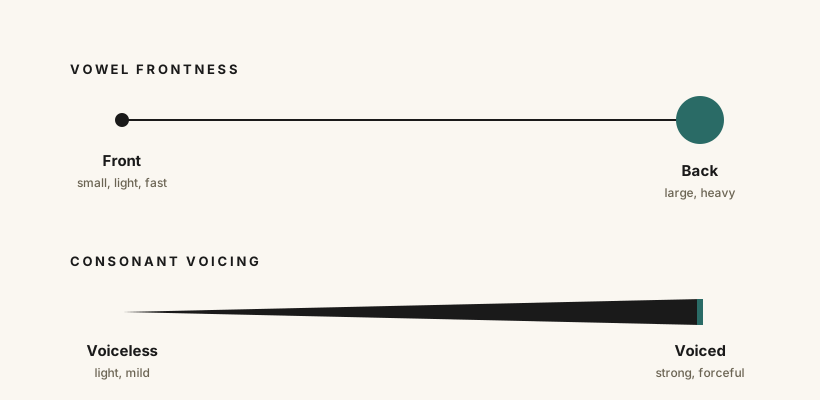
Two dials a founder can turn. Vowel frontness runs from small to large, consonant voicing from mild to forceful.
Vowels sit on a rough front-to-back scale set by where your tongue is when you make them. The ee in seen and the i in sit are front vowels. The o in go and the a in father are back vowels. Sapir's mal and mil told the first half of the story, back vowels read larger and front vowels read smaller. The fuller picture is Klink's work in 2000, the study most people in branding point to as the one that moved sound symbolism into naming. Klink gave people invented brand names that differed only by vowel, like nidax and nodax. The front-vowel versions were judged smaller, lighter, milder, thinner, faster, colder, and more feminine than the back-vowel ones. One vowel, a whole stack of associations.
The finding that should change a decision came in 2007, when Lowrey and Shrum showed the effect moves real preference, but only when the sound fits the thing. People preferred front-vowel names for small, sharp products like a convertible or a knife. They preferred back-vowel names for large, heavy ones like an SUV or a hammer, by roughly a two-to-one margin. The dial doesn't make a name better in the abstract. It makes a name fit, or clash with, what you sell.
So the first question for a shortlist is plain. What does your product want to feel like, small and quick or large and substantial, and do the dominant vowels in the name point the same way. A featherweight running shoe named with heavy back vowels is turning the dial against itself.
Dial two, consonant voicing
The second dial is consonant voicing, and it separates the hard sounds from the soft ones by a difference you can feel with a finger on your throat.
Say the p in pat, then the b in bat. Your vocal cords stay quiet for the p and switch on for the b. The first is voiceless, the second voiced. In 2020 Pathak, Calvert and Lim tested this split across 25 invented brand names and found a steady pattern. The voiced consonants, b, d, g, z, and v, read as harder and more forceful. The voiceless ones, p, t, k, s, and f, read as milder and lighter. Voicing is the force dial. It sets how heavy or gentle a name hits, while the snap of a plosive and the shape of the vowels set how sharp or round it feels. A name can be light in force and still sharp at the edge, which is exactly what the brand reads below will show.
One of the most cited naming decisions ever came down to the texture of a single consonant. George Eastman invented the word Kodak, and he was explicit about why. He bookended it with the hard letter K, which he called a strong, incisive sort of letter. He built the name to three rules of his own, that it be short, impossible to mispronounce, and unlike anything else. It's the rare case where a founder put his reasoning on record, and the reasoning came down to how one consonant feels. It's one man's account of one name, not a law that K means strength. It's also the cleanest founder-level evidence that the texture dial is something namers reach for on purpose.
The dials, read off four real names
Dials are easier to trust once you read them off real brands you can already buy. Here are four, each run through the two dials. Every read assumes the names are said in General American English, with the pronunciation spelled out where a name could be said more than one way. What matters is where the stressed vowel sits, front or back, and whether the leading consonants are voiced. Each read follows from the sounds themselves, not from anything the founder has said about the name.
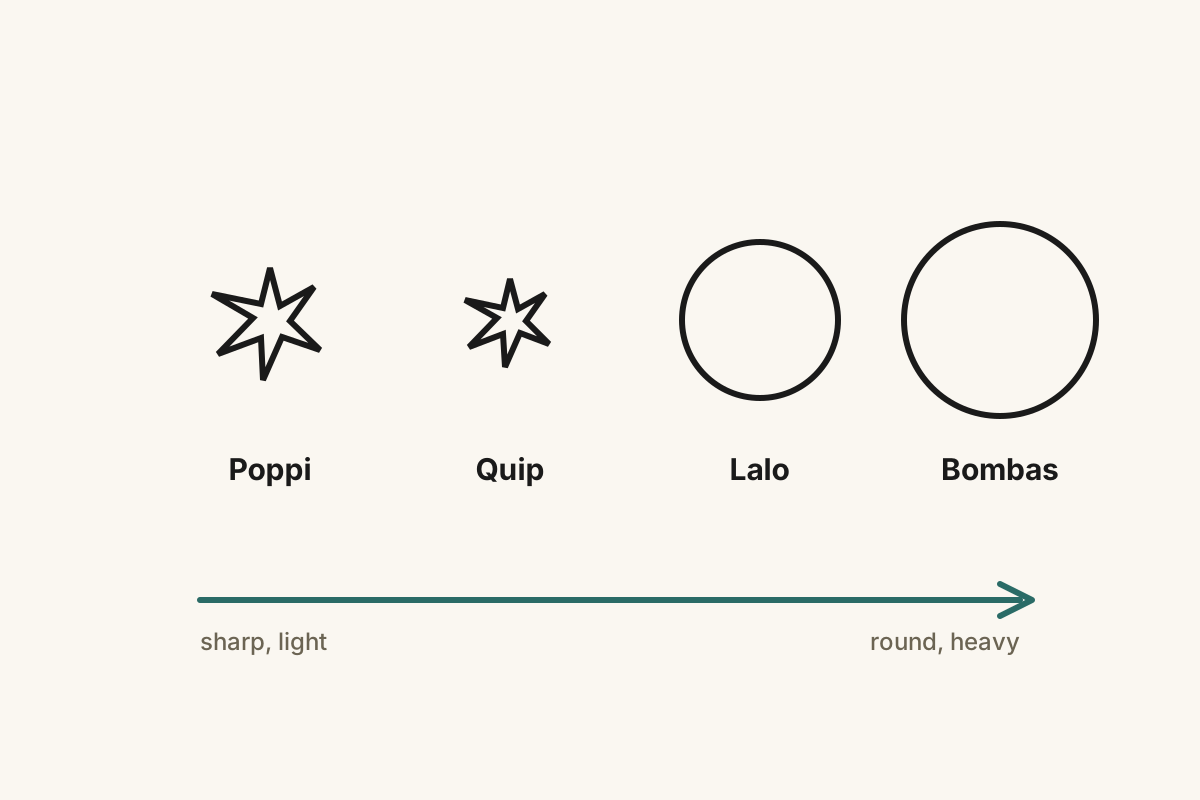
Four names, four sound-shapes. Poppi and Quip read sharp and light, Lalo and Bombas round and heavy, each matched to what the product is for.
Poppi, the soda brand, is two syllables built on repeated voiceless plosives, the p sounds, opening on a plosive. Those plosives read fast and sharp, and the short clipped shape adds a lightness on top. It's a sound built to feel quick and bright, the right promise for a soda set against heavy legacy cola.
Turn to Quip, the oral-care brand, and you get the textbook small-and-sharp profile. One syllable, two voiceless plosives, a single front vowel. Both dials point the same way, sharp and light. The front vowel pulls it small, toward something neat and pocket-sized, which is what a slim travel toothbrush is.
Now both dials go the other way. Lalo, a baby-gear brand, said LAH-loh, has no plosives at all, just two liquid L sounds gliding over two open back vowels. The liquids and the back vowels read large, smooth, and heavy, the soft and substantial texture you want on a stroller a parent is trusting with a newborn. The same family of sounds that makes Poppi feel quick makes Lalo feel slow and solid.
Bombas, the sock brand, stressed on the first syllable as BOM-bas, shows the back end of both dials together. Two voiced B plosives for force and a back vowel under the stress for weight, with a fricative s and a nasal m in the mix. The voicing and that back vowel read heavy, bold, warm, and rich, on a product whose whole pitch is cushioning and bulk. The sound is selling the same thing the socks are.
In each one the sound is doing a job the copy hasn't started yet.
There's a third, weaker effect worth knowing, one that sits alongside the two dials rather than replacing them. English carries sound clusters that leak meaning of their own. The gl in glow, gleam, and glint hints at light. The fl in flap, fling, and flutter hints at movement. Linguists call these phonesthemes, Firth named them in 1930, and Bergen showed in 2004 that they're psychologically real and stretch to brand-new words. Borrow one and a name picks up a faint, free association. Just don't lean on it the way you lean on the dials, its pull is weaker than the vowel and voicing effects.
Two gates that decide whether it lands
Two conditions decide whether the sound effect actually lands. A name can nail both dials and still fail on either one.
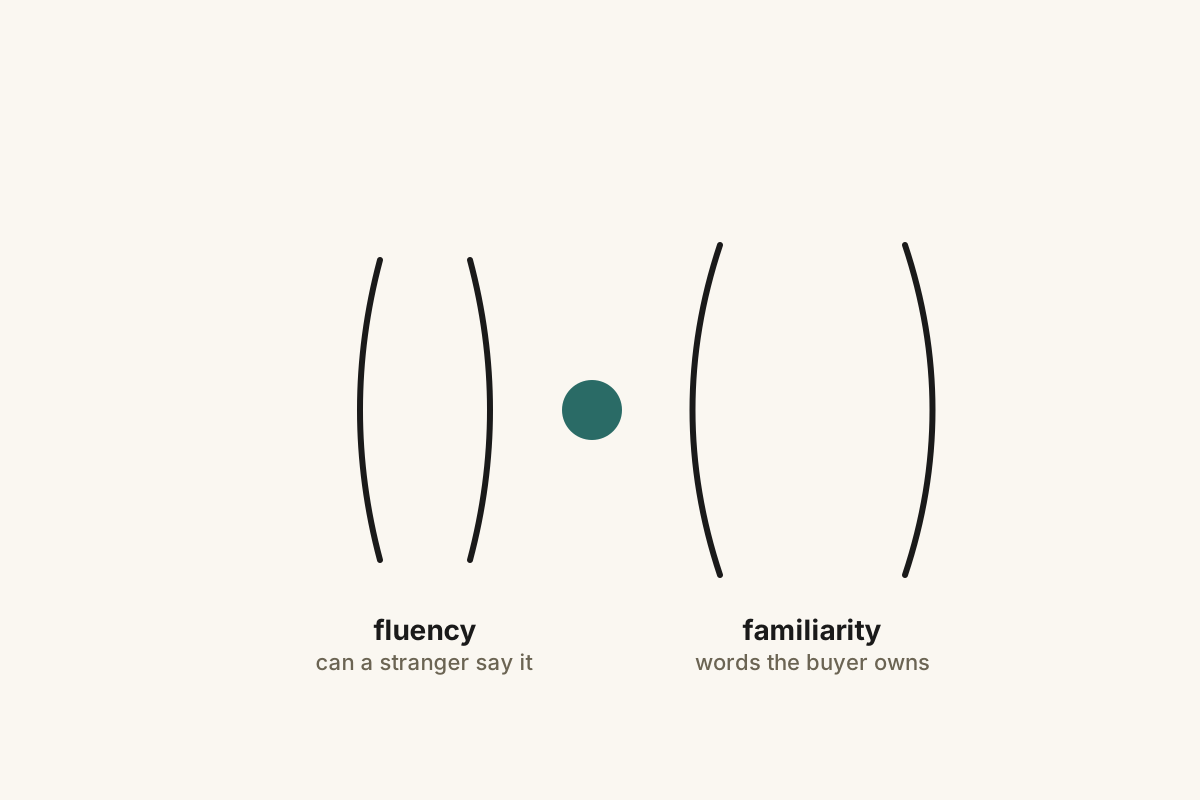
Two gates decide whether the sound lands. A narrow one for ease of saying, a wider one for words the buyer already owns. A name has to clear both.
The first gate is fluency, how easily the name moves through the mouth and the eye. In 2009 Song and Schwarz ran a study that should sober up anyone in love with an exotic spelling. They gave people food additives and amusement-park rides with either easy or hard-to-pronounce names. The hard ones, things like Hnegripitrom, were judged more harmful and more likely to make people sick than the easy ones like Magnalroxate. The difficulty itself read as danger. A sharp sound profile buried in a spelling nobody can say doesn't read as sophisticated. It reads as a risk, and the buyer backs away without knowing why.
The second gate is vocabulary the buyer already owns. Sound symbolism fires inside words the mind can process, so the effect is only as strong as the name is readable. A front vowel can't do its quick, light work if the reader stalls trying to decode the word it lives in. The interest has to sit in the connection between familiar sounds, not in reaching for an unfamiliar one.
How to run this on your own shortlist
Here's the sequence to run on a shortlist you already have.
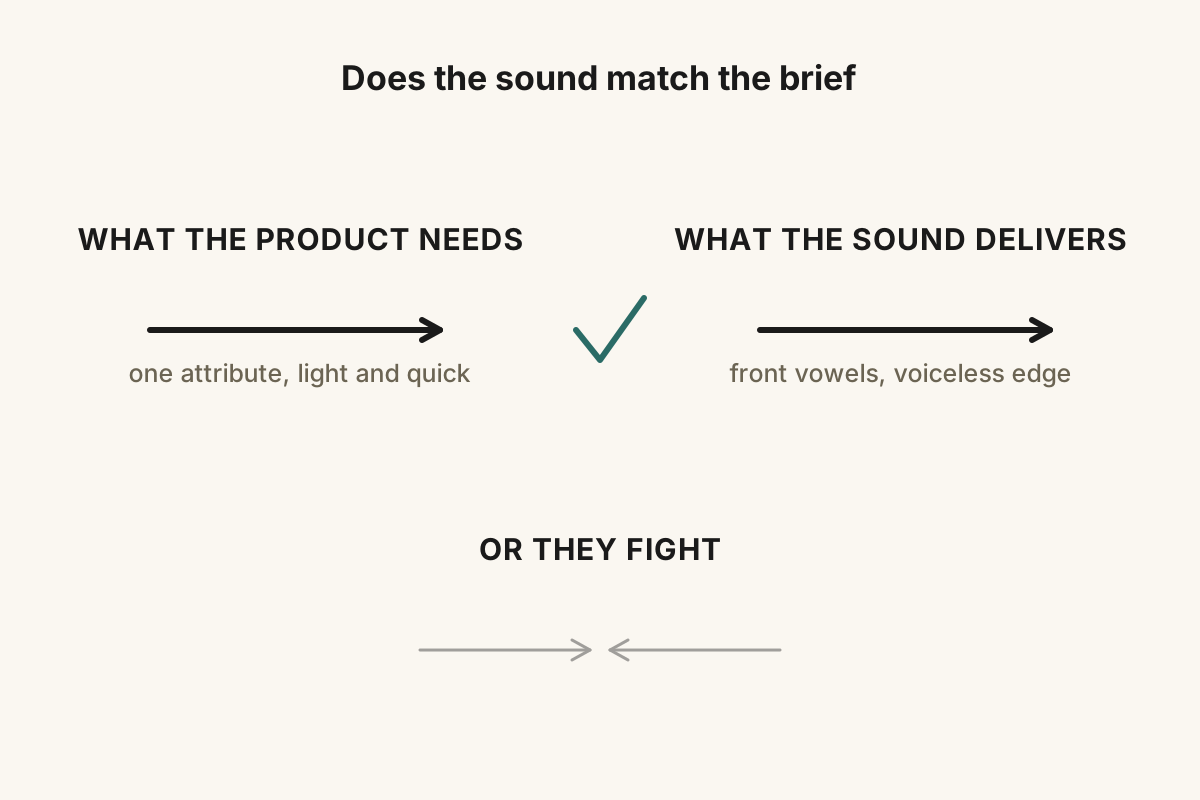
Run the name against the one attribute the product needs. When the sound points the same way the dials confirm the brief, when it points the other way the name is fighting itself.
First, say each name out loud, in a sentence, the way a customer would hear it rather than the way you read it in your head. Argo, Popa and Smith found in 2010 that names with sound repetition, spoken aloud, generate real positive feeling. They also found you can overdo the repetition until it tips into a gimmick, so listen for both.
Then name the one attribute your product most needs to own, fast or substantial, precise or warm, and check the dials against it. Front vowels for small and quick, back vowels for large and heavy. Voiceless consonants for light and mild, voiced ones for strong and forceful.
Last, run the two gates. Can a stranger say it on the first try, and does every part read as something familiar rather than a word they have to decode.
A name that passes the dials and clears both gates isn't guaranteed to win, but it's stopped fighting itself, which is more than most names on most shortlists can say.
Two dials aren't the whole of naming. Whether a name should be polarizing rather than safe is a separate decision and a different lever. The companion guide on how to name a brand takes that one up.
Frequently asked questions
Is sound symbolism real or pseudoscience? Real, and heavily replicated. Roughly 95 percent of people pair the same shapes with bouba and kiki (Ramachandran and Hubbard 2001). The match held at 72 percent in a 2022 test spanning 25 languages, 9 families, and 10 writing systems (Cwiek et al. 2022). The size version of the effect dates to Sapir in 1929, so the record runs almost a century.
What is sound symbolism in a brand name? It's the link between how a name sounds and what a listener guesses it means, running ahead of the dictionary definition. The sounds set an expectation on their own, which is why a name can signal fast, heavy, cheap, or premium before anyone parses the word.
What is an example of sound symbolism in a brand name? Bombas, the sock brand. The voiced b at each end and the low back vowel give it a padded, weighty feel that fits the product. A shopper picks up that softness from the name alone, before a single claim about the cushioning.
What is the bouba/kiki effect and why does it matter for branding? Show people a round blob and a spiky one with the made-up words bouba and kiki, and nearly everyone gives bouba to the round shape. For a name it means rounded sounds read smooth and approachable, while sharp stops read precise and edgy. The job is to pick whichever register the category rewards.
Do front and back vowels really change how a product feels? They do, and the effect is measurable. A front vowel like the i in Quip nudges a product to feel smaller and quicker, a back vowel like the o in Lalo nudges it larger and slower. When the vowel fits what the product is, that preference runs about two to one (Lowrey and Shrum 2007). One vowel swap was even enough to make an invented ice cream taste creamier (Yorkston and Menon 2004).
Does the effect work if people aren't paying attention? Better, not worse. The inference runs on its own, below conscious control, so dividing a buyer's attention doesn't switch it off. Yorkston and Menon recorded a stronger effect among distracted participants (Yorkston and Menon 2004), which is why a name is working on a shopper who is only half looking.
What makes a phonetically smart name backfire? A spelling no one can pronounce. Hard-to-say names get judged as riskier (Song and Schwarz 2009), so all the phonetic care in a name stops paying off the moment a shopper stalls on the word. Fluency is the gate the sound has to clear first.
BrandNames applies sound symbolism and processing-fluency research to founders' real shortlists. The doors open soon. Drop your email to get one note when they do.