
Processing fluency in a brand name is how easily the name moves through the mind when someone reads it or says it. A fluent name goes down in one clean beat, with no hitch where the eye stops to guess at the spelling. The mind takes that ease as a quiet signal of quality and trust. A name it absorbs without strain earns a little credibility before the buyer has learned a single fact about the company. Some names slide in on the first read. Others make the reader work, even slightly, and that small effort doesn't stay neutral. A name that glides reads as more trustworthy than a name the mind has to wrestle, every time someone meets it.
The trust a name earns just for being easy shows up hardest in the name itself. The name is met first, before any claim, and it gets repeated far more often than any tagline or line of copy. Whatever small feeling the name's fluency creates is the feeling the rest of the brand has to build on. A name a fraction harder to process makes the mind do a little work on every meeting. A name that glides spares it the work, and that relief quietly reads as warmth toward the brand. That trade runs every time someone meets the name, whether the buyer notices it or not.
Why ease reads as truth
One mislabeling drives the whole effect. The mind feels how easily it took the name in, then pins that feeling on the name instead of on itself. A name that's easy to process feels good to process, and the mind reads that good feeling as a quality of the name.
Reber, Schwarz and Winkielman (2004) pulled the evidence together and showed that fluent processing produces a positive response. People then misread that response as liking, or as truth. Reber and Schwarz (1999) put it to a direct test. They showed people the same statements in easy-to-read and hard-to-read type, and the easy ones were judged more likely to be true, even though only the look of the words had changed. A face that's easy to process is rated better looking, and a name that's easy to say picks up the same quiet vote, one the voter never knows they cast.
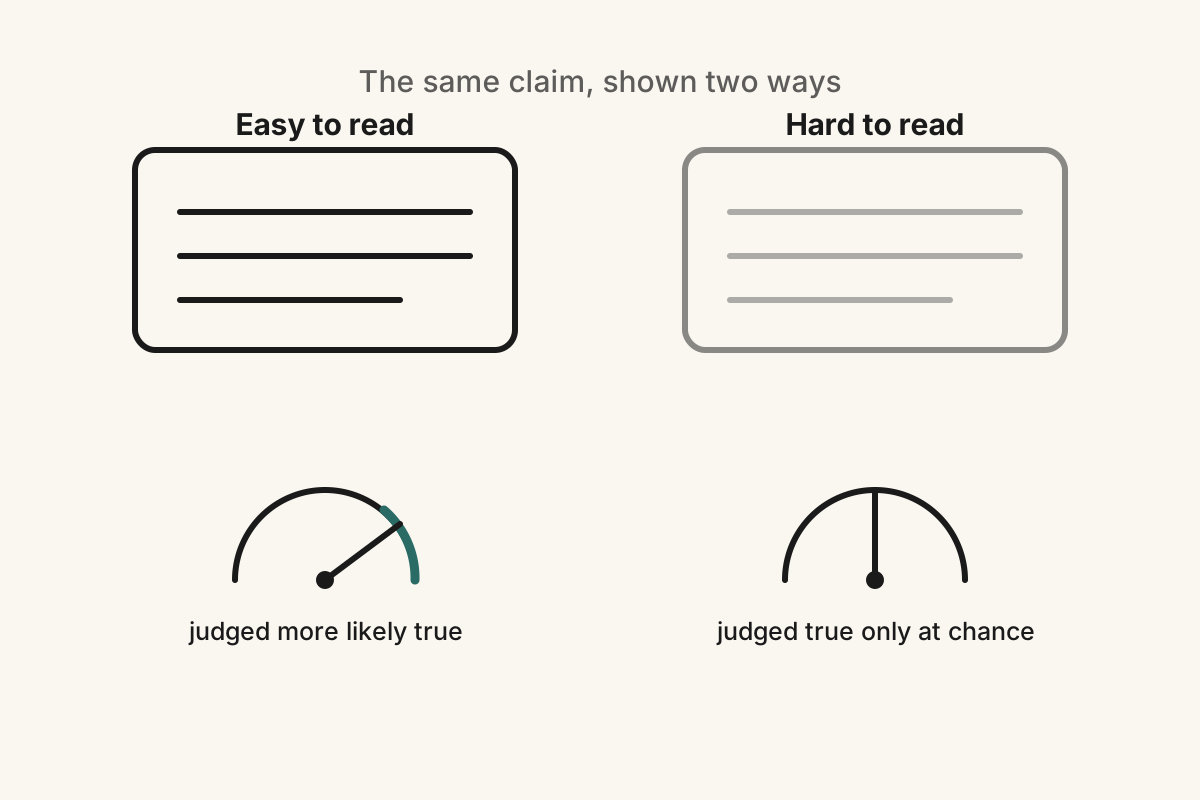
Show the same claim in easy-to-read and hard-to-read type and the easy one is judged more likely true, though only its look has changed.
For a name, that vote compounds, because a name is met first and repeated most. The homepage gets one careful read. The name gets a thousand glancing ones, across inboxes and search bars, and each one adds a little to the tally. Prettiness has little to do with it. What decides the vote is how hard the mind has to work to take the name in, and the mind keeps score whether the buyer means to or not. The processing-fluency entry in the glossary states it in a line. Every name is either charging the buyer a small toll or paying them a small dividend, on every single read.
What easy and hard names do to money and risk
The effect isn't only a lab curiosity. It's turned up where real money and real fear were on the line.
The market gives the clearest case. Alter and Oppenheimer (2006) tracked companies in the days right after they went public and found that the ones with easy-to-pronounce ticker symbols outperformed the ones with hard-to-pronounce tickers in early trading. A thousand dollars spread across their smooth-ticker portfolio came out about eighty-five dollars ahead of the same money in the hard-ticker portfolio after the first day. It was a nominal gap, and it narrowed over the days that followed, but it pointed one way. Nothing about the underlying businesses lined up with the tickers. The difference the researchers isolated was how easily the ticker could be pronounced, and that ease tracked early demand. A symbol said more smoothly pulled more money toward it.
The danger side got measured too, and it bites harder. Song and Schwarz (2009) labelled food additives and amusement-park rides with names that were either easy or hard to pronounce. People rated the hard-to-say versions as more harmful and more dangerous, working from nothing but the name. The finding doesn't hold cleanly everywhere. A 2017 replication in the same journal (Bahník and Vranka, 2017) found it didn't fully generalize to a freshly built set of names, holding mainly where the hard-to-say names were also longer. Where it does hold, the struggle in the mouth gets reassigned to the thing itself. A name that fights pronunciation doesn't merely fail to charm. It can read as riskier. The same ease the mind is reacting to here is what decides whether a name's sounds carry their meaning. Difficulty gets taken for threat, and ease for safety, both before a buyer knows anything true.
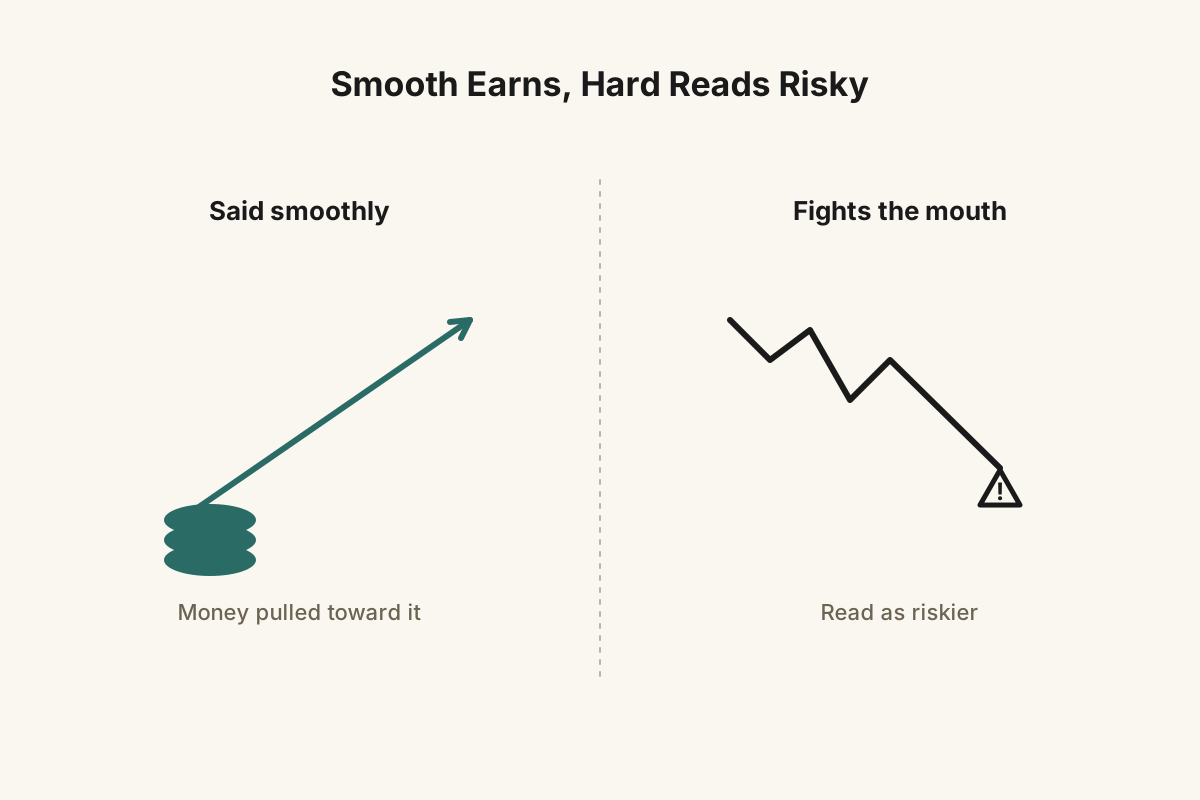
A name said smoothly pulled money toward it, while a name that fights the mouth read as riskier, both before any fact was known.
The four levers of processing fluency
Fluency isn't a single property a name either has or lacks. It's built from four separate things, and pulling them apart is what turns "keep it simple" from a slogan into a real set of choices about what makes a name easy to say.
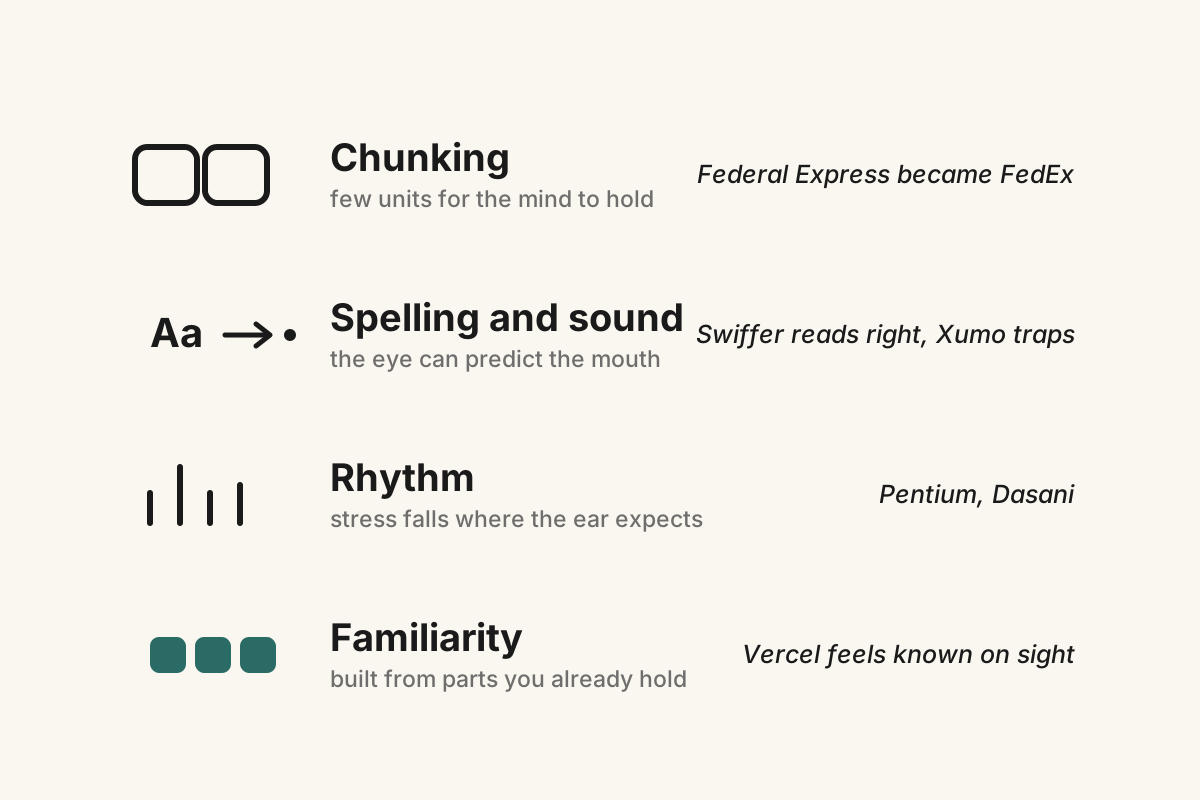
Four separate things set how easily a name goes down. Length and chunking, the fit of spelling to sound, rhythm, and familiarity.
Start with how much the name asks the mind to hold at once. Sonos is two syllables, and reads as one clean chunk, which is close to the lightest load a name can carry. A long coinage the mind can't break into familiar pieces forces it to juggle more units than it wants to, so people shrink the name down on their own. Federal Express became FedEx in everyday speech long before the company made the cut official. Past roughly three syllables, a name that doesn't offer a natural short form gets handed one anyway, and that improvised short form, not the full name, is the part that sticks.
Chunking is about how much the mind holds. The fit between spelling and sound is about whether it can trust its first guess at how the name is said. Swiffer is read right on the first attempt, because the letters predict the mouth and nothing about the word springs a trap. A spelling like Xumo or Qwest breaks the prediction. The eye lands on the word and hesitates, unsure whether the X is a Z and whether the Q has dropped its usual U, and that flicker of doubt is the disfluency itself. A name people are afraid of saying wrong is a name they avoid saying out loud, and a name that goes unsaid doesn't travel by word of mouth.
Even a name the eye reads cleanly can still trip the ear. English has stress patterns the ear expects, and a name that lands on one of them is easy to say without thinking about it. Pentium and Dasani sit on the language's native rhythm, so the tongue never has to stop and re-plan. Put the stress somewhere the ear doesn't expect and the mouth stumbles, and a listener who couldn't explain why still feels the bump. A rhythm that fits goes unnoticed, and the ear only speaks up when the pattern breaks.
Familiarity is the last lever, and the one that keeps growing. A name assembled from parts the mind already owns reads as fluent on first contact, because the pieces are pre-loaded. Vercel is invented, but it's built from fragments the eye recognises, so it processes immediately rather than on the tenth viewing. Plain repetition then compounds the ease, the effect Zajonc measured in 1968. The more a thing is seen, the more fluent it gets, and the more fluent it gets, the more it's liked. A name with no familiar handhold starts that climb at the bottom, working against the reader on every early impression until exposure begins to help.
A name can clear all four of these and still be the wrong name. Passing them is a floor to stand on, and nothing more. An effortless name can still be wrong for its category, lost among its rivals, or already taken in trademark. Clearing that floor only means the name has stopped working against the buyer. Whether it wins on the far side is a separate question the fluency test can't answer.
When a little difficulty earns its place
Almost every guide stops at "make it easy." That's right most of the time. The same research that proves ease works also marks the narrow place where a little difficulty helps.
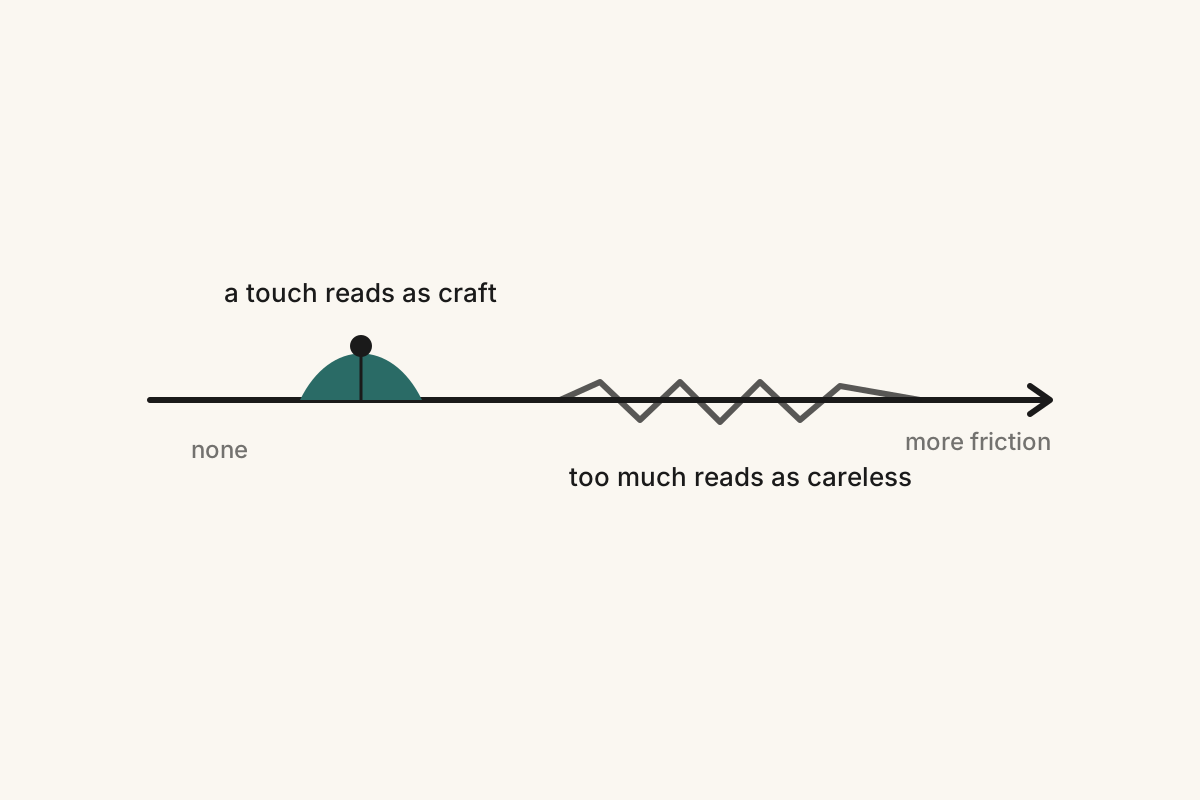
A small, deliberate dose of difficulty can read as craft. Push past the narrow safe band and the same friction reads as carelessness.
A small, deliberate dose of friction can read as effort. Song and Schwarz (2008) gave people instructions printed in a hard-to-read font, and they judged the task itself to take more time and more work. The strain came from the reading, not the task. In a category that sells craft or rarity, a name that's a touch harder to take in can borrow some of that felt weight. It sits on the same curve the case for polarizing names walks, approached from the difficulty side instead of the distinctiveness side. Placed well, a little friction can read as substance.
The catch is that the safe dose is tiny and the failure is ugly. The mind doesn't reliably read difficulty as effort. More often it reads difficulty as incompetence. When readers are shown text written in needlessly complicated language, they rate the author as less intelligent, because the strain of getting through it gets blamed on the writer. Reach for friction on purpose, in a narrow set of premium or craft categories, never by accident. A name can carry a strange, slow spelling and still be smooth in the mouth. Keep the deliberate difficulty in the look of the word or its meaning, and out of the part the mouth has to perform.
The checks that make a name easy
The goal is the least work for the mind, which is not the same as the shortest or plainest name. A short name can still trip the tongue, while a longer one made of familiar parts glides straight through. What counts is the amount of work a name asks for, and that comes down to a few concrete checks rather than a feeling. Can the eye predict how the mouth should say it? Does the rhythm fall where the ear expects? Is the name built from parts the mind already holds, rather than parts the buyer has to learn cold?
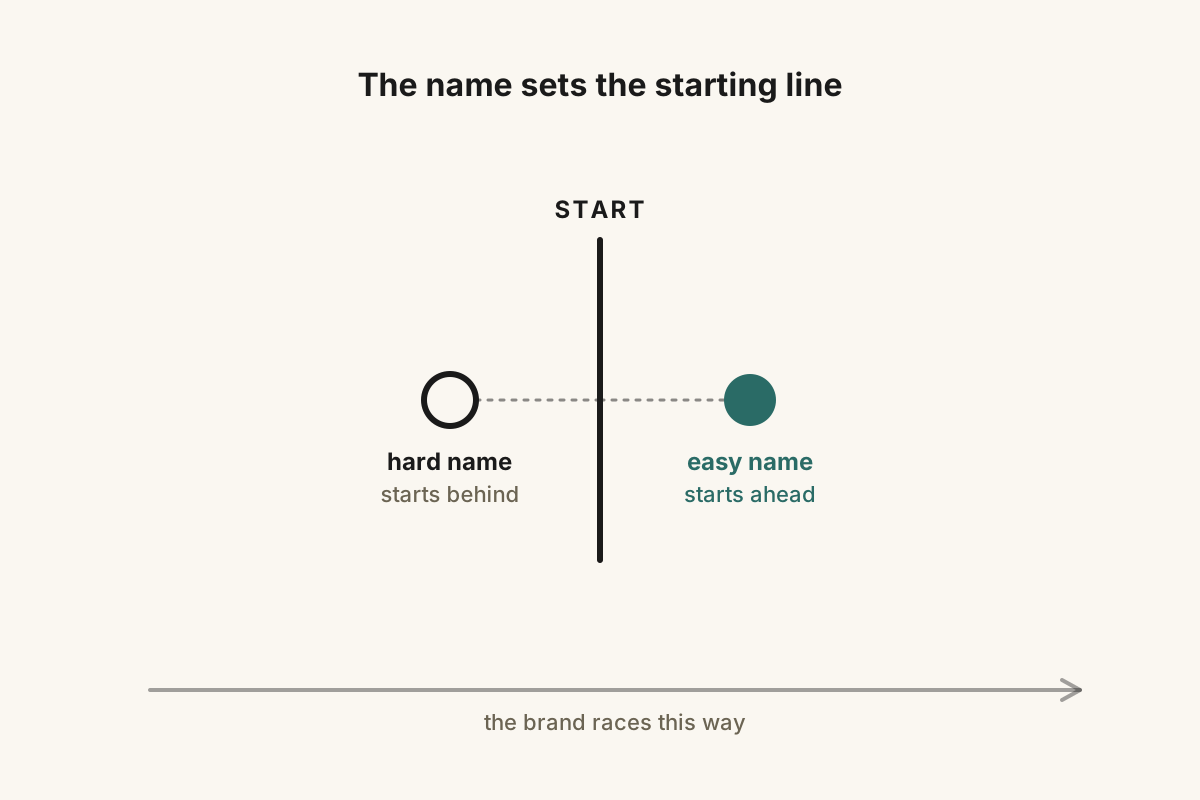
An easy name starts ahead of the line and a hard name starts behind it, so the brand begins the race from a different place before a buyer learns a single fact.
A name that answers those well makes no demand on the reader before a word of copy is read. Everything the brand says next begins from a small surplus instead of a small deficit. The harder a name is to process, the more the rest of the brand has to do just to get back to even. Choosing a name the right way is, in large part, refusing to start behind.
Frequently asked questions
What is processing fluency in a brand name? Processing fluency is how easily a name moves through the mind when someone reads or says it. The reason it matters for names is a quirk of attention. The mind feels how smoothly it handled the word, then credits that good feeling to the name rather than to its own effort. So an easy name arrives already tinged with quality and trust, and a hard one arrives with a faint drag the buyer can't name. The name is also the most repeated word a brand owns, which is why this small effect, multiplied across every reading, is worth designing for.
Is cognitive fluency the same as processing fluency? Yes. They're two names for the same idea, the ease with which the mind takes a word in. Some writers say cognitive fluency and some say processing fluency, but a reader who searched either one has landed in the right place.
Does a hard-to-pronounce brand name actually hurt sales? The evidence says it does, in ways that have been measured. Companies with easy-to-pronounce stock tickers outperformed those with hard-to-pronounce ones in the days after going public. Products with hard-to-say names have also been rated as more risky and more harmful, though that effect shows up mainly where the hard name is also a longer one. A name that fights the mouth tends to lose word of mouth and read as riskier at the same time.
Should a brand name always be easy to say? Almost always, with one narrow exception. In categories that sell craft, rarity, or luxury, a small and deliberate dose of difficulty can signal effort and weight. Even then the friction is a scalpel, used on purpose and never by default. And it belongs in the spelling or the meaning, well away from the part of the name a buyer has to say out loud.
Is a short brand name always better than a long one? No. Length is only one of the things that set fluency, and what counts is how many units the mind has to hold rather than the raw letter count. A longer name built from familiar, well-chunked parts can process more easily than a short but unpredictable coinage. Names past about three syllables do tend to get shortened in use, so it helps to hand people a clean short form rather than let them invent a messy one.
Are there different types of processing fluency? Yes. Researchers usually name three. Perceptual fluency is the ease of seeing and saying the name itself, how cleanly the letters and sounds move through the eye and mouth. Conceptual fluency is the ease of grasping what the name means or points to. Retrieval fluency is the ease of calling the name back to mind later, which is where repetition and familiarity pay off. A strong name tends to want all three, though this piece is mostly about the perceptual side, the part a buyer feels in the moment of reading or saying it.
Do successful brands ever have hard-to-pronounce names? Plenty do. Hyundai and Haagen-Dazs both sit near the top of mispronounced-brand lists and still built large businesses. Ease of processing is a starting advantage rather than a hard ceiling, so enough exposure and marketing money can carry an awkward name a long way. The difference is that the awkward name works against itself the whole way up, while an easy one never meets the wall.
BrandNames runs a founder's shortlist through the same fluency research this post is built on, so a name clears the gate before it ships. The doors open soon. Leave your email for one note when they do.