
A brand name does measurable work in the half-second before a buyer reads a word of your copy. The sounds land first, and they arrive already carrying a shape, fast or slow, light or heavy. Naming science is the study of exactly that, how a name's sound and structure shape what a buyer feels before the meaning of the word arrives. The phrase has a biology sense too, but this glossary is about the brand one.
Most naming advice skips past all of it and hands you adjectives instead. Pick something that sticks. Make it sound good. The catch is that you can't aim at an adjective. You can aim at a sound, a pattern, a category, and every term below is one of those.
Each entry is defined in plain English and backed by the peer-reviewed research behind it, not by marketing folklore. Sound symbolism and processing fluency are real fields with a century of measurement behind them.
The terms run from the raw phonetics of how a name sounds to the category it finally competes in. Skip to whichever one you came for. The longer argument for how they all fit together runs through how to name a brand.
How a name sounds
This first group is the raw material, the sound units a name is built from and the association each one carries before any meaning arrives.
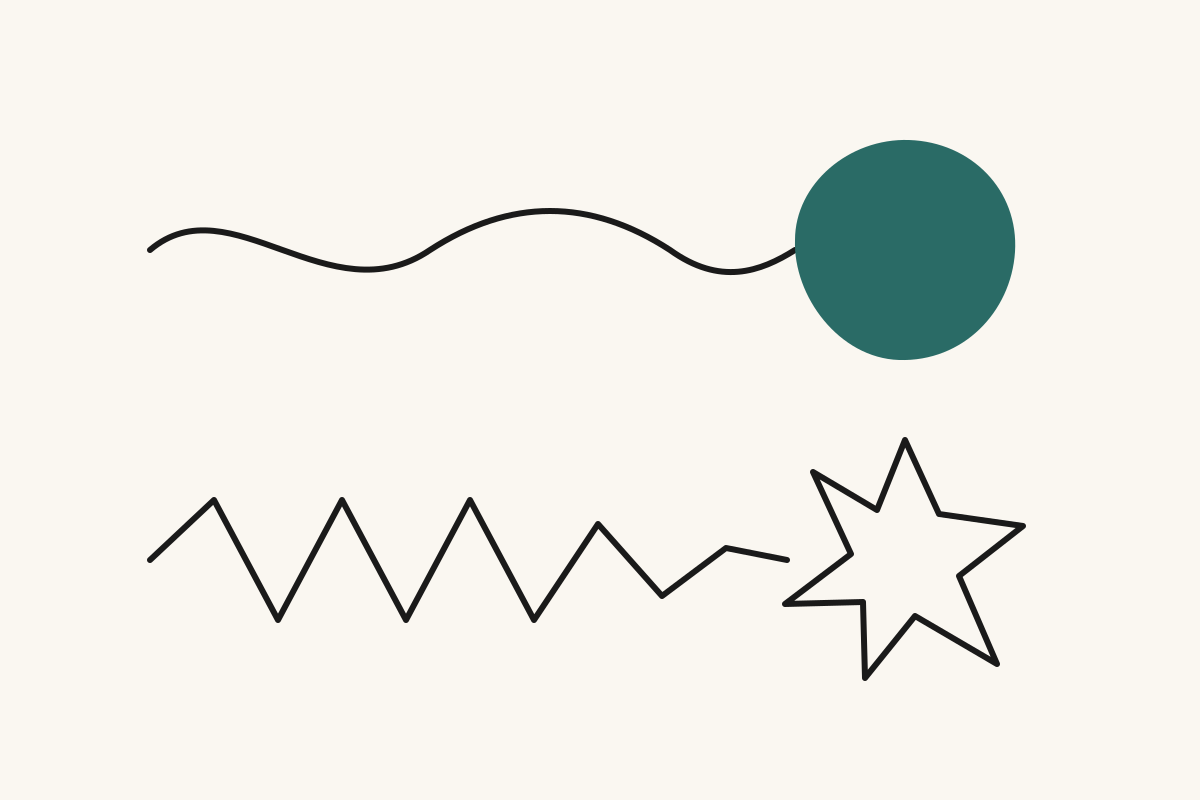
A soft wave settles into a round form, a sharp wave into a spiky one. The sound becomes the shape.
Sound symbolism
Sound symbolism is the link between how a word sounds and the meaning a listener feels from it, before the dictionary meaning is read. The link is not random. Specific sounds carry steady associations of size, weight, and texture across speakers and languages.
Academics call the same effect phonetic symbolism. Yorkston and Menon ran the cleanest test of it in 2004, serving one invented ice cream under two names that differed by a single vowel. The group given Frosh rated the same ice cream creamier and richer than the group given Frish, on the back vowel alone. Sound symbolism in brand names shows how to aim the effect on a real shortlist.
The bouba/kiki effect
The bouba/kiki effect is the reliable tendency to match a round shape to the made-up word bouba and a spiky shape to kiki. It is the plainest evidence that speech sounds carry shape on their own, before any word is learned.
About 95 percent of people make that match (Ramachandran and Hubbard 2001). And 72 percent still do across 25 languages and 9 writing systems (Cwiek et al. 2022), far above chance even for readers whose scripts look nothing like the Roman alphabet.
Phoneme
A phoneme is the smallest unit of sound that changes a word. Naming science reads a name phoneme by phoneme rather than letter by letter, because a buyer hears sounds, not spelling.
In Sapir's 1929 study, the nonsense pair mal and mil differs by one vowel phoneme, and about 80 percent of people read mal as the larger of two tables. One phoneme carried the size.
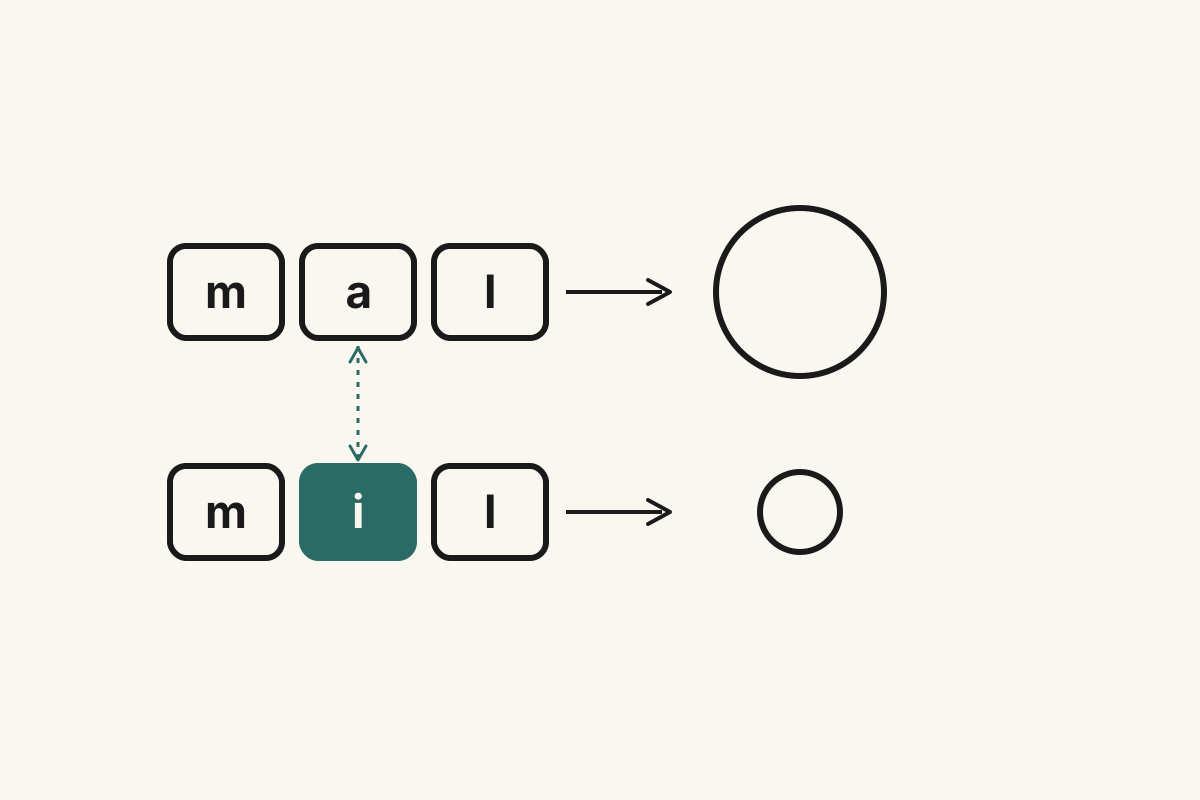
Change the one middle sound and mal becomes mil. That single swap flips the size a buyer hears.
Plosive (stop consonant)
A plosive, or stop consonant, blocks the airflow and releases it in a burst. The voiceless set is p, t, k, and the voiced set is b, d, g. Plosives read sharp and energetic, and an opening plosive gives a name a hard, salient start.
Pepsi and Kodak stack voiceless plosives, which is why each name lands with a crisp, punchy onset (Klink 2000).
Fricative (and sibilants)
A fricative forces air through a narrow gap to make a continuous hiss. The ones that carry the most weight in names are f, v, s, z, and sh. The sibilants are the sharp, high-pitched subset, s, z, and sh. Fricatives read smooth and refined, and the voiced ones, v and z, lean warm and premium.
Versace opens on a voiced v and runs on sibilants, smooth where a plosive would be blunt (Pathak, Calvert and Lim 2020).
Nasal
A nasal is a consonant sounded through the nose, m and n. Nasals read warm and soft, among the warmest-rated sounds in the language, so a name built on them feels approachable rather than sharp.
Mailchimp and Notion each open on a nasal that softens the whole name (Klink 2000).
Liquid
The liquids are l and r, made with the airflow gliding around a partial closure. They read flowing and smooth. The l is the soft, light member, while the r leans toward power and grip.
Lalo and Lululemon ride on l sounds, which gives each a soft, smooth feel (Klink 2000).
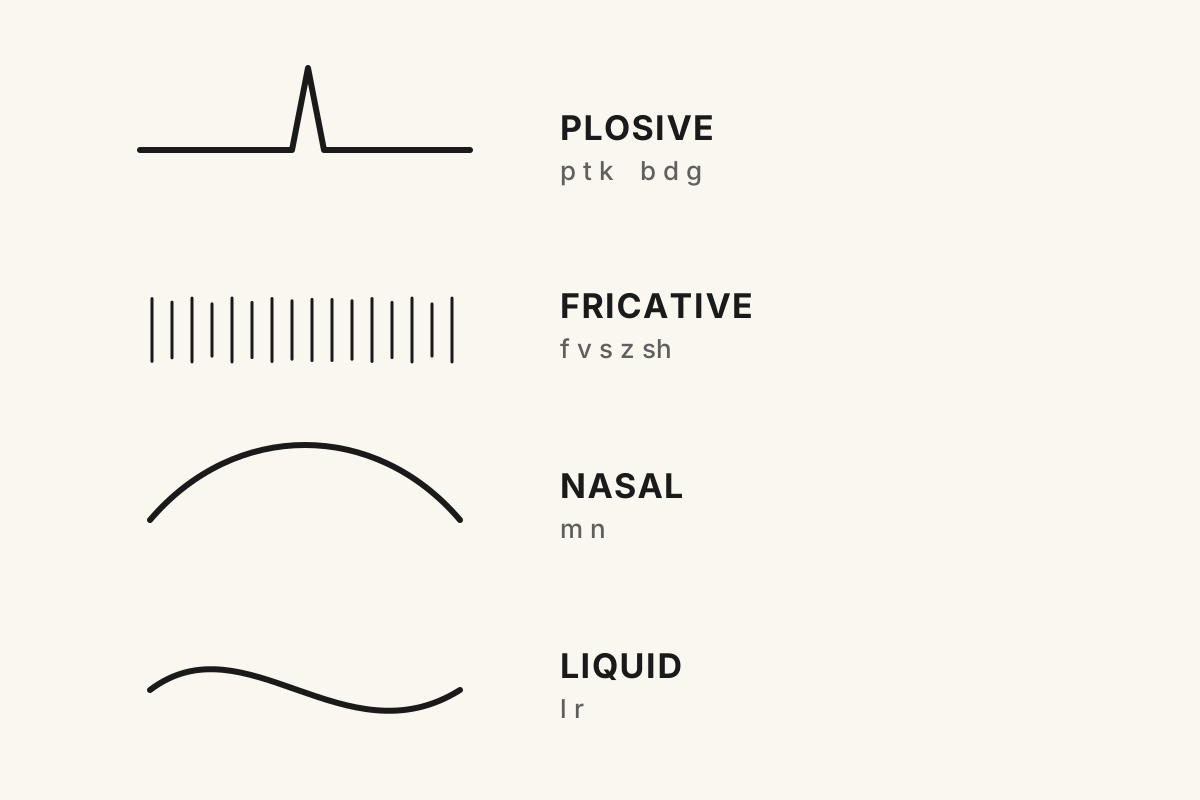
A burst, a hiss, a soft hum, a glide. The shape of each mark mirrors the sound of the family.
Voicing (voiced vs voiceless)
Voicing is whether the vocal cords switch on during a consonant. The voiced sounds, b, d, g, z, and v, read heavier and stronger. The voiceless ones, p, t, k, s, and f, read lighter and milder, the force dial of a name.
Rest a finger on your throat and it stays still for the p in pat, then buzzes for the b in bat. Bombas, built on voiced b, reads sturdier than a voiceless cousin would (Pathak, Calvert and Lim 2020).
Vowel frontness (front vs back vowels)
Vowel frontness is where the tongue sits when a vowel is made. Front vowels, the ee in see and the i in Frish, read small, light, and fast. Back vowels, the o in Frosh and the a in father, read large and heavy, the size dial of a name.
In Sapir's pair, mil read smaller than mal on the vowel alone (Sapir 1929), and the same kind of swap made an invented ice cream taste richer (Yorkston and Menon 2004).
Phonestheme
A phonestheme is a recurring sound cluster that leaks a shade of meaning across many unrelated words, without being a true root or prefix. The gl in glow, gleam, and glint points to light.
Borrow a phonestheme and a coined name picks up a faint, free association, a hint of light from gl or of movement from fl. The clusters are psychologically real and stretch to brand-new words (Firth 1930, Bergen 2004).
Reduplication
Reduplication is a name pattern that repeats a syllable or sound, sometimes with a vowel change. The repetition reads cute, playful, and approachable, and it nudges expectations of sweetness.
TikTok and Dum-Dums repeat their sounds, and the doubling reads light and friendly. It helps in playful or sweet categories and turns into a risk in serious ones (Motoki 2015, Psychology and Marketing).
Alliteration
Alliteration is the same opening consonant sound repeated across the parts of a name. The matched onset is easy on the ear and helps a name stick.
Coca-Cola repeats the hard k across both words, the textbook case of sound repetition aiding recall (Argo, Popa and Smith 2010).
How the brain reads a name
The first group was the raw sound. These next two terms are about what the brain does with a name once it has taken the sound in, the judgment that follows.
Processing fluency
Processing fluency is the ease with which the mind takes in a word. The brain misreads that ease as a signal, so a name that processes easily feels more trustworthy and higher quality than one that does not.
People rated hard-to-pronounce food additives as more harmful than easy-to-pronounce ones at identical risk (Song and Schwarz 2009). The difficulty itself read as danger, an instance of the broader fluency effect (Reber, Schwarz and Winkielman 2004).
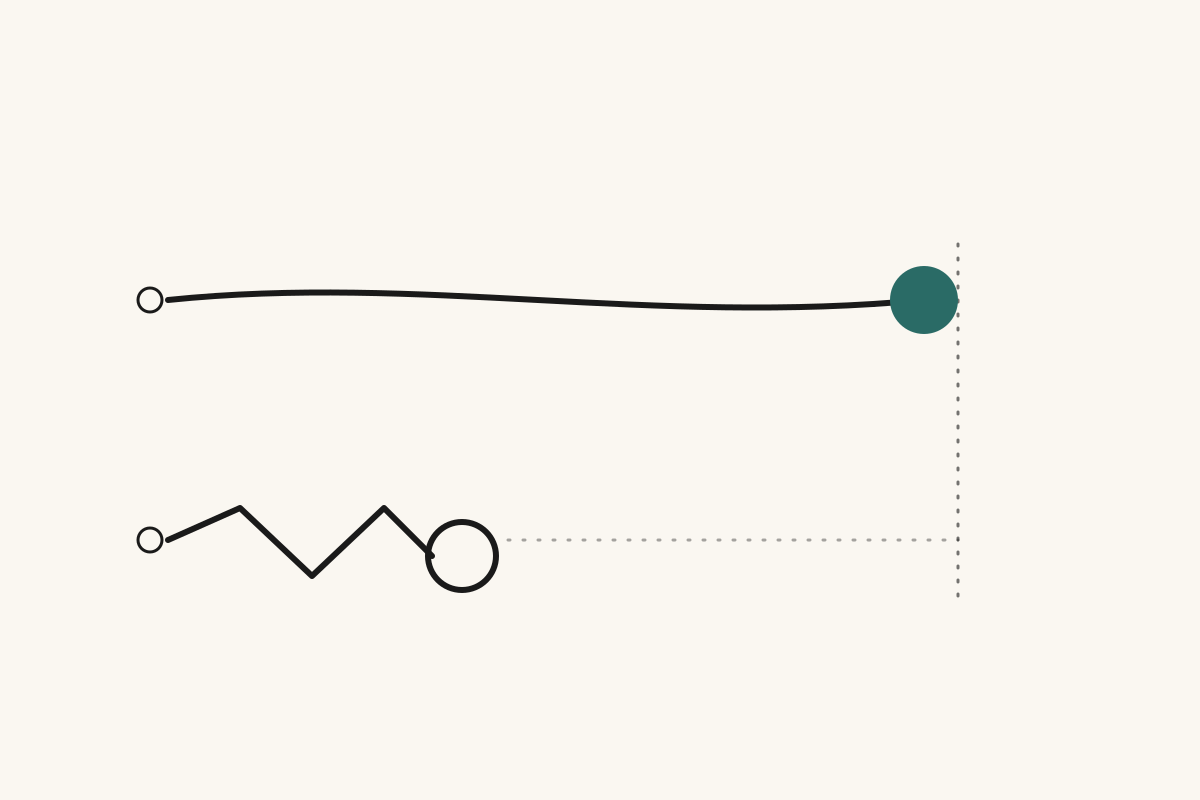
The teal name reaches the end without friction. The other snags partway and stops.
Optimal incongruity
Optimal incongruity is the sweet spot between too familiar and too strange. A name too familiar reads as boring, a name too strange overwhelms, and moderate novelty sits at the peak. Berlyne measured that curve as an upside-down U.
Berlyne had people rate patterns by novelty, and the moderately novel ones scored highest while the plain and the chaotic both lost (Berlyne 1970). That is the case for letting a name take a stance instead of playing it safe, and the argument runs in full through how to name a brand.
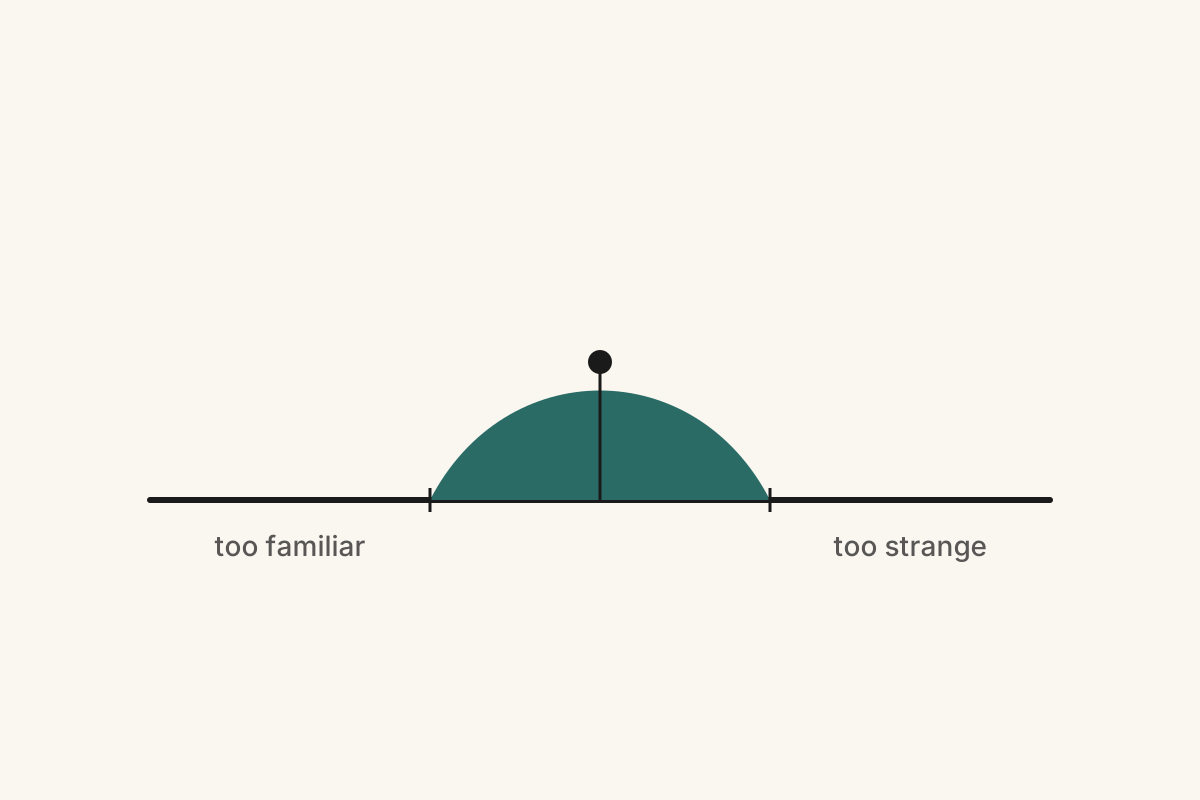
Too familiar on one side, too strange on the other. Liking rises in the moderate middle.
Mere exposure effect
The mere exposure effect is the finding that seeing a name again and again makes it easier to process, and that ease gets misread as liking. A familiar name starts ahead of an equally good unfamiliar one. It is processing fluency built up by repetition rather than by the sound itself.
Zajonc found that people preferred shapes and words they had simply seen more often, with no meaning attached (Zajonc 1968).
Where a name competes in its category
Fluency and incongruity both judge a name on its own, but a buyer never meets a name on its own. These last three terms are about the company a name keeps, the rival names sitting next to it when a buyer first sees it.

A name carries a clear signal until the category fills with rival names and buries it. A packed category is where a name disappears.
Register
Register is the shared family of sound and style that the names in a category already occupy, the sound a buyer expects in that category. A name that fits the register blends in, and one that breaks it stands out, for better or worse.
Clinical skincare runs on coinages and plain words like CeraVe and The Ordinary. A soft, playful name like Drunk Elephant reads as deliberately off-register there.
Crowding (the competitive set)
Crowding is how packed a category's set of rival names already is. A packed category buries a new name, a busy one is mixed, and an open one leaves room to stand out.
In the packed category of plain clinical skincare, one more clinical name vanishes into the rest.
Name type (typology)
A name's type is where it sits on the spectrum from saying what a product does to carrying no literal meaning at all. The common types are descriptive, suggestive, abstract or invented, founder, and acronym.
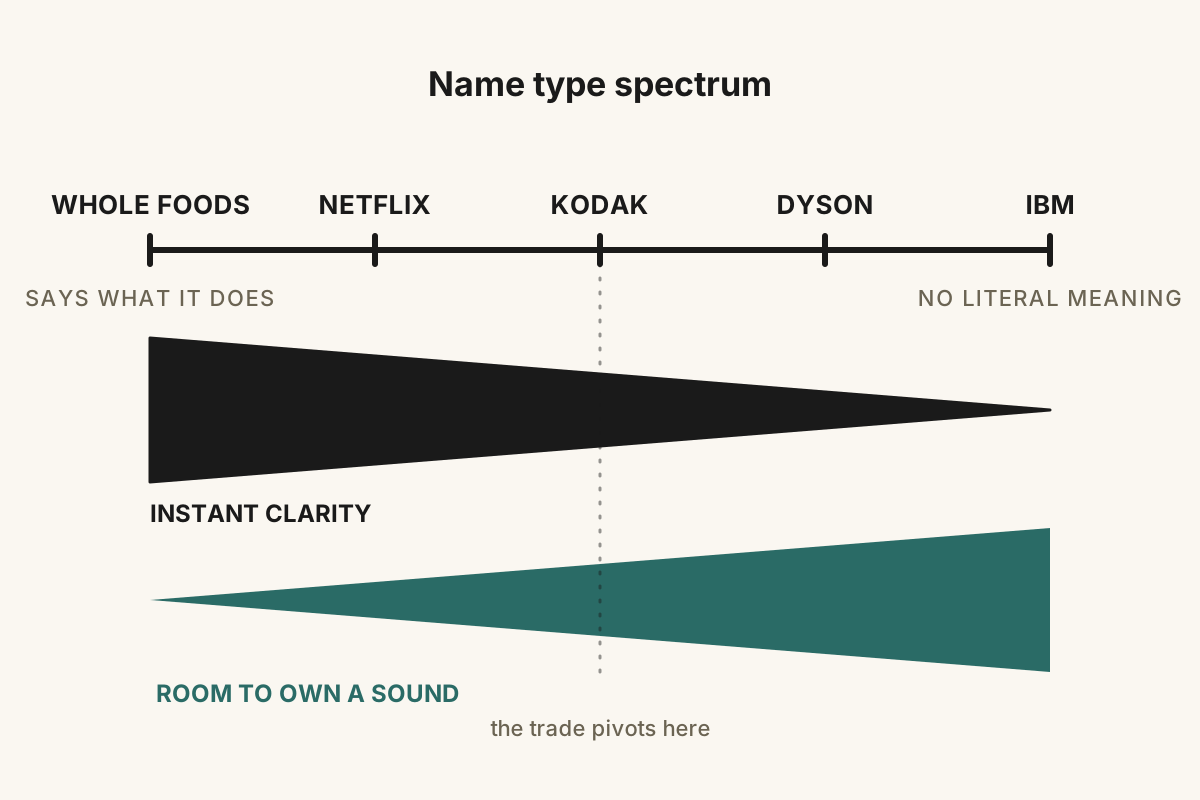
Whole Foods says what it does, IBM says nothing literal. The clarity wedge shrinks and the ownership wedge grows with every step right.
Whole Foods describes, Netflix suggests, Kodak is invented, Dyson is a founder, and IBM is an acronym. Each step toward the abstract end trades instant clarity for room to own a distinct sound.
How BrandNames puts the naming science together
Put all these terms together and a name stops being a matter of taste. It becomes something a naming science can read and score. Two more terms, both BrandNames' own, name what the research adds up to in practice. The first is the Convergence Trap. It is the failure mode where founders and AI tools keep landing on the same obvious name. The option that feels most right is the one everyone else reaches for too, and a name everyone reaches for disappears in a crowded category. The White Space Method is the answer to that trap. It maps where a subcategory's names already cluster, generates names wide, then cuts hard against that cluster to find the open ground no rival holds. Drunk Elephant is that move in miniature, a soft, playful name in a category of clinical coinages, holding the ground the clinical crowd left open. How to name a brand walks through the whole approach end to end.
Frequently asked questions
What is naming science? Naming science is the study of how a brand name's sound and structure shape what a buyer perceives, before the meaning of the words is read. It draws on two research fields, sound symbolism and processing fluency. It is a different thing from the biology sense of the phrase, binomial nomenclature, the Linnaeus system that gives species two-part Latin names like Homo sapiens. This glossary covers the brand sense.
What is the difference between sound symbolism and processing fluency? Sound symbolism is about meaning, the specific associations a sound carries, so a back vowel reads heavier than a front one. Processing fluency is about ease, how smoothly the brain handles the name at all, which it then misreads as trust and quality. One sets what a name feels like, the other sets whether it feels safe.
What is optimal incongruity, and why can a polarizing name beat a safe one? Optimal incongruity is Berlyne's finding that preference peaks at moderate novelty, not at the familiar end and not at the strange end. A name everyone finds fine has cleared the boredom line but claimed no attention, while a name that takes a stance draws a reaction worth remembering. The safe option clears the bar and then fades from memory by the time a buyer looks away.
Do front and back vowels really change how a brand name feels? They do. Front vowels like the i in Frish read small, light, and fast, and back vowels like the o in Frosh read large and heavy. The preference runs about two to one when the vowel fits the product (Lowrey and Shrum 2007). A single vowel swap was enough to make an invented ice cream taste creamier (Yorkston and Menon 2004).
Is sound symbolism real, or marketing folklore? Real, and heavily replicated. The shape-sound match holds for about 95 percent of people and across 25 languages, and the size effect goes back to Sapir in 1929. Sound symbolism in brand names lays out the studies in full.
BrandNames applies sound symbolism and processing-fluency research to founders' real shortlists. The doors open soon. Drop your email to get one note when they do.