
The name usually gets chosen in a meeting.
A founder has five finalists in a shared doc. The team's lived with them for a week, so now it comes down to a show of hands, and one name keeps drawing the votes. It says easily, nobody stumbles over it, the domain's available, and when the founder reads it aloud the room agrees it sounds right. So that's the one, and the brand ships.
Two years later the name sits in a crowded category beside four competitors that ran the same brand naming process and reached for the same kind of name. A shopper scanning the category can't tell them apart. The name wasn't a mistake. It cleared every check the founder knew to run, so the real problem is the process behind those checks. That process is the one nearly every guide online hands you, and it quietly skips the steps that would've made the name sharp instead of safe.
Most of that standard process is worth keeping. It just has to add back the three steps it skips, the three that decide whether the name lands. One maps the category before you fall in love. Another throws away the names that feel right, which sounds backwards until you see why. The last swaps the lone trademark search for real evidence that the name works.
The process every guide gives you
Read the guides that rank for naming a brand and the advice converges fast. Some lay out five steps, some eight or nine, but the arc rarely changes. Define your brand and your audience. Generate a long list of options. Cut it to a shortlist. Run a trademark search. Pick one and register it.
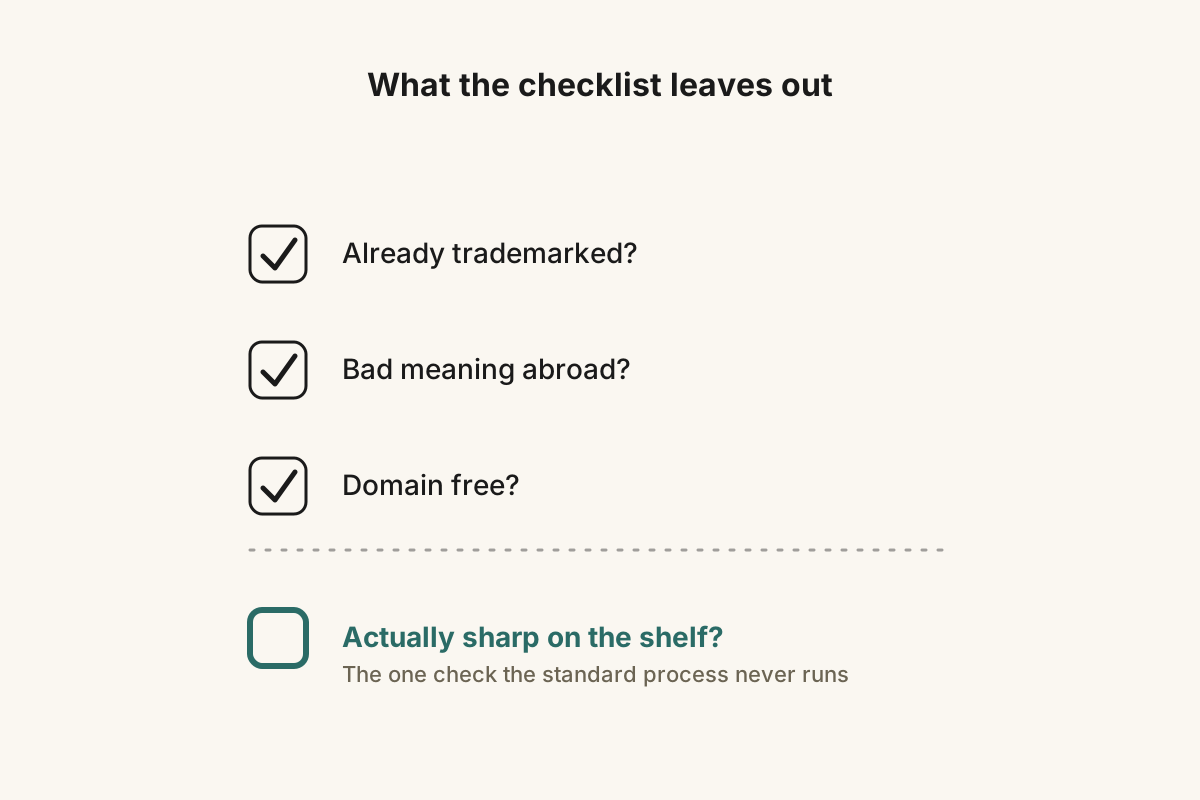
The standard process ticks the obvious checks and skips the one that decides whether the name lands.
There's nothing wrong with that arc. It's a sensible scaffold for the visible work of naming, and it catches the obvious failures. It'll stop you from picking a word that's already trademarked in your category, or one that means something unfortunate in another language.
What it leaves out sits underneath that visible work. Three steps decide whether your name turns out sharp or forgettable, and the standard process rushes them or drops them. The real category you're about to compete in never gets mapped. Then it steers you toward the option you like best, the one move you most want to avoid. And validation, in its telling, amounts to nothing more than a trademark search. Put those three steps back, and the rest of the process does what it was meant to do.
The brand naming process, step by step
- Decide what you're naming, and at what altitude. Name the brand, not the single product in front of you.
- Map the category before you fall in love. Lay out the real names you'll compete beside and see where they cluster.
- Generate wide, and keep it loose. Produce a lot of raw options before you grade any of them.
- Throw away the names that feel right. The obvious favourite is the one everyone lands on, so cut it on purpose.
- De-risk the finalist with evidence. Trademark, domain, a real customer read, a language check.
- Commit to a decision you can defend. Pick with a written reason, not a gut nod.
Steps two, four, and five are the ones the generic guides skip.
1. Decide what you're naming, and at what altitude
Most processes open here, and they're right to. Before any names, you write down what the brand is, who it's for, and how it should feel in a buyer's hands, whether that's clinical and exact or warm and a little reckless. That short brief becomes the ruler every later step measures against.
The piece the standard version gets wrong is altitude. Founders tend to name the product sitting in front of them, the one item they're about to launch, and a name pinned that tightly to a single product becomes a cage the moment the line grows. You name a barrier cream something that shouts cream, then you add a serum and a cleanser, and the name fights you.
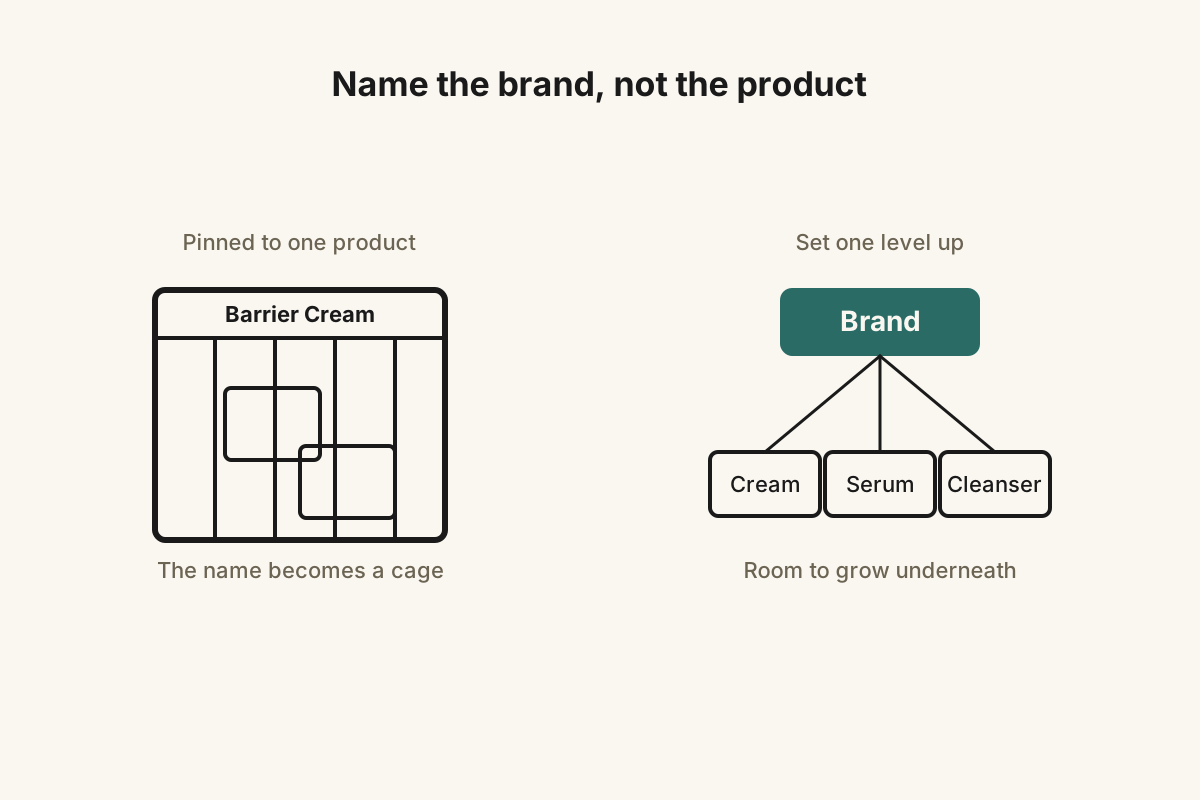
A name pinned to one product turns into a cage. Set it one level up and the line can grow underneath it.
Name the brand one level up, at the altitude that still fits when there are three products under it, or ten. The brief you write should describe the company you're building, not the first thing it sells.
2. Map the category before you fall in love
This is the first step the guides skip, and the rest of the process leans on it.
Before you write a single name, build a map of the category you're about to join. Not a vague sense of your competitors, but the actual names, lined up, each one read for what it's doing. List the twenty or thirty names you'd meet in one aisle or one category search, and group the ones making the same move. In any crowded category the names cluster, because the obvious association is obvious to everyone, and one founder after another reaches for it.
Clinical skincare is the clearest example. Look at the category and one move dominates. CeraVe builds its name from ceramides, the skin-barrier lipid it's formulated around. Cetaphil is a scientific-sounding coinage with the same intent, a name engineered to read like something a dermatologist would trust. Brand after brand borrows the language of the lab, and that repeated move is the convergent zone, the spot in the category where everyone's already standing.
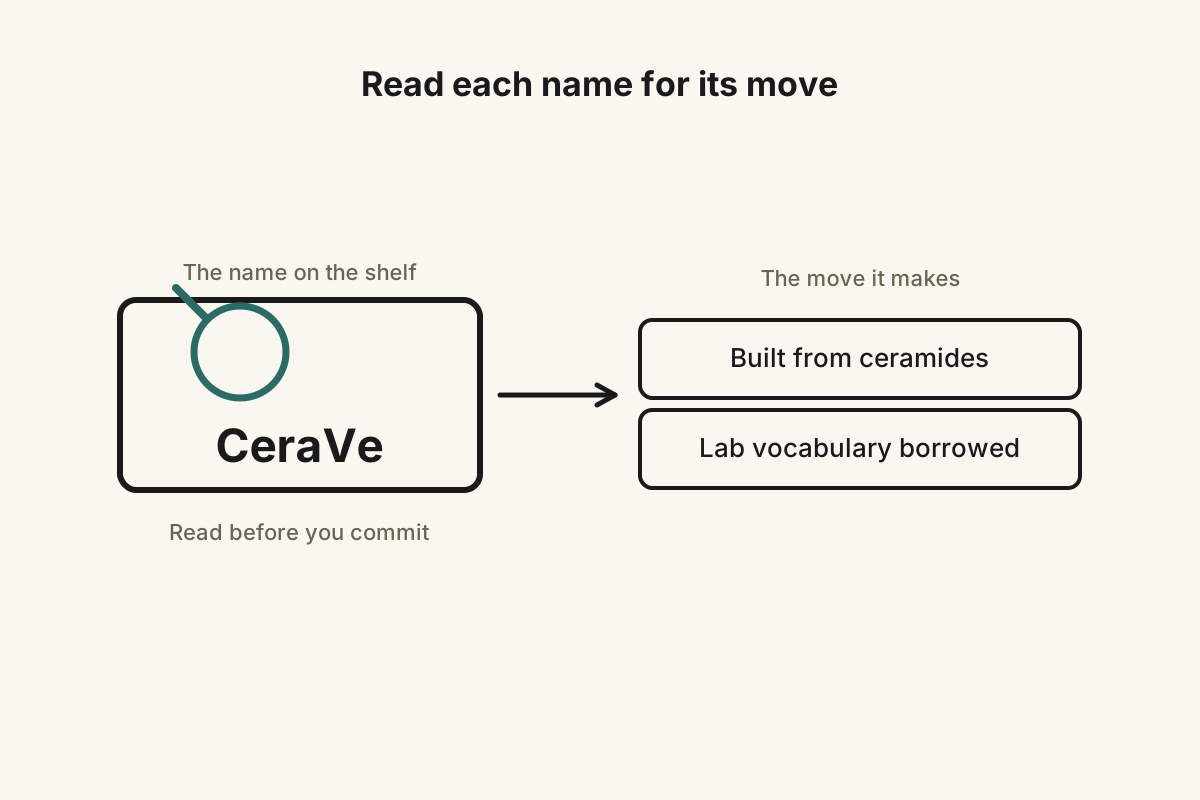
Read each name for the move it's making before you commit. CeraVe borrows the language of the lab, built from the ceramide it's formulated around.
The open ground, the white space, is everywhere the crowd isn't. The Ordinary named itself the plainest thing imaginable, and it stood out by refusing the lab-coat vocabulary the whole category leaned on. It read the crowd and walked the other way.
You can't find that open ground until you can see the crowd. The map makes the crowd visible, so the names everyone reaches for are easy to spot and easy to skip, which is what you need before the next step.
3. Generate wide, and keep it loose
Now you generate, and this is the part that got easy. A founder with a clear brief and any decent AI tool can produce hundreds of raw options in an afternoon, so generation is close to free.
Because it's that cheap, the urge to over-engineer it is worth resisting. It's tempting to feed the model your whole strategy, your positioning, and your list of must-have traits, then ask it to thread all of them at once. That produces careful, on-brief, forgettable names, because a heavily instructed prompt walks straight to the obvious answer. A loose, almost naive prompt fed a few sharp example names ranges further and turns up more surprises. Ask for a hundred options in the spirit of a few names you admire, then keep the twenty that make you stop.
Keep this step wide and unprecious. Some of what comes back wins on meaning, and some wins purely on sound, the way a name can land before a buyer has worked out what it means. That second lever, the sound itself, is its own subject, taken up in the guide on sound symbolism in brand names. You're not grading yet, you're filling the pool.
4. Throw away the names that feel right
This is the step that goes against instinct. The standard advice says to read your long list, find the names you like best, and shortlist those. Follow it and you'll almost always shortlist the convergent names, the ones sitting in the middle of the crowd you mapped in step two.
Those names feel right precisely because they're familiar. Your brain has seen that shape of name a hundred times in the category, so familiarity reads as rightness. Every other founder in your category feels the same pull toward the same names, and so does every AI generator, trained on the same crowded internet.
So invert the instinct. Treat the names that feel most obviously right as suspects, not finalists. The first job of the cut is to strip out those convergent names on purpose, the ones a free tool would've handed you anyway. What survives is the material worth taking seriously.
From there, cut toward the open ground you found on the map, and keep at least one name that makes the room slightly uncomfortable. The safe name, the one nobody objects to, is also the one nobody reacts to, and a name nobody reacts to is a name nobody repeats. Liquid Death named canned water after the one idea the whole beverage category works to avoid, and plenty of people hated the name on sight. The brand is now valued at $1.4 billion, built on far more than its name, but a name that polarizing plainly didn't hold it back. The deeper case for why the safe option loses is its own argument, taken up in how to name a brand.
A good cut hurts a little. If every name you kept feels comfortable, you've probably kept the wrong ones.
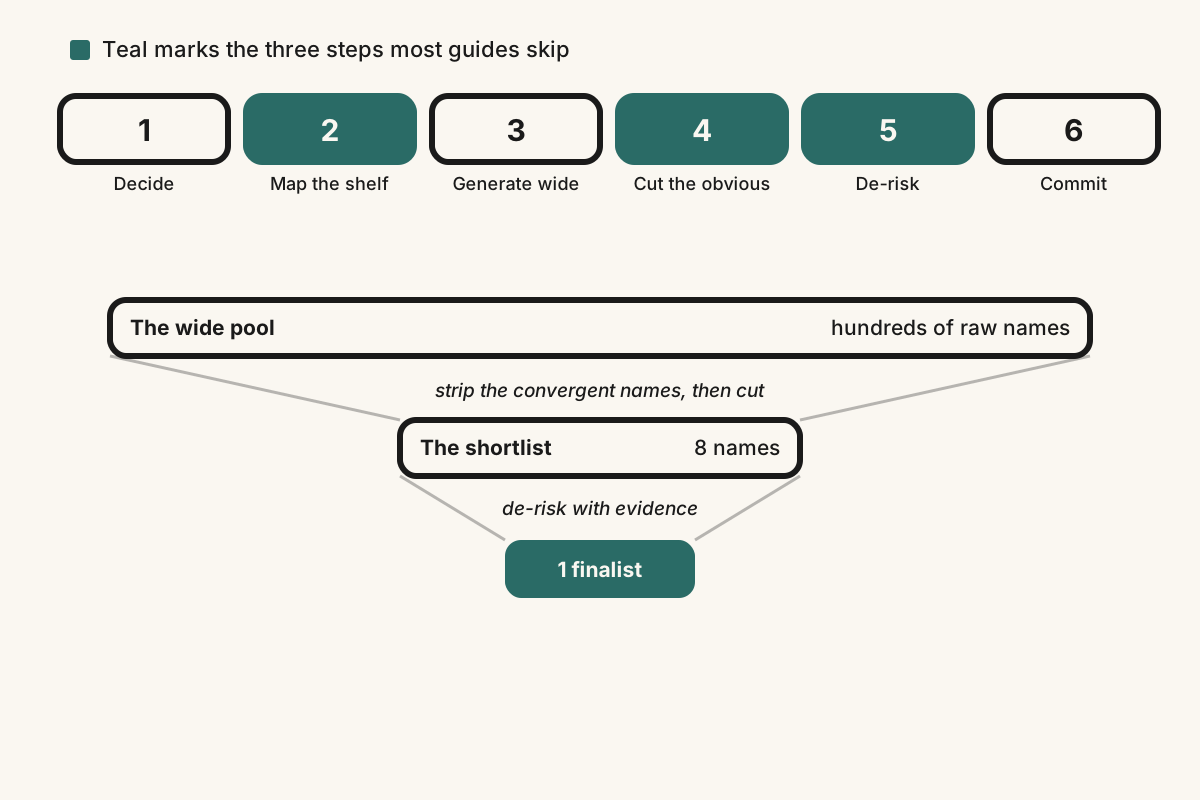
Hundreds of raw names narrow to one finalist. Generation is cheap, and the cut is the work. Teal marks the three steps generic guides skip.
5. De-risk the finalist with evidence
Most processes stop one step too early, at the trademark search, as if clearance were the same as validation. Clearance only tells you the name is available, and it says nothing about whether the name works. Real de-risking runs four checks, and a finalist should clear all of them before you commit.
Start with the legal screen, because it can kill a name outright. Run a free preliminary search on the US Patent and Trademark Office's Trademark Search tool at tmsearch.uspto.gov. Then run the same check on the WIPO Global Brand Database at branddb.wipo.int. For any market you'll sell into abroad, add that country's national trademark office. Those are knockout searches, not a legal opinion, so once a name survives them, a trademark attorney runs the full clearance before you spend a dollar on a logo.
Then check the practical availability. The domain, the social handles, and what comes up when you type the name into a search engine cold.
Then put the name in front of strangers, not your co-founder. Show a handful of real buyers the name with no pitch attached, and ask what they think the brand sells and who it's for. If they place it in the wrong category, the name's fighting you. Mild curiosity is fine, because a strong name can intrigue before it explains. Active misdirection is the problem.
Last, run a language and culture screen if you sell across borders, so the name doesn't carry a meaning you never intended.
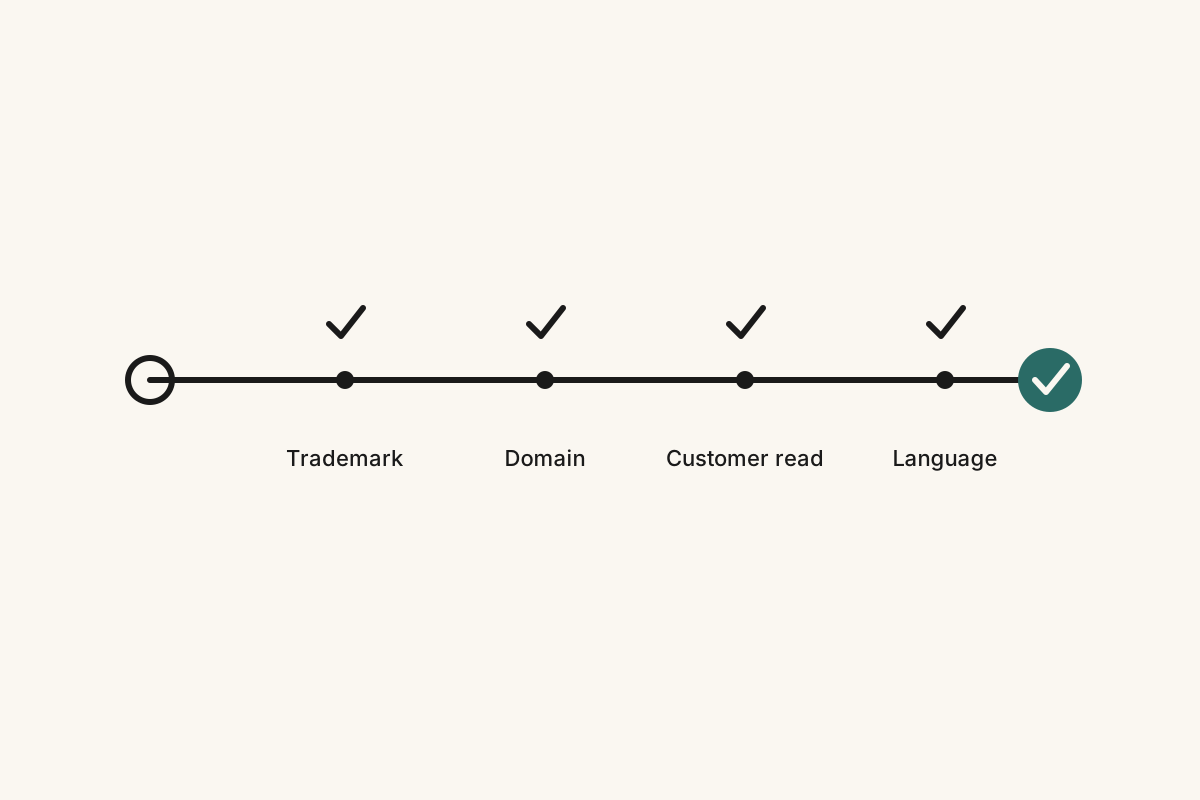
A finalist clears four evidence checks before you commit. A trademark and legal screen, practical availability, a cold read from real buyers, and a language and culture check.
6. Commit to a decision you can defend
The last step is the one founders rush, because by now they're tired of the question and ready to move. Resist the urge to pick on a feeling.
Write down why the name won. The brief it serves, the open ground it claims in the category, the checks it cleared, the two runners-up and why they lost. A decision you can put in a paragraph is one you can defend later, to a co-founder, an investor, or yourself at 2am when the doubt arrives. A name chosen on a gut nod has nothing to fall back on, and the doubt always comes.
That written reason is the real output of the process. The name is just the part you print on the label.
Frequently asked questions
What are the different types of brand names?
The type matters far less than founders expect. What decides a name is whether it fits the brand and stands apart from the category, not which bucket it falls into. The usual buckets are descriptive (General Motors), suggestive (Airbus), coined (Kodak, Cetaphil), associative (Amazon, borrowing the idea of scale), and eponymous (Dyson). A sharp name can come out of any of them, and so can a forgettable one.
How long does it take to name a brand?
Faster than an agency, slower than it feels like it should. Run it yourself and the generating is a day, but the cutting and the validation are the slow parts, so protect a focused week or two. Naming agencies typically take three to six months. The real clock is trademark clearance, which runs on the attorney's and the office's schedule, not yours.
Do you need the matching .com domain?
Less than founders think. An exact-match .com is a nice-to-have, and chasing one is a common way to talk yourself into a worse name. Plenty of strong brands run on a modified domain or a newer extension and let the trademark, not the URL, carry the weight. Decide whether the name is clear and ownable first, then solve the domain.
Can AI name your brand for you?
It can do half the job. AI is good at the generating, producing a wide pool of raw options in minutes. It's poor at the deciding, because it converges on the same obvious names every other founder's prompt produces and has no read on the specific category you compete in. Use it to fill the pool, then do the cutting and the validation yourself, or with someone who knows the category.
BrandNames runs this process for founders, the wide generation, the hard cuts, and the evidence behind the finalist, with a strategist on every project. See how it works, or drop your email for one note when the doors open.