
Lululemon means nothing.
The word is invented. Lululemon is a Canadian athletic-apparel brand, founded by Chip Wilson in Vancouver in 1998. Wilson has said the name "came out of nothing, absolutely nothing," a made-up term with no roots and no dictionary entry, built around three of the letter L for the way it sounds rather than for any meaning. That is the real answer to what the name means, and it is where nearly every explanation of it stops.
The eye does catch two real words inside it, lulu and lemon, but neither was placed there for its meaning. By Wilson's account the one worry was that lemon might echo the old slang for a dud car, a worry he talked himself out of. The word was assembled for how it sounds, not for what it says.
Why it's called lululemon
The part people repeat is the story of the three L's. By Wilson's own account, he wanted a name packed with the letter L because, years earlier, Japanese buyers had liked a skate brand of his for the same reason, and he decided an L-heavy word would read as authentically Western. The word itself has no meaning in Japanese. The only connection is Wilson's hunch that an L-heavy name, with a sound Japanese speakers find hard to produce, would land as exotic and Western in that market. In a 2005 magazine profile the reasoning came out blunter and uglier, in a quote Wilson now disputes, and the company he no longer runs has since distanced itself from his public remarks. The premise was always more folklore than fact.
All of that explains where the letters came from. Why the name actually worked is a separate question, and the answer is in the sounds. A made-up word with an awkward backstory went on to sit on millions of waistbands and become shorthand for a whole category of clothing, on the strength of what those sounds do to the mouth and the memory. That part holds up no matter what you make of the man who picked it.
What the name is, before it means anything
Say it slowly. It is pronounced loo-loo-LEM-on, with the stress on the third syllable.
Strip lululemon down to its sounds and one thing jumps out. There is nothing hard in it. The consonants are three L sounds and the nasals m and n, and that is the whole consonant inventory. Not a single hard stop, none of the p, t, k, b, d, or g sounds that make a word click or snap. Linguists call the soft, flowing consonants sonorants, and lululemon is built from almost nothing else.
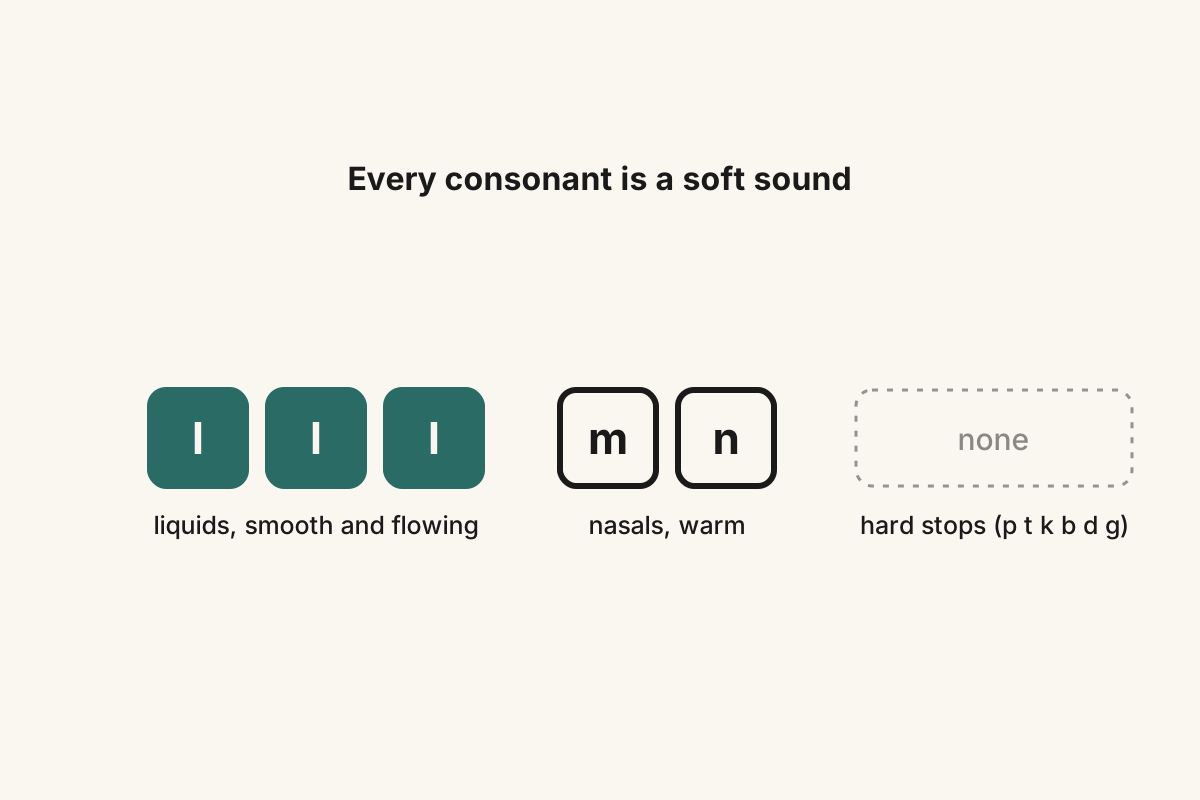
Three liquid L sounds and two nasals, and nothing hard. The name has no stop consonants to interrupt it.
The vowels keep to the same lane. The first two syllables, lu and lu, both ride the rounded oo sound, the deepest of the back vowels. The name never sharpens. It opens on a round vowel and never hardens, and the final syllable softens into a hum that most people barely voice.
Then there is the shape of the front. Lu, lu. The same syllable twice. That doubling is the most distinctive thing about the word, and the reason almost everyone shortens the brand to lulu in conversation. Four syllables is long for a brand, and long names get clipped, so buyers kept the part that repeats.
Why it feels soft before you read a word
The softest sounds in a language are not soft by coincidence. They carry associations, and those associations are stable enough to measure.
Start with the L. The L is a liquid consonant, the class linguists group with the R for the way the sound glides rather than stops. In Klink's 2000 study of sound symbolism in brand names, liquids read as smooth and flowing and nasals like the m read as warm. Lululemon has three liquids and two nasals and nothing else, so the name reads as smooth and warm before a buyer has processed a single thing it sells. For a brand whose whole pitch is comfort against the body, soft fabric and easy movement, that is the sound doing the product's job in advance.
The vowels add weight to the softness. Back, rounded vowels like the oo in lulu have read as large and heavy since Sapir first measured the effect in 1929, and the pull is strong enough to change how a product seems. In a 2004 study, Yorkston and Menon gave people an invented ice cream and changed only one vowel in its name. The version with the back vowel was rated creamier and richer than the front-vowel version, on identical ice cream. A name stacked with the roundest vowel in the language is pre-loading a sense of substance and richness, the right promise for premium clothing and the wrong one for anything that wants to feel quick or sharp.
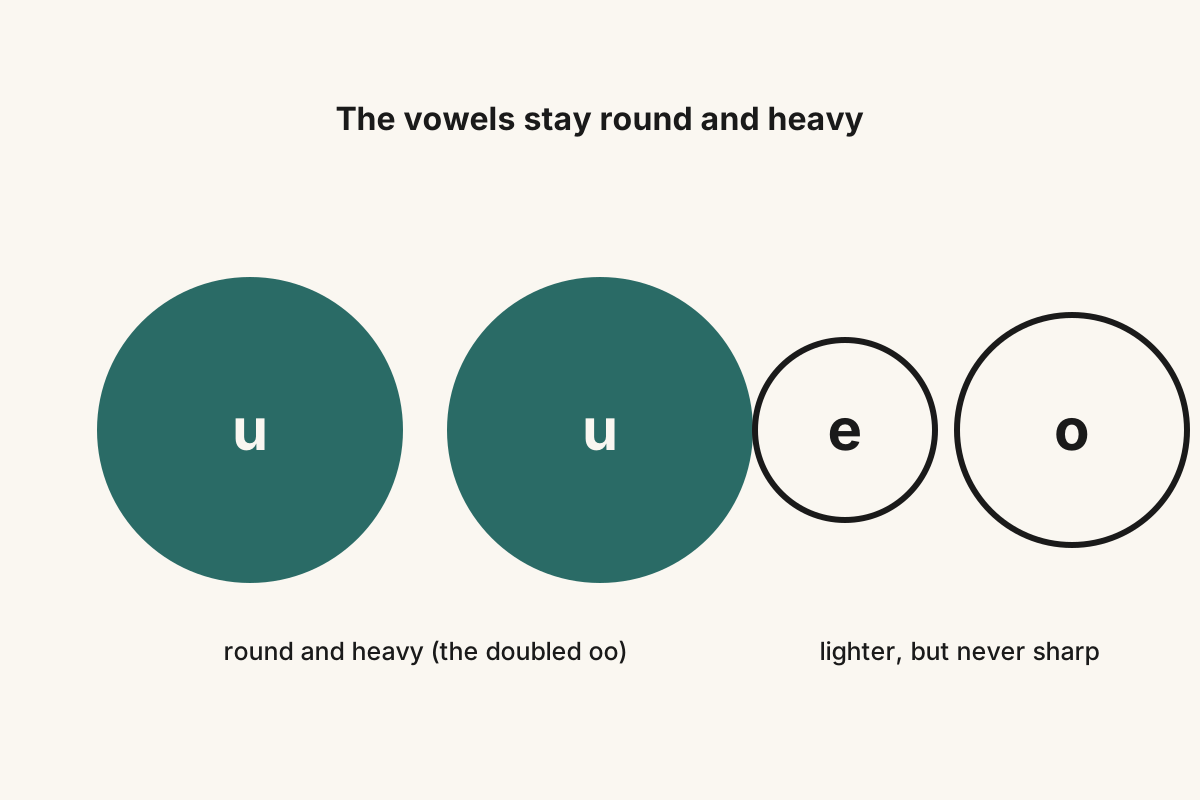
The doubled oo is the roundest, heaviest vowel English has. Every vowel in the name reads round, never sharp.
The sound-symbolism guide lays out these dials across a range of brands. Lululemon sits at the soft, round end of all of them, which is how a meaningless word can come across as calm and expensive.
The lowercase l does the same work by eye. The brand starts with a small letter on purpose. By his own account, Wilson wanted it to read softer and less aggressive than the male-dominated athletic labels it launched against, so he dropped the capital, one more nudge in the soft direction the sounds were already pushing.
The doubled lu
Most explanations stop at the three L's and miss the pattern next to them. The first syllable repeats. Lu, lu.
Repeating a sound unit is called reduplication, and it shows up everywhere in words built to be liked rather than to be precise. It is how baby talk works. It is why Coca-Cola is not Coca-Drink, and why a Kit Kat is not a Kit Bar. The repeated syllable reads as friendly and approachable, the opposite of clinical, which is a useful thing to be when you are selling technical performance gear to people who find most athletic brands cold.
It also does something measurable to how the name lands when spoken. Argo, Popa and Smith found, in 2010, that brand names with sound repetition, said out loud, produce real positive feeling that transfers to the brand itself. The mouth enjoys the repeat, and some of that enjoyment sticks to the product. They also found you can overdo it, push the repetition until it tips into a gimmick, but a single doubled syllable at the front of a longer word sits well short of that line.
The doubling is also why the brand has a natural nickname. Lululemon is four syllables, which is long, and long names get shortened in real speech. What buyers kept was not the first syllable or a set of initials. They kept lulu, the part that repeats, because the repeat is the part that is easy to say and pleasant to land on. A name that hands its customers a fond short form has an edge most names never get.
Why a made-up word still feels safe
There is a problem hiding in any invented name, and lululemon solves it so quietly that the solution is easy to miss.
Coined words are the harder path to begin with. In a BrandNames analysis of 5,000 direct-to-consumer brand names, only about a quarter were invented words like this one. Most brands borrowed something real. A made-up word starts with no meaning and no familiarity to lean on, which is exactly why what it does have to lean on matters so much.
A coined word is, by definition, unfamiliar. Unfamiliar things make people wary, and that wariness shows up in judgments people do not know they are making. Song and Schwarz showed in 2009 what that wariness can cost. They gave people food additives and amusement-park rides with either easy or hard-to-pronounce names, and the hard-to-say ones were rated more harmful and more dangerous than the easy ones, on no information except the difficulty of the word. When a name is a struggle to pronounce, the struggle itself reads as risk.
Lululemon should be exposed to that risk. It is a long, invented word with a strange repeated front. But it is also effortless to say. It has no consonant clusters and nothing hard to trip over. The mouth alternates between a soft consonant and a vowel the whole way through, loo loo leh mun, which is about as smooth as an English word gets. The oddness lives in the spelling and the repetition, never in the act of saying it.
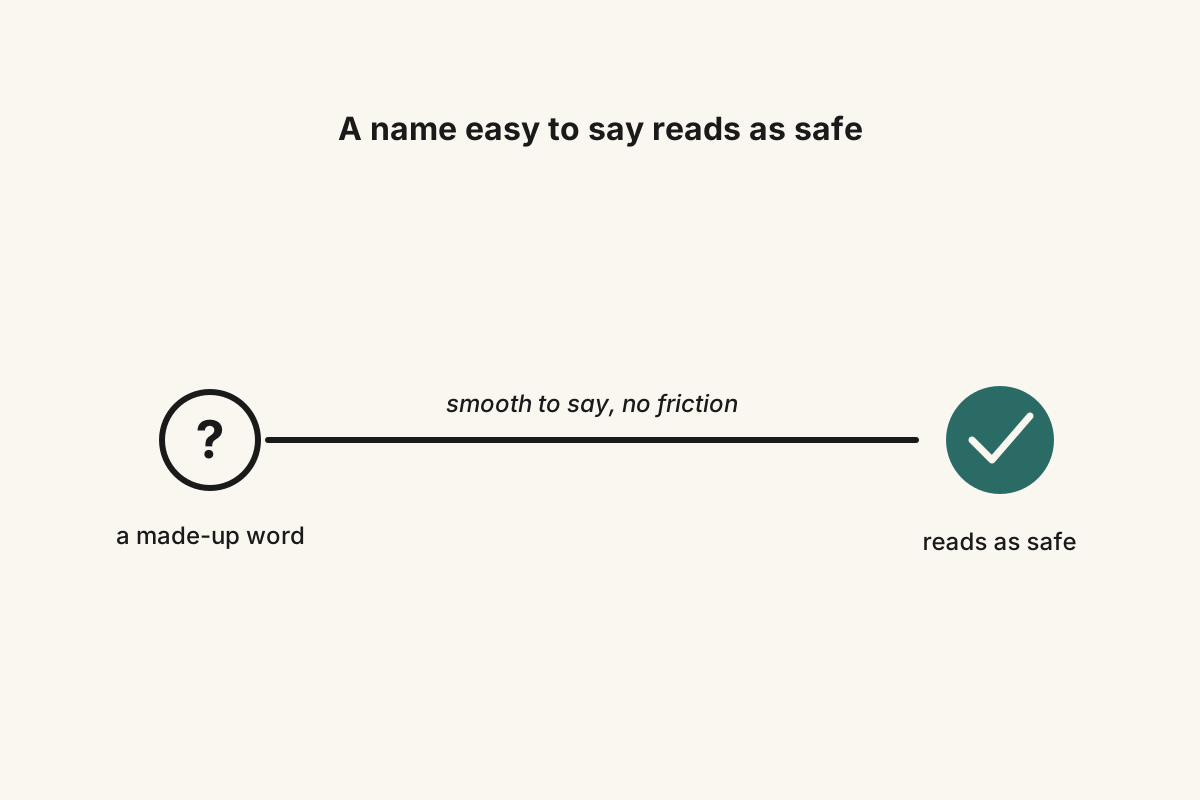
An invented word should make a buyer wary. This one glides off the tongue, and ease of saying it reads as a quiet signal of safety.
That smoothness is what carries the invented word past the wariness. Ease of processing does not stay neutral. Reber, Schwarz and Winkielman showed that the easier something is to take in, the more people like it, and that they misread that ease as a sign of quality and trustworthiness. A frictionless name collects a small, unearned vote of confidence before anyone has tried the product, and lululemon collects that vote on every pronunciation. So the honest answer to whether it is a real word is no, and it does not matter, because the name was built to feel safe in the mouth, and a word that feels safe to say feels safe to buy.
Distinctive without being harsh
Soft, easy names have a reputation for blending in, and the case for polarizing names is that the brands which win usually take a real risk while the comfortable middle gets forgotten. Lululemon looks like it breaks that rule. It is soft and easy to say, and it grew into one of the biggest names in athletic apparel.
It does not actually break the rule, because fluency and distinctiveness are separate things. A name can be strange and smooth at once, and lululemon is the proof. All of its strangeness lives in the spelling and the doubled syllable, an odd, meaningless coinage that was a genuinely strange thing to call an athletic-wear company in 1998. The brands it launched against ran on hard, punchy sounds, the k that ends Nike and Reebok, the plosive p in Puma. A soft, doubled coinage stood out on that shelf without ever raising its voice. None of that strangeness lives in the saying of it. The surprise is in the word, not in the mouth, which is what let the name be distinctive without ever turning hard or harsh.
What your name can borrow from it
None of this transfers as "use lots of L's." The L's are the surface. What matters is the thinking underneath them. A name built on soft sounds, liquids and nasals over rounded vowels, will feel the way a comfort product is supposed to feel before the buyer reads a word of copy, while sharp sounds do the opposite job for something built on speed. A doubled syllable gives people a piece to repeat, and a repeated piece tends to grow its own short form, a bit of free familiarity every time the name gets said.
A made-up spelling can be as strange as you like, but the saying of it cannot. Read each name on a shortlist out loud, in a sentence, to someone who has never seen it written, and listen for the stumble. A clean read means the name has cleared the only gate an unfamiliar word faces. A stumble means it is spending its first impression on the wrong kind of risk.
Frequently asked questions
Is lululemon a Japanese or a Canadian brand? Canadian. Lululemon was founded by Chip Wilson in Vancouver, British Columbia, in 1998. The only Japanese link is the origin story, that Wilson chose an L-heavy name partly because he believed it would read as authentically Western to Japanese buyers.
Does lululemon mean anything in Japanese? No. The word is invented and carries no meaning in Japanese or any other language. The Japanese connection is only Wilson's belief that the letter L, a sound Japanese speakers find hard to produce, would make the name feel exotic and Western in that market.
Is lululemon a real word? No. It is a coined word with no dictionary meaning. Made-up names usually carry a small penalty because unfamiliar words make people wary, but lululemon avoids it by being smooth and effortless to say.
How do you pronounce lululemon? It is pronounced loo-loo-LEM-on, with the stress on the third syllable. The soft consonants and open vowels make it easy to say despite being a long, invented word.
BrandNames runs founders' shortlists through the same sound and fluency research this post is built on. The doors open soon. Leave your email for one note when they do.